

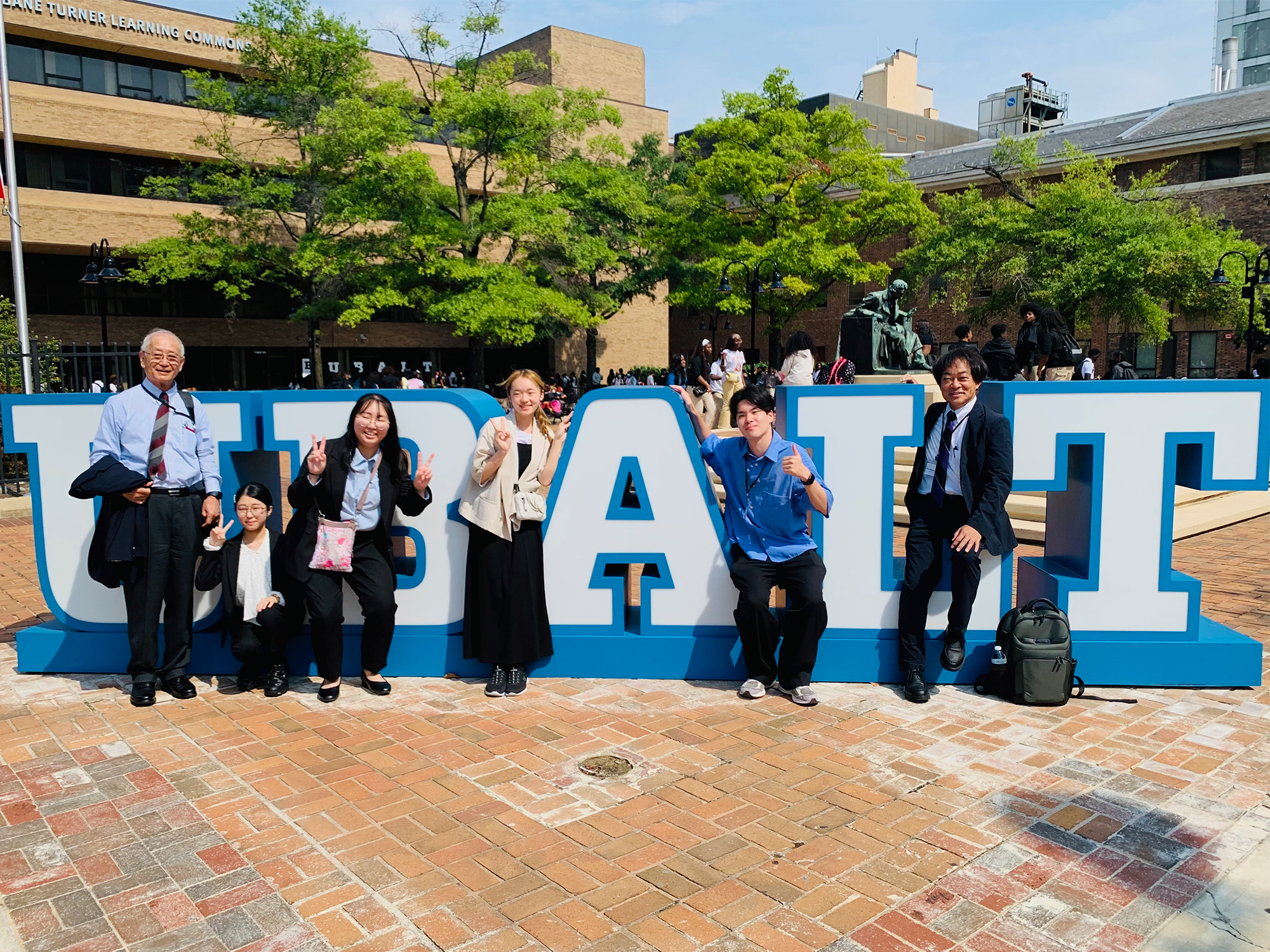
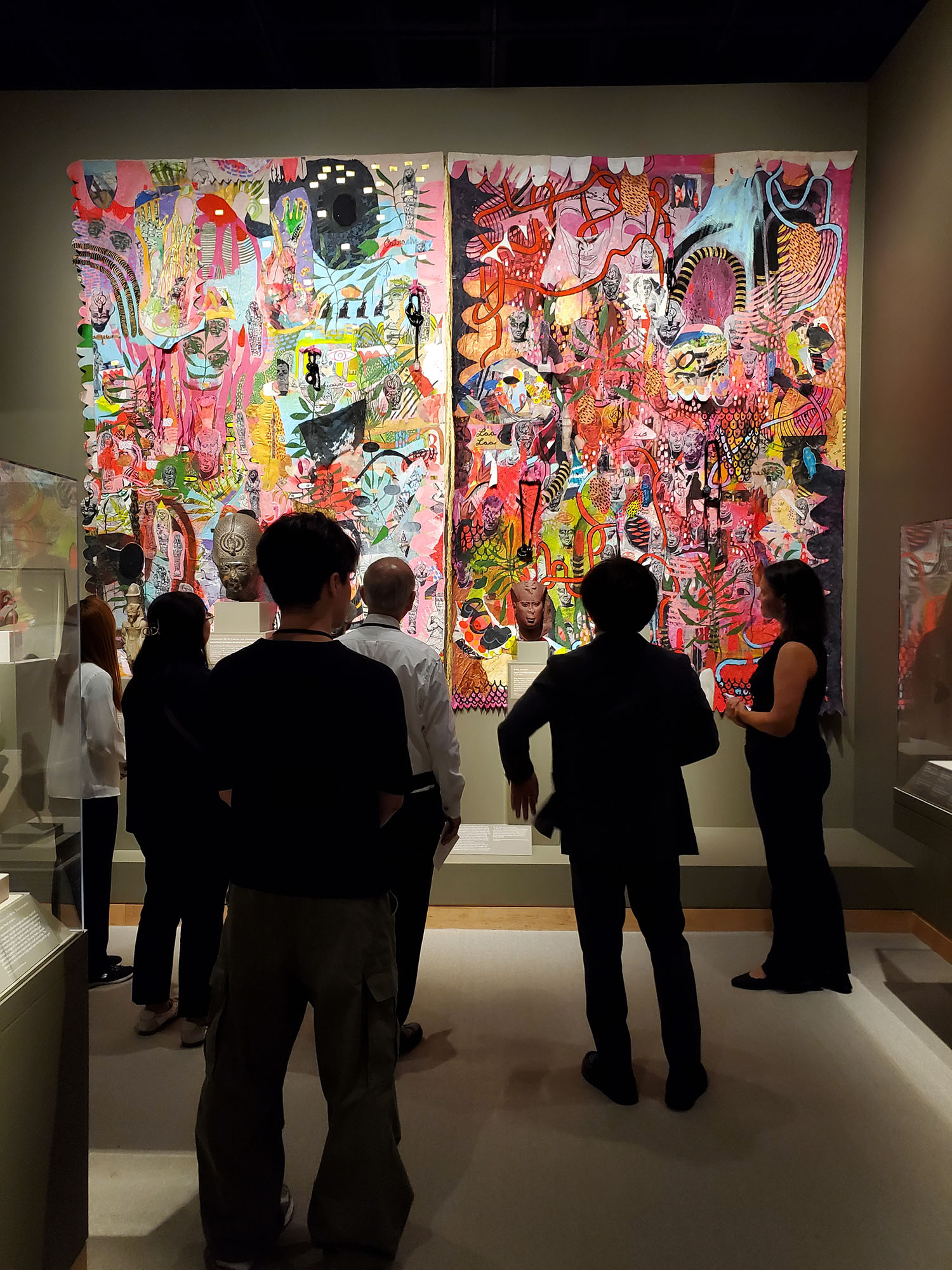
Four students, a professor and a special ambassador from Japan's Ehime University visited The University of Baltimore campus the week of Sept. 14, during which they discussed different ideas and approaches to resolving conflict as well as American immigration policy and more. Students, faculty and administrators from UBalt's College of Public Affairs, as well as other schools and programs from across the institution, interacted with the Japanese contingent during a series of exchanges that took place both on campus and at local cultural institutions including the Walters Art Museum.
"Our partnership with Ehime University is connected to even broader thought leadership and aspirational goals of improving the bilateral relationship between the United States and Japan," said College of Public Affairs Interim Dean Ivan Sascha Sheehan. "It was a tremendous effort and it has gone about as well as any of us could have possibly imagined. The delegation has found the experience to be enormously valuable."
Ehime University, based in Matsuyama on the island of Shikoku in Japan, has 150 partnerships with universities worldwide. Their partnership with the University of Baltimore is only their ninth in the United States. The exchange was signed by Ehime University President Hiroshige Nishina and University of Baltimore President Kurt L. Schmoke in October 2025.
Members of the Ehime delegation included:
The group's activities included:
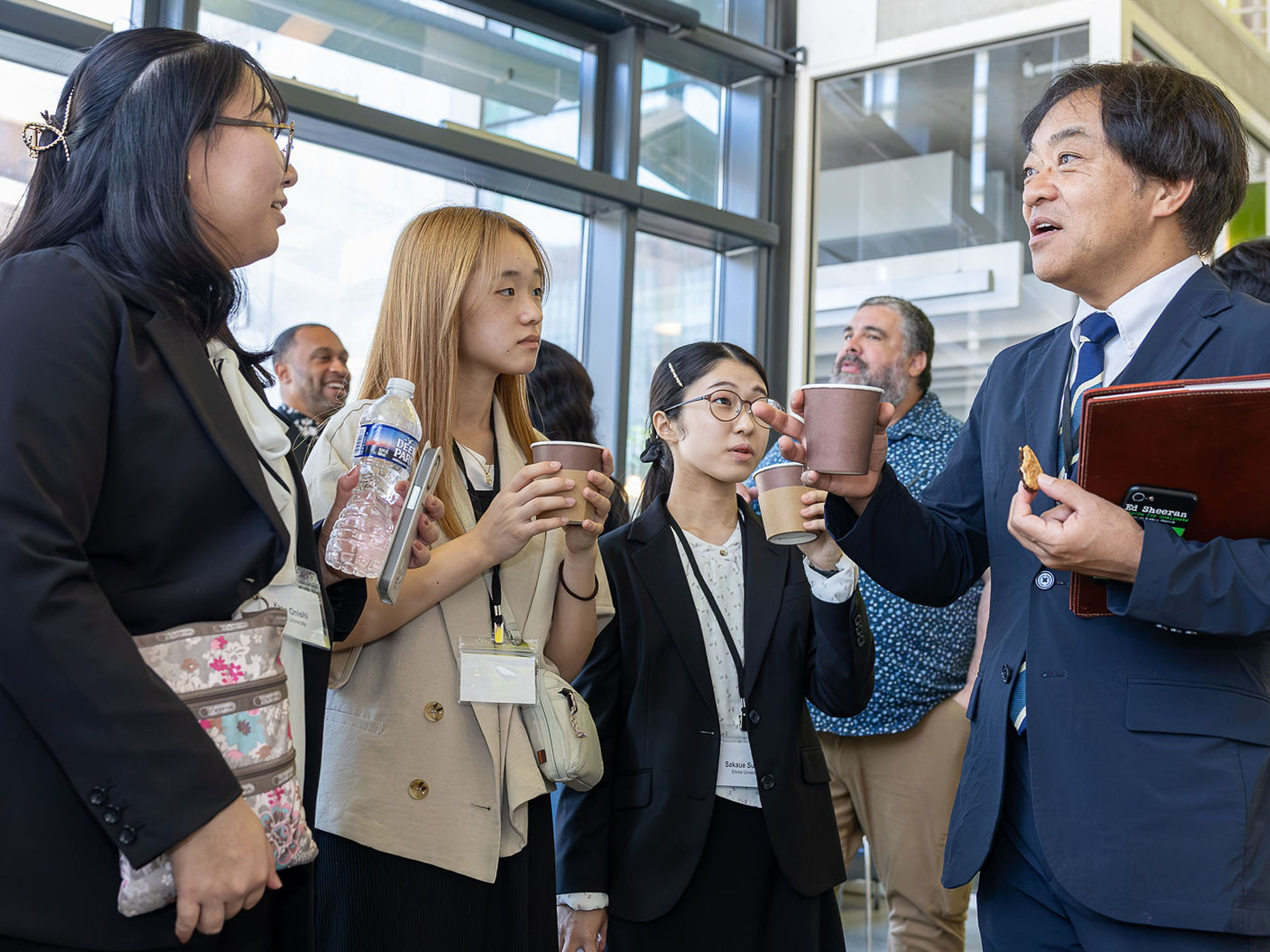
In addition, the visitors sat in on a graduate class, "Understanding and Assessing Conflict," taught by Dr. Clay-Robison. The class is part of the University's M.S. program in Negotiations and Conflict Management.
At the end of the week, each member of the delegation gave a final presentation on what they learned and how they plan to apply it back in Ehime.
Kano Onishi said many of the political dynamics she encountered in Baltimore “do not exist in Japan,” giving her “a new perspective.” Onishi plans to develop an app for residents with foreign backgrounds, informed by interviews with them.
Sumire Sakaue, whose interests include immigration and multicultural coexistence, intends to talk directly with foreign residents in Ehime and propose improvements drawn from Baltimore’s approaches to local government. “It is essential that we learn about and understand each other’s cultures,” she said.
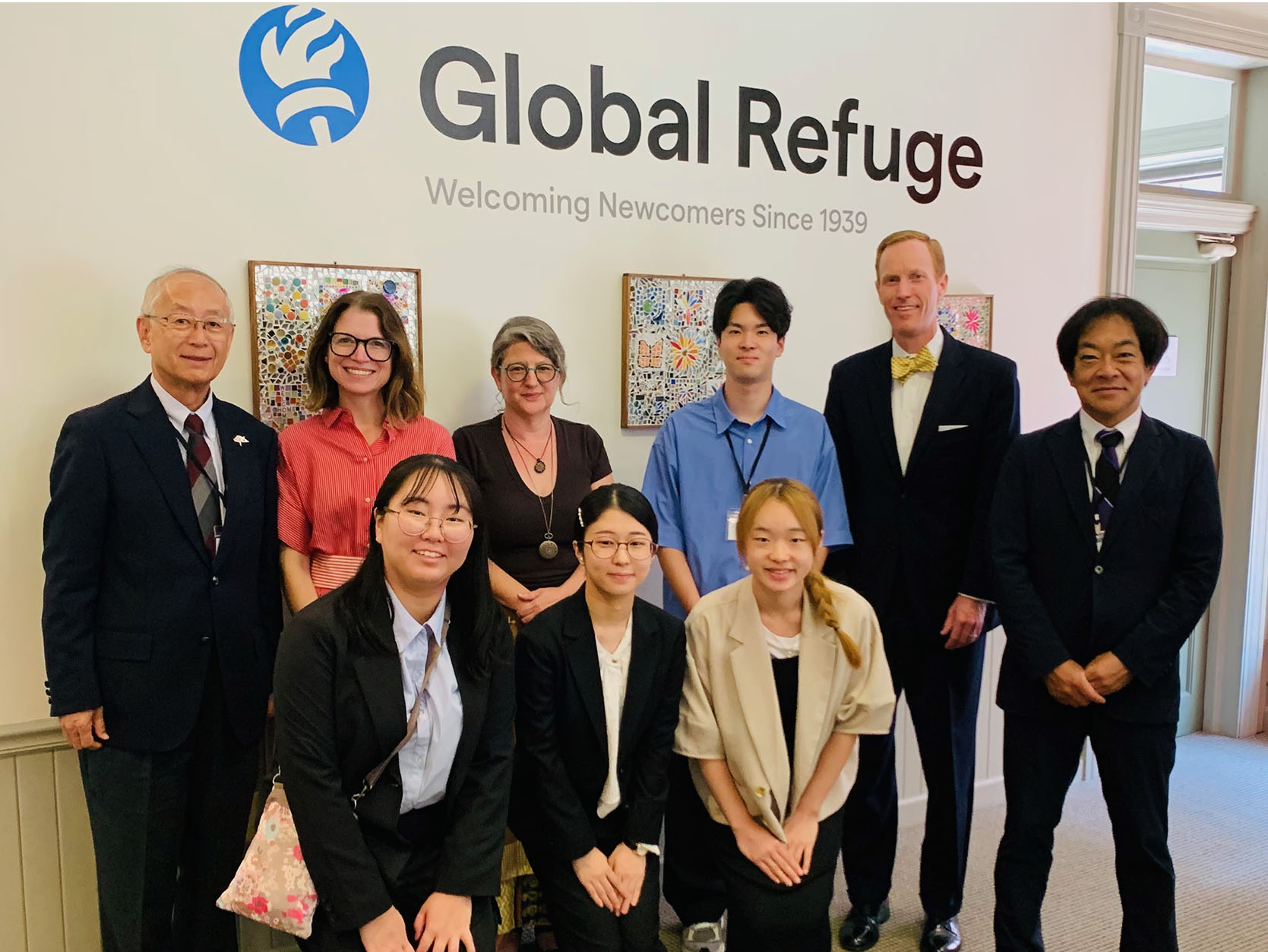
Haruto Morita, who hopes to support foreign workers in Japan, said his visits with Global Refuge, the Office for Immigrant Affairs and MONSE showed him “a big gap between what the law promises and what people actually experience.” What stayed with him most was the people working every day to close that gap, one person at a time.
Prof. Manabu Sumida noted that Baltimore and Matsuyama, capital city of Ehime Prefecture, are similar in size and share a commitment to collaboration among government, universities and residents. Both also use public art to strengthen neighborhoods. “In both cities, art is more than decoration,” he said. He added that the cities’ differences are what give the partnership its value: “We do not need to be the same in order to learn from one another.”
The Ehime University group declared the visit a complete success, with Amb. Ohde noting, "Throughout this entire week's agenda, you and your colleagues have taken exceptional care of our students, and we are sincerely grateful."
Elishabha Eaton-Whitehurst, deputy chief of community engagement and opportunity for MONSE, noted, "It was a pleasure sharing our collective work around public safety, community engagement, and neighborhood-based approaches in Baltimore, while also learning from their perspectives. The opportunity for this kind of international exchange was incredibly valuable, and we hope our visitors were able to take something meaningful from the conversation as well."
Mao Inoue, who studies regional revitalization and community development in Japan, said, "The idea that education can create new opportunities really impressed me. In Japan we have fewer opportunities to have experiences with people who are different from us."
Sheehan said the partnership will endure “not just because we have this formal memorandum of understanding, but because now relationships have been established between students and between our faculty.”
Learn more about The University of Baltimore's College of Public Affairs.