

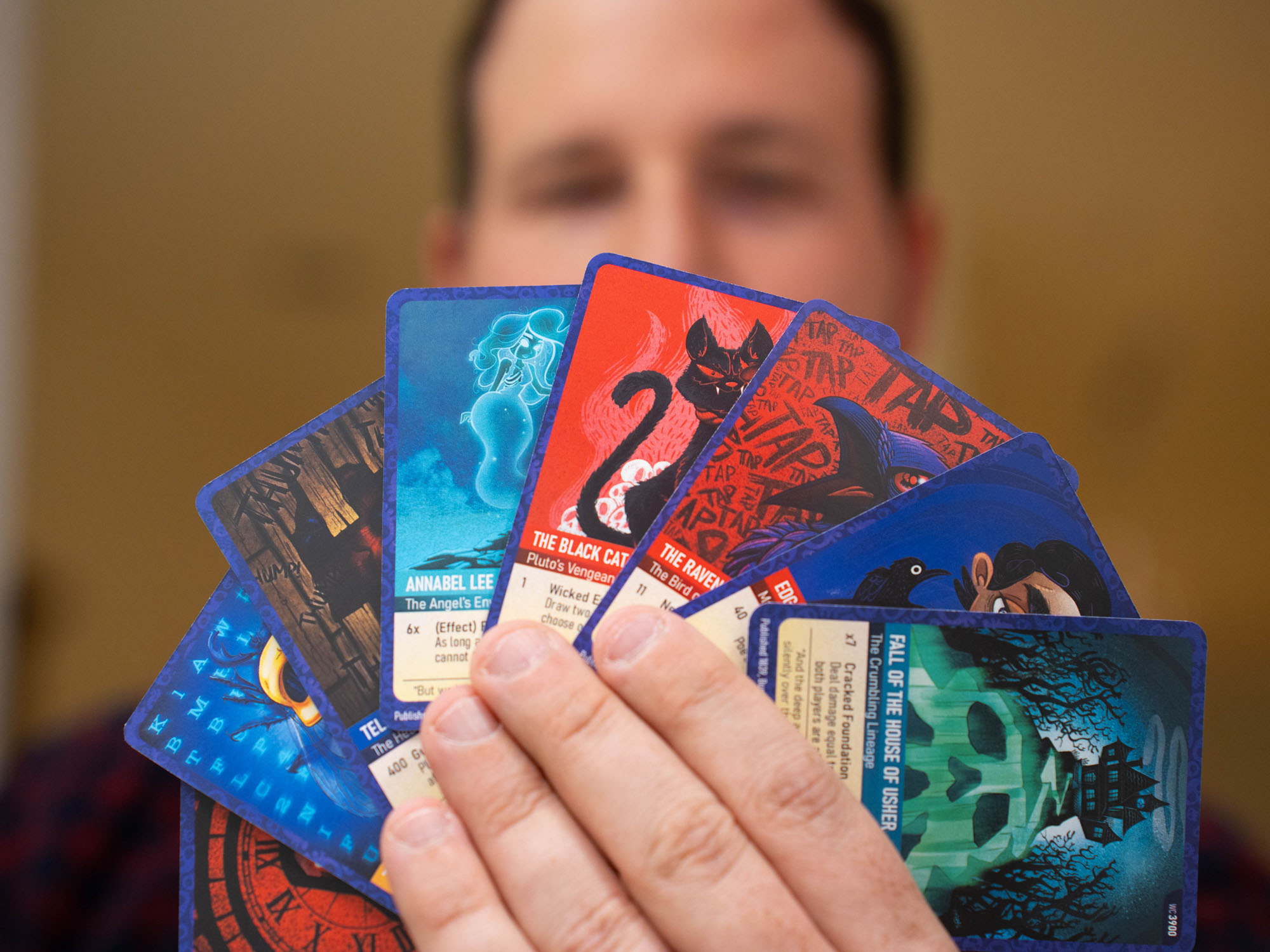
Sean Maykrantz looked to his childhood passions for inspiration for his MFA thesis.
“I used to come home from Taekwondo practice with my dad, and we’d stop at our local High’s and get a Yoo-hoo and a pack of baseball cards,” he said. “I started there, and I started examining the idea of these are collectible trading cards. They’re vehicles to enhance and play card games and board games. But what else can they do?”
That idea grew. Eventually Sean designed his own Edgar Allan Poe-themed trading cards for his final project for the MFA in Integrated Design program at The University of Baltimore.
Sean was able to hand printed versions of his cards to guests of a campus event in October that included a film about Poe. It was a unique experience he loved.

“I’ve been a graphic designer for 15 to 20 years now and it’s always very nerve-wracking,” he said. “I tried not to let people know I did them immediately so I can get that raw, honest reaction, and it was extremely positive. It was extremely cool to see. People were very excited. They were like, ‘Can I have more?’”
Sean started UBalt’s MFA program shortly after the COVID-19 pandemic, calling it “a really good opportunity to re-evaluate.”
A long-time graphic designer for the National Security Agency, Sean found himself wondering how he could keep his skills from plateauing.
Earlier in his career, he started an application to UBalt but never submitted it. After the pandemic, he knew it was the right time to move forward.
Sean was initially drawn to UBalt because of the program’s early focus on creating something tangible.
“It’s almost a dying art now—that physical, tactile, like holding a piece of work in your hand and the creation process of it,” he said. “I also have an illustration background, so I was really interested in combining my passion for illustration with bookmaking and things of that nature.”
The integrated piece was also appealing to Sean as an opportunity to rethink his skills from an interactive and digital frame. He wants to incorporate what he’s learning to better illustrate his workplace’s mission and impact.
“I would love to kind of make that connection and show all the good we can do, as long as there’s proper checks and balances and things of that nature,” he said. “Aside from that, one of my passions as I go further into my career is I eventually would love to help the next generation of graphic designers learn the craft. The MFA program will give me that opportunity to teach at the collegiate level later in my life.”
Sean didn’t initially envision himself pursuing an MFA or having a thesis. UBalt offers an M.A. in Integrated Design, too, and it seemed more manageable for the full-time worker and now father.
But an early meeting with program director Megan Rhee helped him map out his path in a way he could see himself through. At the end of his program, he wanted her on his thesis committee, and she continued to guide him exactly as he hoped.
Through his time in the program, Sean has enjoyed absorbing the lessons because of the variety of perspectives from his professors and peers, particularly how they approach and tackle problems.
“There were just all these new tools that I was able to acquire from all these classes and just the ability to, I don’t want to say fail fast, but they evaluated you based on the chances you took and your thought process and your work,” he said. … “Once you start focusing like I need to get this grade, you’re losing track of what the purpose of the class is, and it’s to grow, it’s to progress.”
In cases when the final product didn’t turn out as expected, Sean said, his professors still found value in the process, and he learned more from that evaluation method because he could identify missteps.
When it came time for his thesis, Sean leaned into his professors’ guidance.
Through his research and design, he wanted to demonstrate that trading cards function not merely as collectibles or game pieces, but as miniature design systems that balance storytelling, functionality and cultural meaning.
“As people play a game, they’ll look at symbols, icons, colors, and it all tells a story without even needing words,” he said. “You’re pairing that with illustration and now they’re integrating into the digital world. So, I was really fascinated with how can we apply this 2 1/2 by 3 1/2 layout and integrate it into other industries like education, business, advertising, marketing and really utilize this small storytelling method?”
As he was forming his ideas, his thesis adviser, Kyle Meikle, told him about an upcoming event themed around Edgar Allan Poe. He presented the opportunity for Meikle to focus his cards on the famed author and distribute them at the event.
Earlier in his program, Sean took a class where he had to take a person from history and rebrand them for the digital age. He had turned Poe into a podcaster, so he already had the breadcrumbs when Meikle approached him.
“Being a Maryland kid my whole life, his influences always come in and out, especially when you’re going through middle school,” Sean said of his affection for Poe.
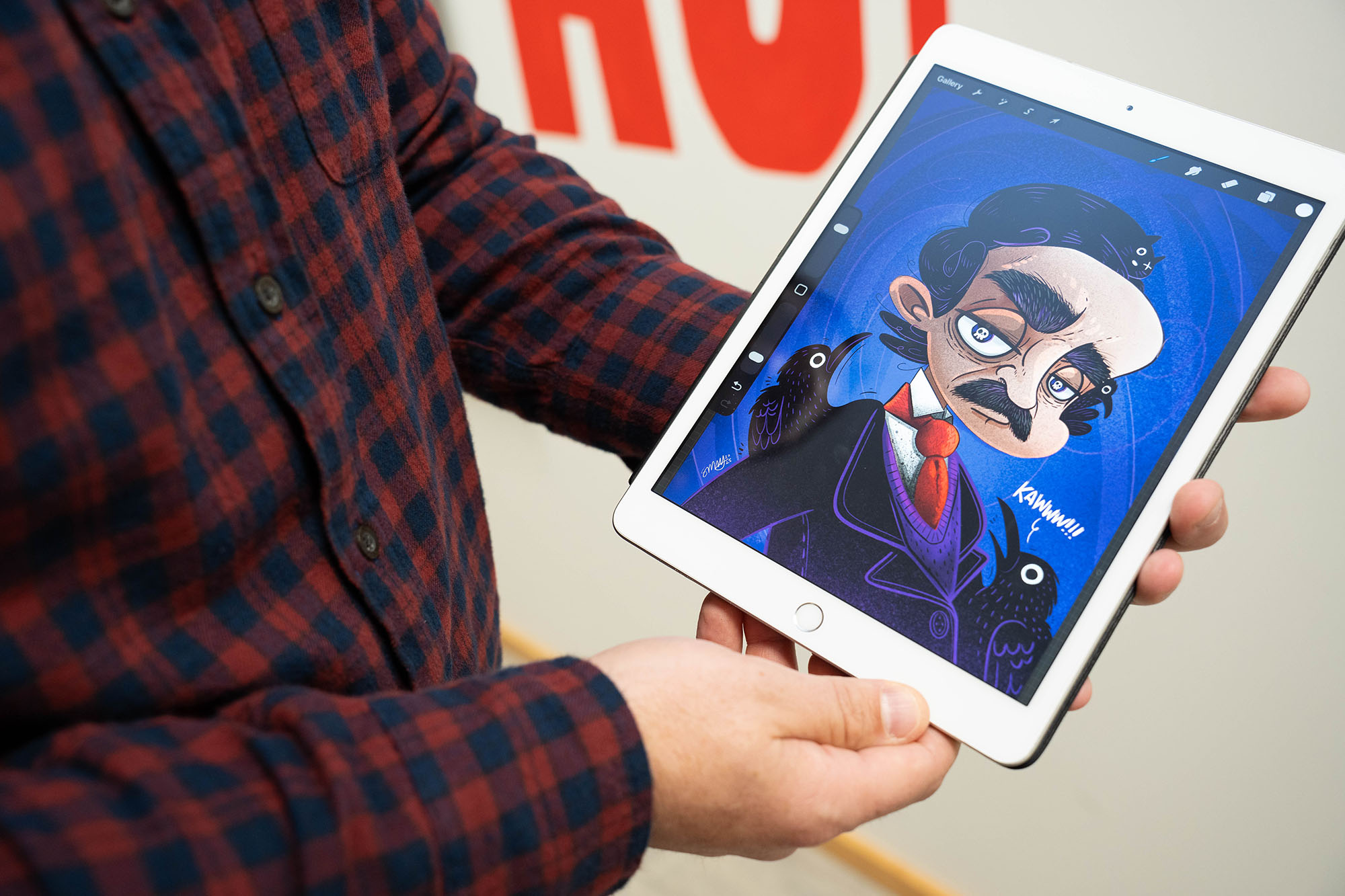
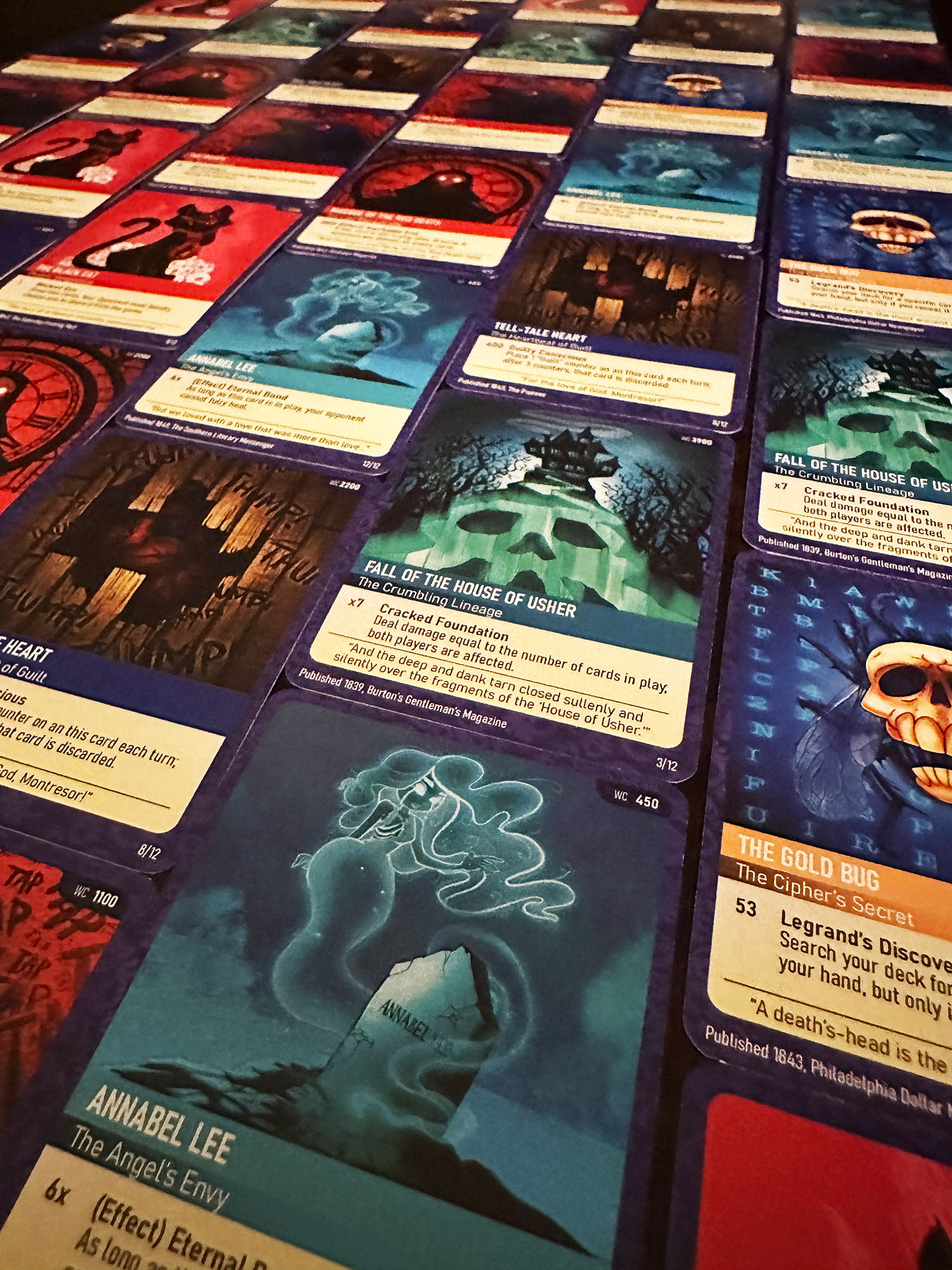
He researched about a dozen of Poe’s influential works, narrowing his choices to eight that would be the basis for his cards. Then he illustrated his cards, keeping in mind existing card collections such as Pokémon and Disney Lorcana.
Sean had some tweaks from typical games for his theme: Instead of hit points—what helps measure health in a card game—his cards noted word count, and instead of element cards, he used colors to indicate whether that card represented a short story, poem, novel or play.
Because card games often have rare collectibles, Sean wanted to mirror scarcity in his own way, and created four holographic versions in his series.
The project gave Sean a new appreciation for Poe and his works, some of which he hadn’t
read until he started his thesis.
“He has so much influential work and there’s some everyone knows—Telltale Heart, The Raven—but he’d made so many other great works that have influence on so many people.”
During the event, a visitor told Sean one of his cards represented a story his grandfather had always read him as a child. The moment deepened the value of the project that all started because of a passion from his own childhood.
“Even in the blandest environments, I try to infuse my passion, my joy for graphic design, my joy for storytelling, into whatever I do,” Sean said. “Whether that’s an infographic about government jobs or an illustration about ADHD and kids, you’ve got to find ways to infuse your passion into it and make it enjoyable for everyone. And I think that’s infectious, and people want to be around that kind of environment.”