

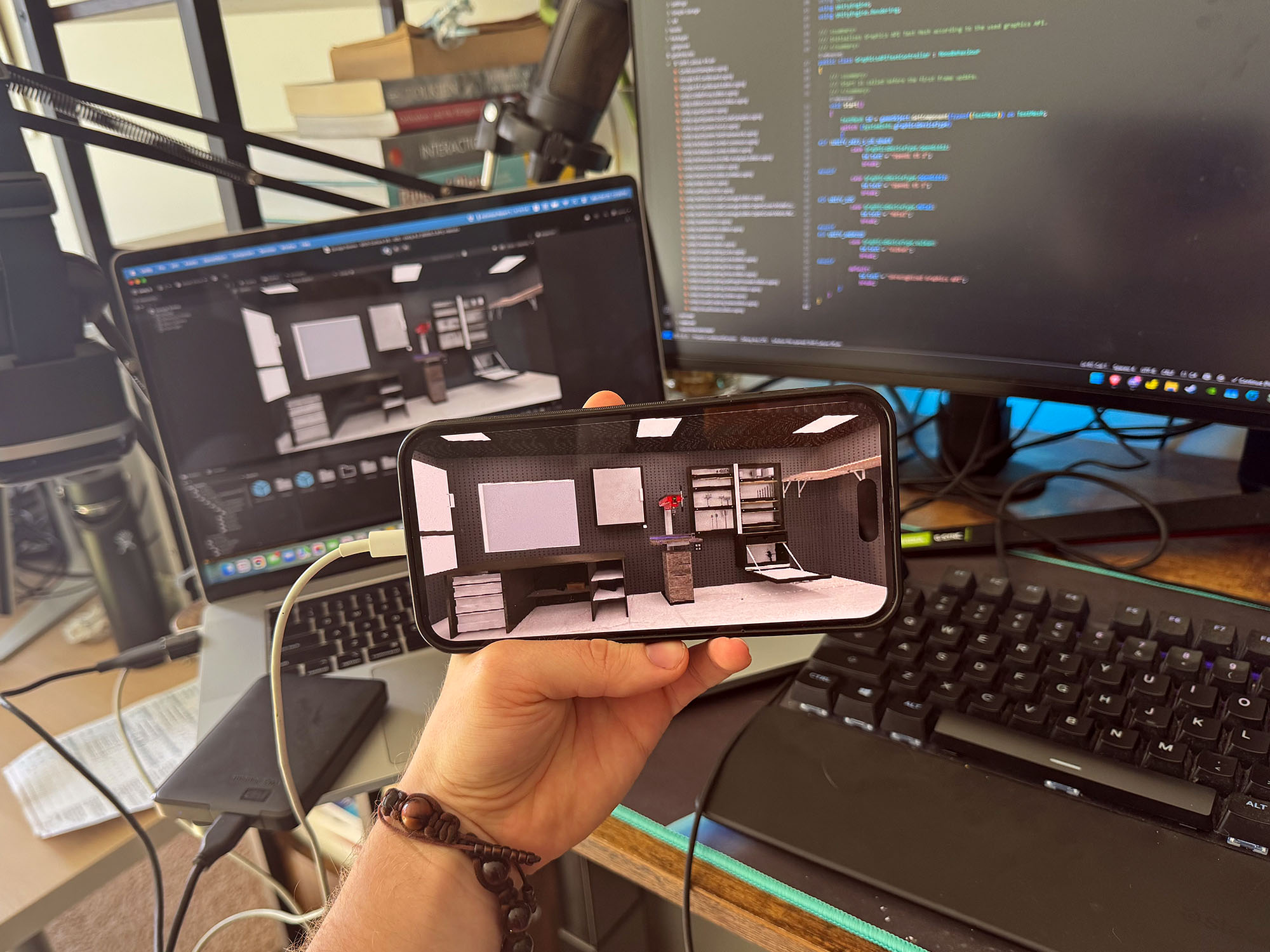
Every fall, Dr. Elka Cahn invites her students to face a challenge with a cause.
They connect with a client, usually a local nonprofit, and have a few weeks to get to know their mission and goals. Then they spend the rest of the semester developing a game that client can use to serve their mission.
It’s a tall task for students typically only midway through the B.S. in Simulation and Game Design program at The University of Baltimore. But those up to the challenge get to support their community while gaining invaluable real-world experience.
“The challenge is meeting the client needs, while also creating something that is within your skillset, or grows your skillset, and is realistic for the timeframe that you have,” Cahn said.
Community Partnerships
Cahn has been teaching GAME 477, Community-Focused Game Design, at UBalt for about eight years. This past fall marked the first time that Cahn earned a special service-learning designation for the course.
As the University leans into its commitment to community engagement in and around the city of Baltimore, faculty are finding ways to fulfill the greater community’s needs through their students’ coursework. Limited grant funding has supported supplemental materials, travel and other needs to facilitate the partnerships.
Cahn tries to pick a new community partner each time. She most recently selected B-360. The Baltimore nonprofit leans into dirt bike culture to give city youth a pathway toward STEM learning and positive community connections.
Her students met with B-360 staff, including UBalt alum, Desja Wilson, B.S. ’25, CERT ’25. After learning about the organization during one of its events, the students set out to create games that they would give to B-360 at the end of the semester.
A partnership between UBalt and B-360 was something Wilson had hoped to make happen since her first semester. The organization wanted to use games as an education platform. Finally seeing the partnership come to fruition and watching the students develop their ideas was exciting, she said.
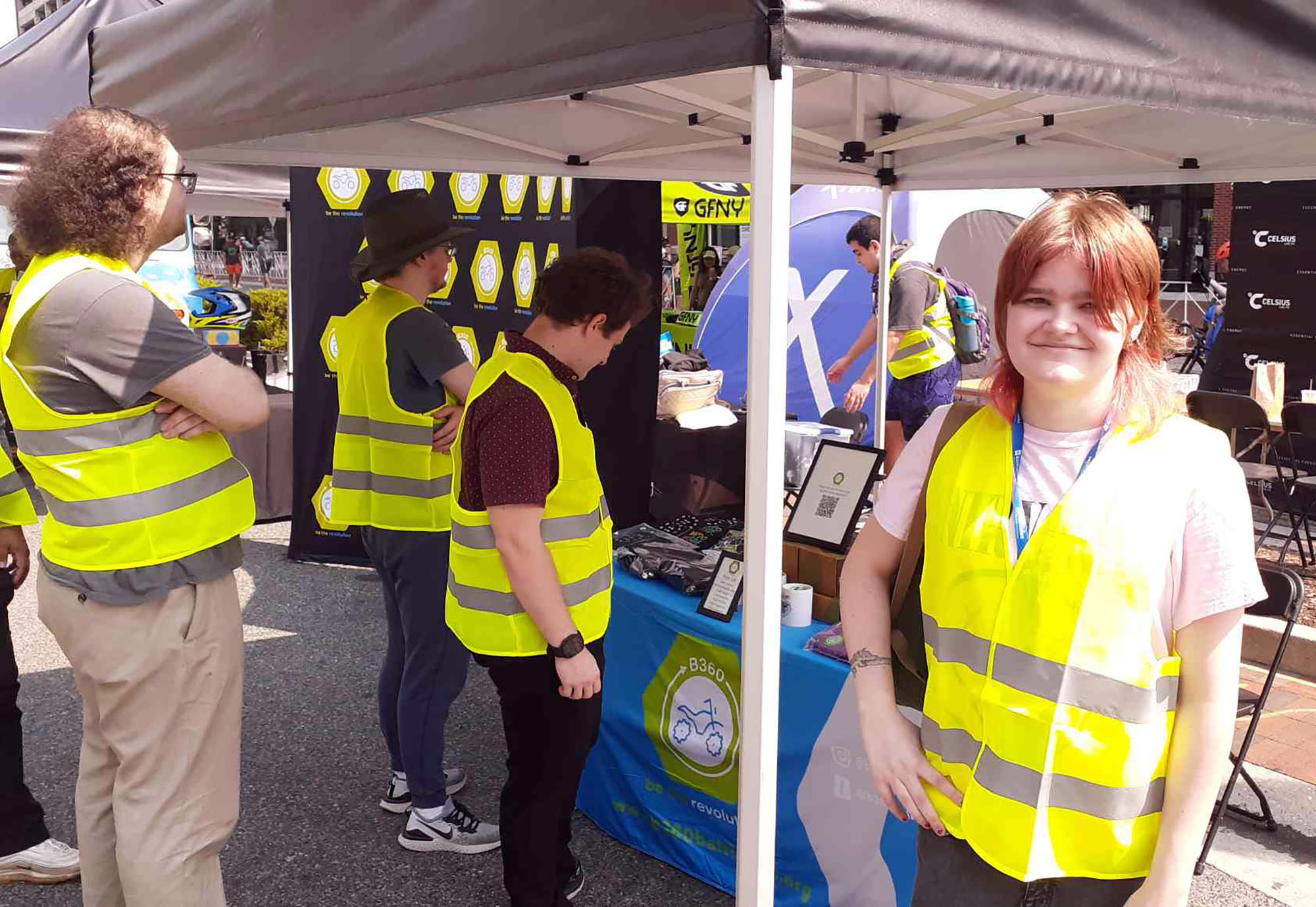
“Not only did we get a chance to come to the school and do hands-on activities, but we got to see the students create something relevant to our work and our impact,” she said.
Wilson said she loved the idea of UBalt students collaborating with community organizations like
her own.
“I think the organizations have something to offer just as well as the students have something to offer to the organization,” she said.
The game design students, split in three groups, did a soft pitch of their game plan to Cahn. Then they presented their ideas to B-360 staff for feedback.
The games mixed play with educational pieces, such as teaching dirt bike parts, tools and safety.
Cahn said the students are responsible for building the game themselves with limited guidance. Some students struggle with the concept initially, she noted, but grow over the 15 weeks into better designers and better students of the craft.
“They really benefited from having an exterior project,” she said at the end of the semester. “They really pushed themselves. They really learned a lot. They learned how to communicate. They learned how to ask questions. They learned how to articulate their own work.”
Overcoming Obstacles
Some lessons are hard to come by but pay off in the long run, Cahn said.
“One of the struggles that some of our students had in the beginning of the semester was that they didn’t know how to articulate how they would be able to meet the client needs or ask the questions they needed to ask,” she said. “And I felt that I did see growth in a lot of students, both in articulating their own work and ideas, as well as learning how to ask the questions that would get them the information that they needed in order to make changes and in order to do the work that they needed.”
Felipe Rios’ team pitched a game that invites players to learn about the parts of a bike as they build it. Then they could test drive their creation.
He appreciated learning in real time how to build a game from nothing. He relished in the challenge of creating something within their means that the client can value.
“It's nerve wracking, to be honest, because there's a different kind of pressure, making for yourself and making for other people. There's a creative pressure to put out something good and that really speaks to you and that you're capable of doing,” Rios said.
One of his team’s goals was to make a game that could live online, so anyone who could get to a computer, whether at home, at school or in a library, could access the game.
Georgi Tsvetanski’s team took the challenge to another level when they pitched a virtual reality game. The team dedicated a lot of time to ensuring the game met the client needs and was playable on an affordable mobile VR setup, such as a Google Cardboard-style headset, he said.
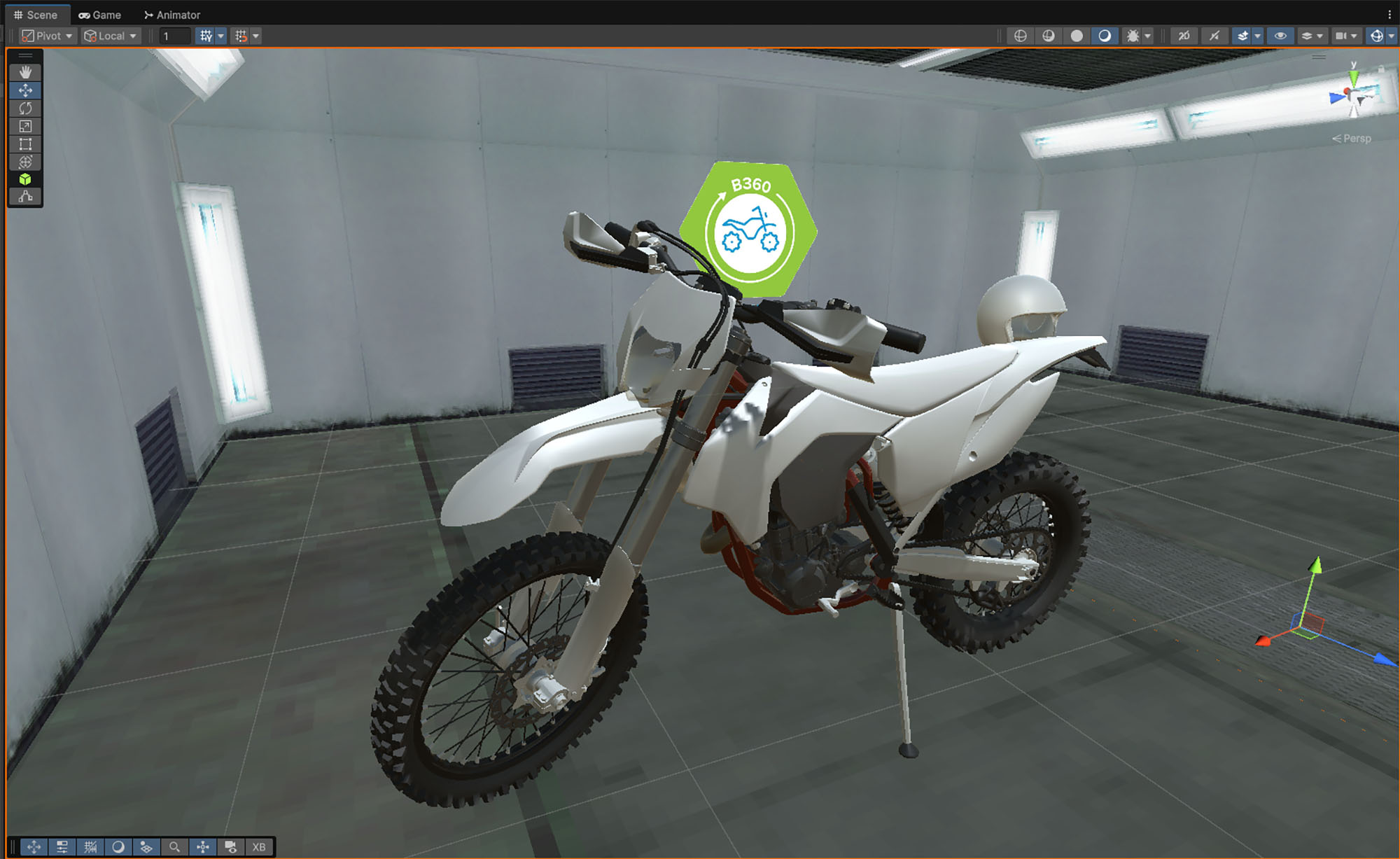
“Our final in-person meeting with B-360 was especially helpful,” Tsvetanski said. “We showed them our working prototype, gathered their reactions and talked about how they might use this in real workshops. Their feedback was helpful, and their excitement, when they first play-tested it, truly motivated me and my team and reminded us how our hard work makes a difference.”
His team’s game puts the player in a workshop where they can inspect a dirt bike to understand parts and placement. They can also test drive their bike with a view that looks like they’re really riding one. Throughout the game, players are challenged with quizzes to help them learn as they go.
Tsvetanski was excited his team could present a game they were proud of and was influenced by the staff’s feedback.
“It changes how you think about design. It’s not just about what is fun—it’s about what is
useful, accessible and meaningful for the group you are serving, while still being fun!” he said. “Working with B-360 also gave me insight into how technology, education and community outreach can intersect. … I feel better prepared for future collaborative work that involves clients, community organizations and real constraints.”