

The task seems simple yet is anything but.
Dr. Tiffaney Parkman challenges students in the final stage of their B.A. in Human Services Administration program to put all the skills they’ve learned to practice into one community event.
For her summer students, a small cohort working against a shorter semester, Parkman provides the partner. From there, every step lies in the students’ hands.
This summer’s class soared.
Arkia Wade, founder and CEO of the partnering organization, said if she could opine on their grade, “A++++ is what I'm recommending.”
Engaging With Baltimore City
This marked the second summer Parkman’s University of Baltimore students partnered with Neighborhood Companions, which Wade started to foster connection, companionship and transportation for Turner Station-based seniors.
Partnerships like this are just one example of the University’s continued commitment to community engagement.
UBalt received a 2026 Carnegie Elective Classification for Community Engagement, recognizing its effort to weave service-learning opportunities like these into its courses and programs.
The impact of Parkman’s course has rippling effects that last after her students graduate. One past project revamped a campus lactation room to make it more welcoming. Another set the foundation for what would become the University’s Campus Pantry.
Both this summer and last, the students have taken over Neighborhood Companions’ Second Sunday Supper. The monthly event is designed to combat isolation and loneliness among area seniors.
They not only have to plan and execute a dinner but also create an engaging presentation around a relevant topic. Last summer, students focused on scams targeting older adults. This summer’s topic was emergency preparedness.
“There has to be an intervention of sorts,” Parkman said. “The seniors or the participants have to leave with something, not just knowledge, because who wants to just come and listen to someone talk?”
Under Pressure
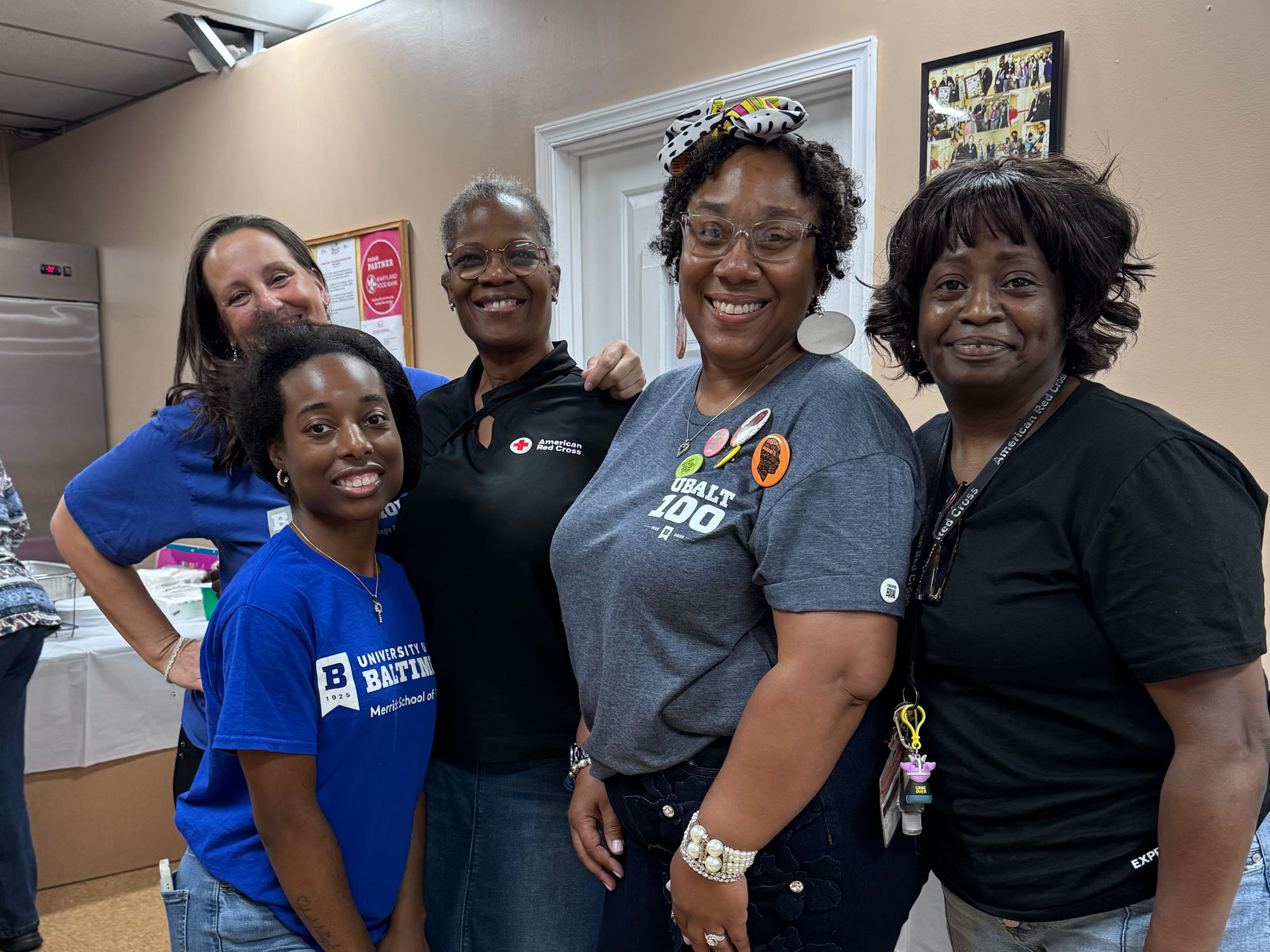
The Human Services seniors, Patrice Brown, Lynnia Hurt, Sara Citroni and Rita Bogan, relied on their experiences and each other to make the event the success it was.
They secured a Red Cross volunteer to offer a presentation to supplement their own. They raised funds to provide a full-service dinner, complete with linen tablecloths and centerpieces, for about 50 people.
They provided informational handouts, made raffle baskets and offered giveaways, including a flashlight to have something relate back to the presentation topic. They raised enough money to present a donation to the nonprofit at the end of the event.
Brainstorming what the event could look like and include was fun for the group, who were familiar with each other from past program classes.
The students were texting throughout the semester—eight weeks from start to finish—to avoid gaps in dialogue.
“We had to get quotes from the food vendors. We had to figure out what type of food we're going to have. We had to figure out a suitable menu for the age population that we're going to be targeting,” Hurt said.
Fundraising was one of the more difficult aspects of the assignment. They set a goal of $1,000. It took a lot of repeat asks, but they reached their goal with a few weeks to spare.
“I am so proud of us,” Hurt added. “We really pushed to make it happen.”
'A Love For People'
Supporting the community through a collaborative effort is a benefit of the senior seminar, Parkman acknowledged, but learning through each other’s strengths while building on your own skillset is a key point.
Roughly 60 percent of the students in UBalt’s Human Services Administration program are already working in the field, she said. Often their goal is a promotion in their current role. Sometimes they want to start their own nonprofit.
“They have a love for people and for systems that are designed to help people, and they want to either be hands-on in doing that or working indirectly to support systems that help families and individuals,” Parkman said.
A culmination of the program, this class helps students see and test how much they’ve learned.
Sara Citroni, one of four seniors, works as director of peer services for a nonprofit called Prepare, which focuses on parole and re-entry for incarcerated individuals.
She’s used to working behind the scenes and appreciated the opportunity to be more involved. Projects like this were the exact reason she wanted to pursue a bachelor’s degree even though she already had a full-time job.
“I think, to me, it's been a big learning experience,” Citroni said. “It’s helping me to grow as a person.”
Supporting Our Neighbors
Wade relies on a lot of community support, colleges and otherwise to keep her small organization going. When Parkman told her she was looking for nonprofits for her students, Wade was happy to make the connection.
“It’s a game changer for me, because it's just myself and really a part-time person that are running the day-to-day operations,” Wade said. “For us to have a break where we don't have to plan the Second Sunday Supper, where we don't have to expend any cost, it’s a free month for us, essentially, and that goes back into our budget to do other things for older adults.”
Watching the students arrange tables to make the space welcoming left Wade impressed with the extra level of care.
And so was the audience. Wade said she received calls the next day from seniors sharing their gratitude for the students’ effort.
“It was a lovely experience, and for my organization, what a wonderful gift for us. I can't say enough,” Wade said.