

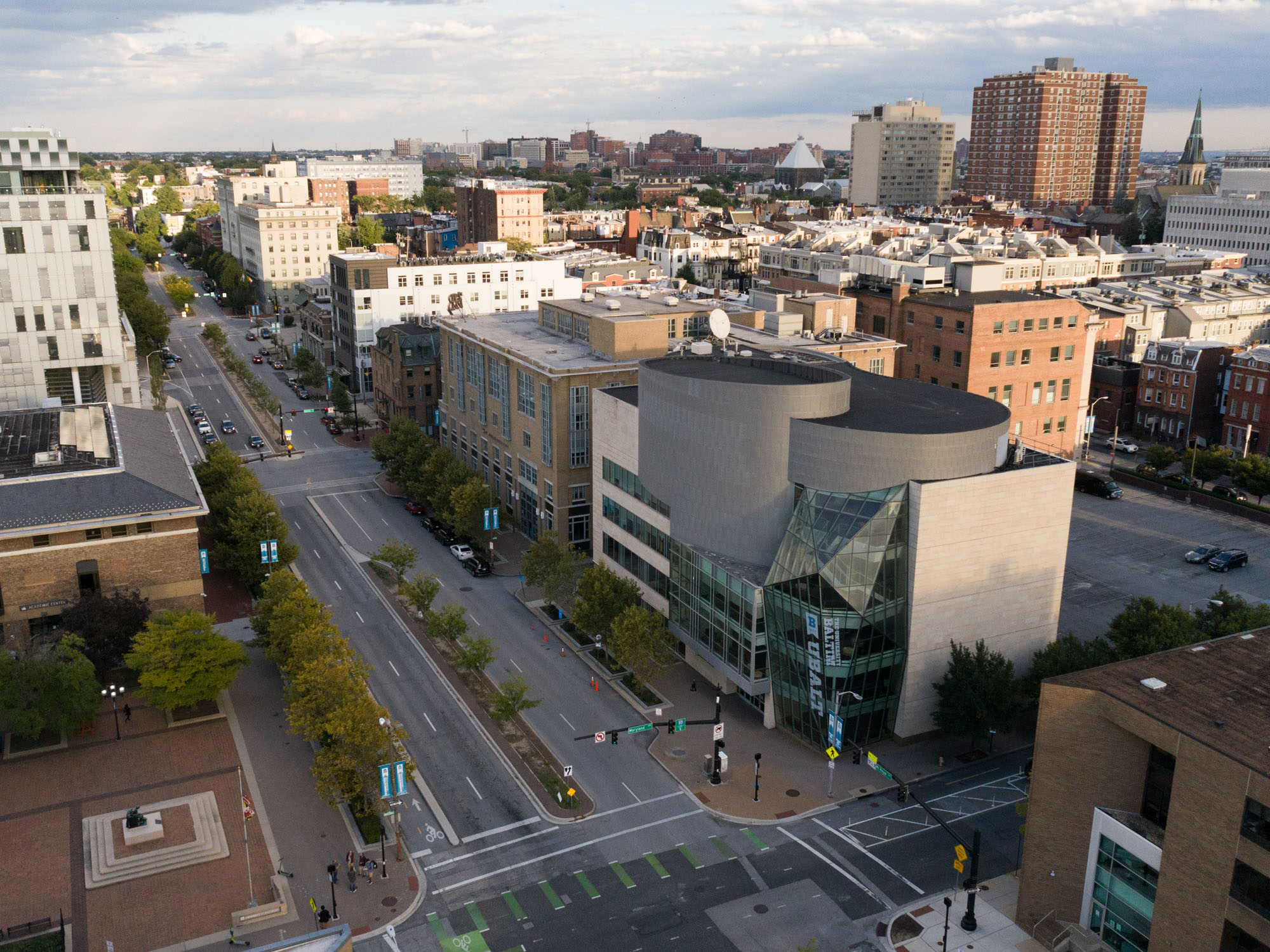
For Baltimore, 2024 was a turning point: The city marked another year of declining homicides, a trend that continues to the present day. Baltimore has entered an era shaped by a clear strategic vision, one built collaboratively by local leaders, communities, and wide network of partners, for how the city might evolve and improve in the years ahead. Achieving this vision requires new metrics, new approaches to collect people-centered data, and develop new goals. With Vital Signs 24, an annual report by the Baltimore Neighborhood Indicators Alliance – Jacob France Institute (BNIA-JFI) at The University of Baltimore, the city has the tool to write its next chapter.
Vital Signs 24, released on June 17, tracks more than 110 indicators that take the pulse of Baltimore’s communities. As it always has, the project explores neighborhood-level trends across eight different topic areas. This year’s report speaks both to the resilience and future of Baltimore's communities.
"Vital Signs stands as a reminder of the utility of data that is gathered intentionally, aligned with community priorities and negotiated formally through memorandums of understanding and data sharing agreements," said Dr. Amanda Phillips de Lucas, director of the Baltimore Neighborhood Indicators Alliance – Jacob France Institute. "Through these networks of people and systems, our indicators provide a trusted reference to understand trends and imagine new futures for Baltimore's neighborhoods."
For some measures, resilience means returning to a pre-pandemic baseline. For example, 2024 marks the first time since 2021 that the number of businesses in the city’s creative economy rose. Increases in this indicator were strongest in areas such as Midtown and Downtown/Seton Hill, two Community Statistical Areas (CSAs) with robust creative economies that experienced profound disruptions resulting from the COVID-19 pandemic. Progress also continues in Baltimore's schools, as educators, administrators, families, and communities work to reduce chronic absenteeism. While reductions for elementary, middle, and high schoolers were somewhat small, most CSAs saw declines in this measure.
Other indicators required reevaluation. This year, Vital Signs sees the return of the Children and Family Health chapter following a five-year gap due to data availability. The chapter includes updated data from 2020-23 on births, maternal health and prenatal health care. Methodology for calculating some indicators has shifted to respond to high margins of error in population estimates for some areas of the city.
Vital Signs stands as reminder of the utility of data that is gathered intentionally, aligned with community priorities, and negotiated formally through memorandums of understanding and data sharing agreements. Through these networks of people and systems, BNIA-JFI's indicators provide trusted reference to understand trends and imagine new futures for Baltimore's neighborhoods.
The full report―Vital Signs 24’s chapters, visualizations, and maps―is available for review on BNIA-JFI’s website.
An executive summary of key findings detailed in the report’s introduction is also available here.
Data described in Vital Signs 24 are available for download through the open data portal.
Baltimore community and neighborhood groups are invited to find out more about Vital Signs indicators pertaining to their neighborhoods. Send an email to schedule a virtual or in-person presentation.
The University of Baltimore is a member of the University System of Maryland and comprises the College of Public Affairs, the Merrick School of Business, The University of Baltimore School of Law and the Yale Gordon College of Arts and Sciences.