

What does it mean to be an excellent educator in 2026?
At SXSW EDU this past March, Ted Mitchell of the American Council on Education described faculty “who identify themselves with the project of transforming students' lives.” It's a deceptively simple idea that reflects CELTT's entire mission.
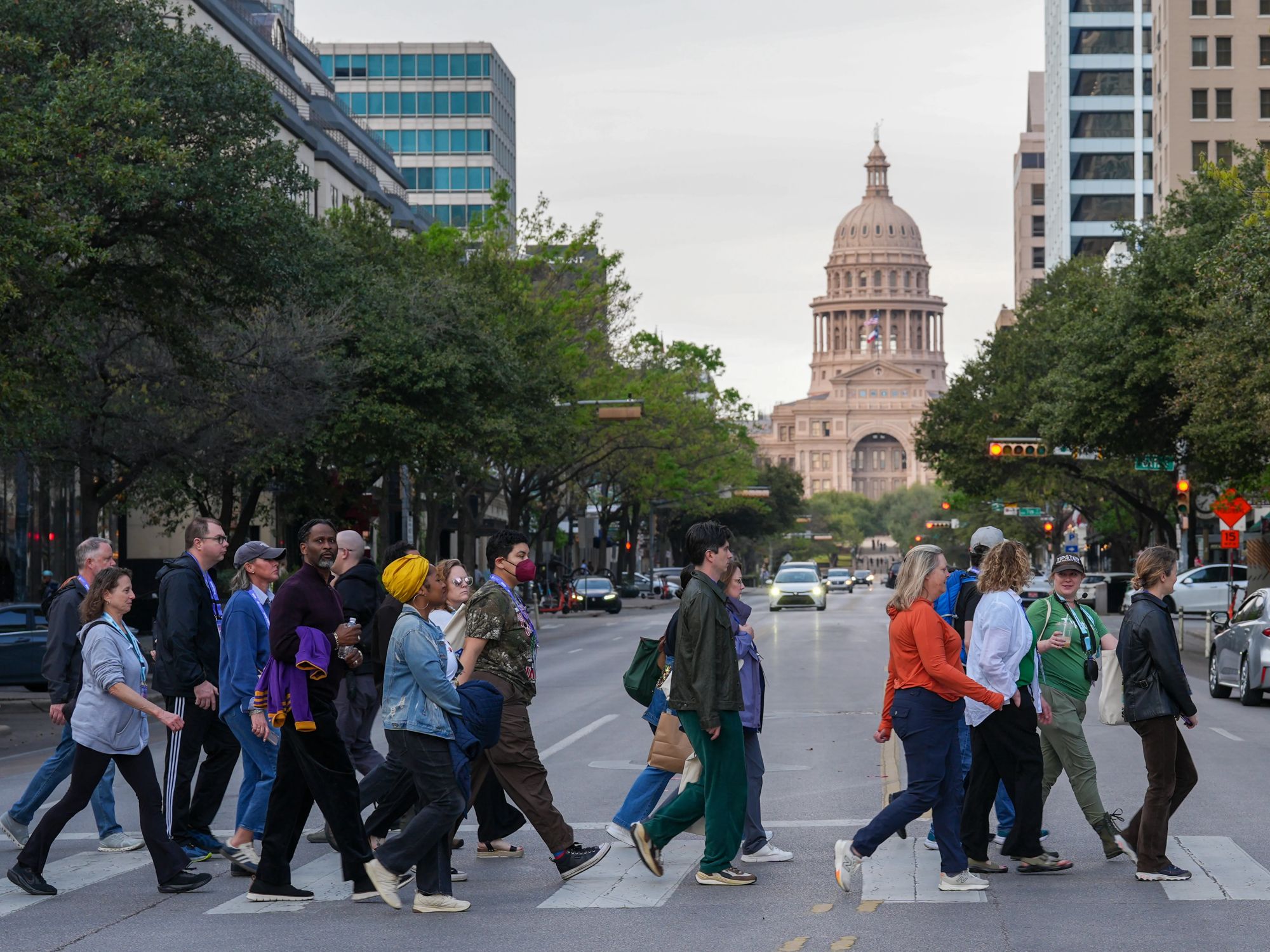
Every March, thousands gather in Austin, Texas for SXSW EDU, a conference dedicated to transforming education through collaboration, experimentation, and emerging technology. I first attended this conference after joining CELTT in 2023, still finding my footing in a new role and a new institution. The following year, I returned as a Roundtable Mentor. This year, I came back in my most expansive role yet as a 1-on-1 Mentor and Meet-Up Presenter, representing UBalt and CELTT in national conversations about the future of teaching and learning.
What follows are three moments from the conference that I keep coming back to, each one a different lens on the same essential question: how do we better support faculty so they can better support students?
One of the privileges of returning to SXSW EDU as a Mentor is the intimacy of those conversations. Mentoring is a two-way street, and this year I found myself learning just as much as I was sharing.
Over the course of my sessions, I met an author-turned-instructional designer curious about higher education, a university director of instructional design exploring how research can deepen faculty support, a post-doc designing AI tools built specifically for faculty, a librarian building a primary source repository faculty would actually trust and use, and a game designer working to make interactive learning approachable for faculty.
That last conversation really stayed with me. As someone who considers herself a gamer, I felt an immediate connection. What impressed me most was her awareness that what feels intuitive to her might feel completely foreign to a faculty member who has never played a roleplaying game. She wasn't trying to convert anyone. She wanted faculty to feel invited to the table, genuinely excited about what they were trying, rather than just going along with something handed to them.
These people understood that if their work didn't resonate with faculty, it wasn't going to help students. Sitting across from them, I kept thinking: this is exactly why CELTT exists.
I met Karen McGregor, Executive Director of Student Success at Purdue Global, and Justin Thomason, Assistant Director of Residence Life at Central Michigan University, early on Day 1 and found ourselves attending many of the same sessions throughout the week. Creating that kind of serendipity over one week is what SXSW EDU does best.
Their workshop, Beyond Handouts: Building a Culture of Basic Needs Support, made the case for moving institutions from reactive crisis response to proactive, community-wide support for students facing basic needs challenges. The core premise: culture change spreads through participation, not top-down mandate. Initiatives that depend on a single passionate champion are "one resignation away from collapse."
What resonated most was how closely this maps to the work we've already been doing
at UBalt. The tiered badging framework they introduced for recognizing educators' commitment to student support is the same philosophy behind
our Teaching Excellence Framework and TEF-LEAD Program. It was refreshing to see it
reflected somewhere else.
Some sessions you attend. Some sessions stay with you. Redefining Success: A New Social Contract for Higher Ed, featuring Ted Mitchell and Timothy Knowles of the Carnegie Foundation, was the latter.
Their argument was urgent and clarifying: higher education has been measuring the wrong things for too long. Carnegie units, credit accumulation, and seat time, for example, tell us how long students were present, not what they became. The case they made was for a broader definition of student success centered on essential skills like communication, collaboration, critical thinking, curiosity, resilience, and work ethic. These determine whether a graduate can actually navigate what comes next.
For those of us in teaching and learning, that's not an abstract argument. Faculty need to be supported to teach toward these capacities, and that takes more than a good syllabus. That's what CELTT is here for.
So what does it mean to be an excellent educator in 2026?
It means showing up as a conduit for student success, not just a deliverer of content. It means being supported well enough to take risks, try new approaches, and grow alongside colleagues. And it means working within institutions that invest in that growth intentionally and sustainably.
That's the work CELTT does every day at UBalt. We SEEK knowledge and shared perspectives. We LEARN continually, from mentees who teach us as much as we teach them. We GROW in community through frameworks like TEF-LEAD. And we SERVE others, because behind every conversation, every workshop, every session, there is a student whose success depends on the quality of support their faculty received.
SXSW EDU 2026 didn't give me new answers. It gave me new confidence in the ones we're already
building together.
This blog post was developed with the assistance of BoodleBox (Model: Claude 4.6 Sonnet) before publishing on April 8, 2026. The AI was used for brainstorming, structural feedback, and editorial refinement. The final text was written, reviewed, and edited by CELTT staff to ensure brand alignment and accuracy.
Curious about what I learned specifically about AI at SXSW EDU? Look out for a deeper dive is coming soon from CAILI.