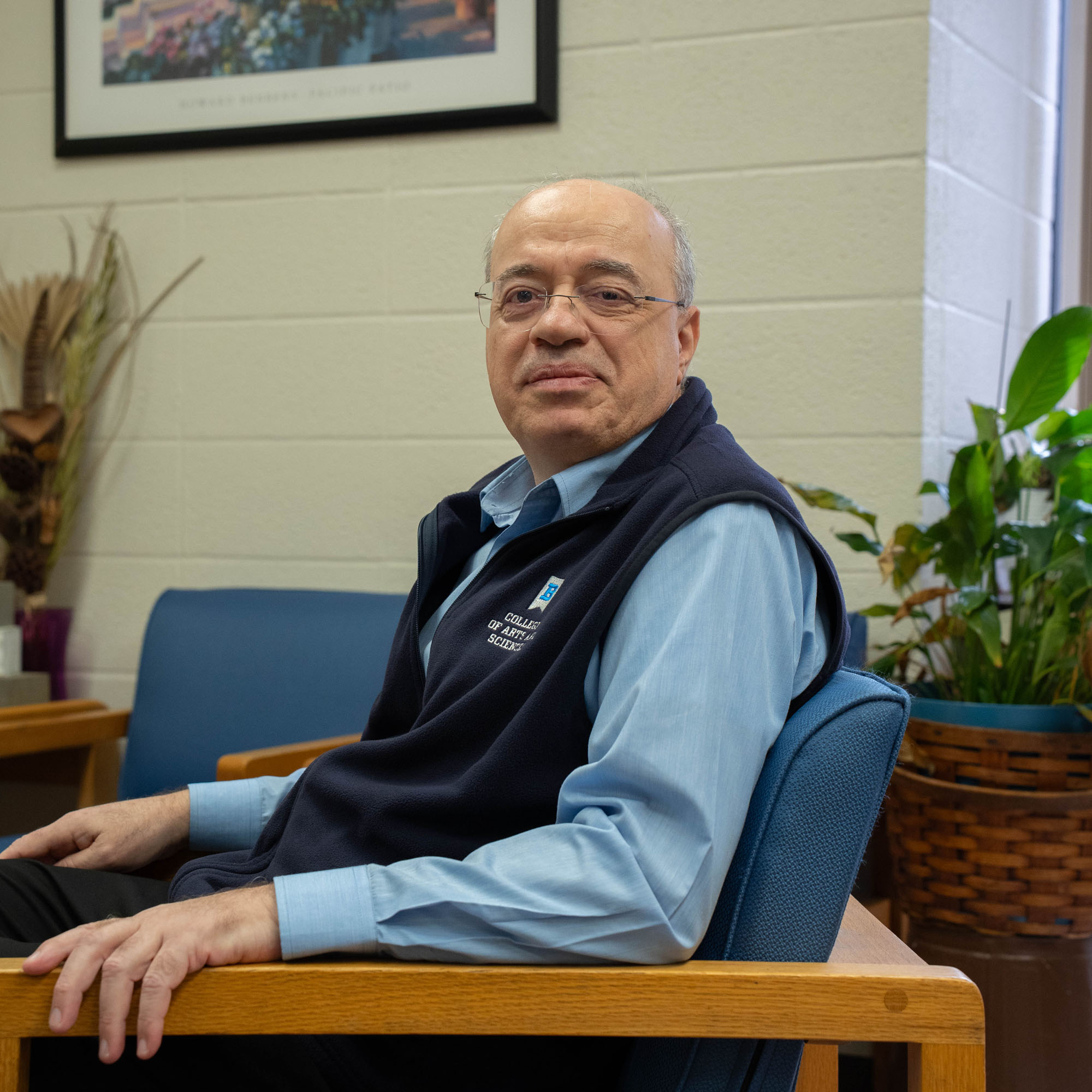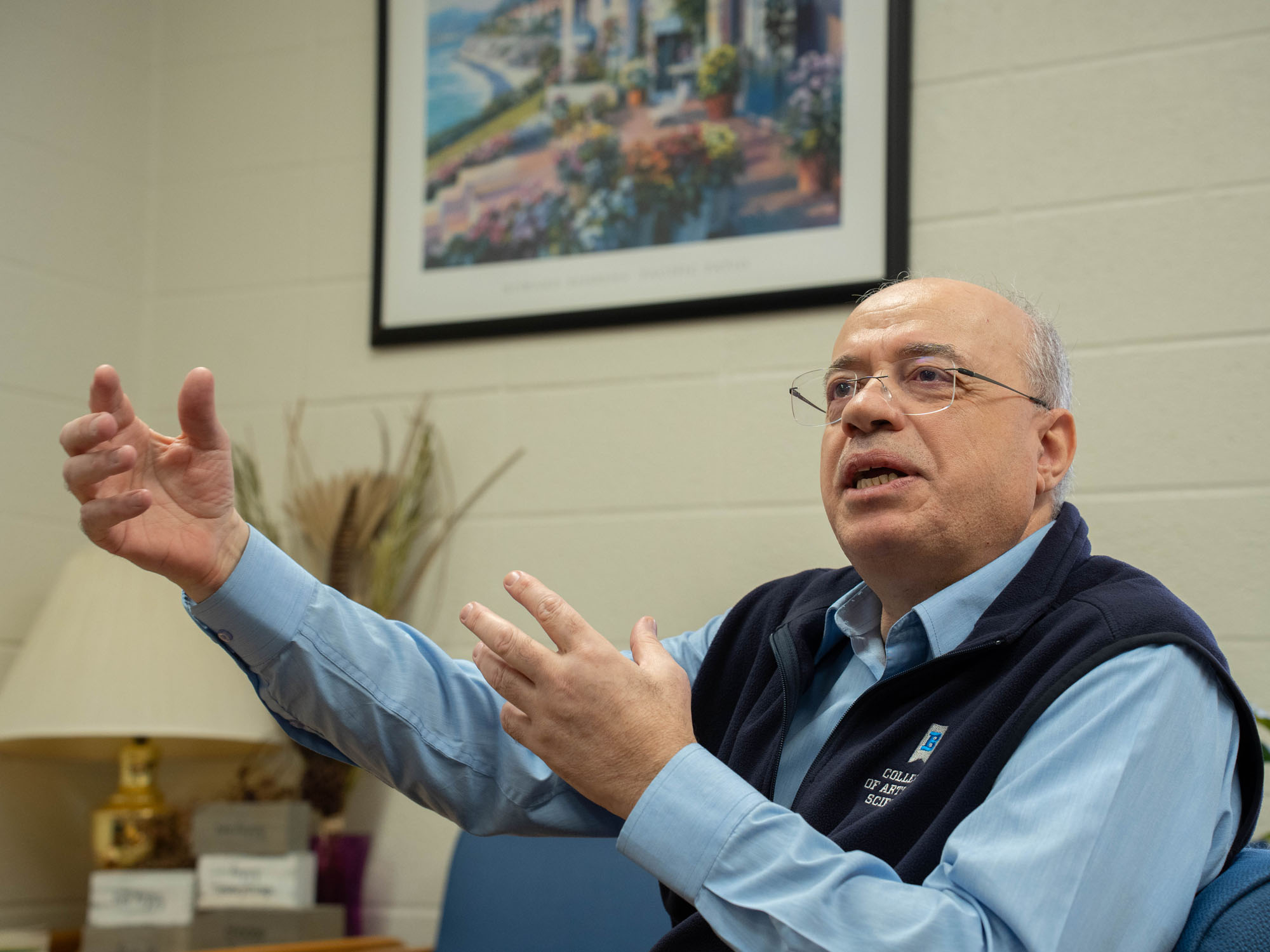
Dr. Haitham Alkhateeb, a professor and director of mathematics at The University of Baltimore, grew up believing in the value of education, and has dedicated his life to celebrating it, improving it and making it accessible to all.
Haitham’s research focuses mainly on teaching and learning in higher education. His work can be found in international journals and publications. His work inside the classroom and beyond its walls have brought Haitham much recognition. He has taken up appointments, including positions with the Mathematics Advisory Council of Transforming Post-Secondary Education in Mathematics (TPSE MATH) and the Governor's Commission on Middle Eastern American Affairs-Maryland, and has won multiple awards, including a 2024 Distinguished Achievement Award in Service from the Yale Gordon College of Arts and Sciences and a 2023 Governor’s Citation in appreciation for outstanding services to the citizens of Maryland.
He shares his love for UBalt with his family. Four of his daughters earned degrees at the University—Bataul, B.A. in Psychology, Rasha, B.A. in English and MFA in Creative Writing & Publishing Arts, Ayal, B.A. in Environmental Sustainability, and Maram, B.A. in Criminal Justice—and gone on to pursue higher degrees. His fifth daughter, Layan, is currently a B.A. in Policy, Politics and International Affairs student, and his son, Amir, is a high school student with his hopes set on attending his father’s University.
In his 13th year at UBalt, Haitham sat down for an interview to share more about his experiences here and what his research and teaching means to him.
Q: Your recent paper, “Motivation and Learning Strategies of University Students in a Self-Paced Developmental Course,” marks your 60th published work. What drives your passion for research, and how do you see your scholarship influencing the field of mathematics and statistics education?
A: My passion for research is driven by a desire to better understand how students learn and what helps them succeed, especially in mathematics and statistics, where many students face anxiety and barriers to persistence. Reaching my 60th published work is meaningful not as a milestone, but as a reflection of a long-term commitment to improving teaching and learning through evidence-based practice, meaning the use of data, empirical research and systematic analysis to inform instructional decisions rather than relying solely on intuition or tradition. My research often emerges directly from the classroom, where questions about student motivation, learning strategies and equity naturally arise.
I see my scholarship as a bridge between research and practice. By examining factors such as motivation, self-regulation and learning strategies, I seek to provide instructors, curriculum designers and academic leaders with concrete insights that can guide course design, instructional strategies, assessment practices and student support structures in both developmental and college-level mathematics. Ultimately, I hope my work contributes to more inclusive, student-centered approaches to mathematics and statistics education and encourages educators to make data-informed decisions guided by empirical evidence, student performance data and systematic observations of learning outcomes to improve instruction and support for all students.
My research shows that motivation and effective learning strategies, such as goal setting, reflection, and managing test anxiety, strongly influence student success. Encouraging students to recognize the value of what they are learning, set goals, reflect on their progress and approach problems strategically can make a significant difference.
 Play Video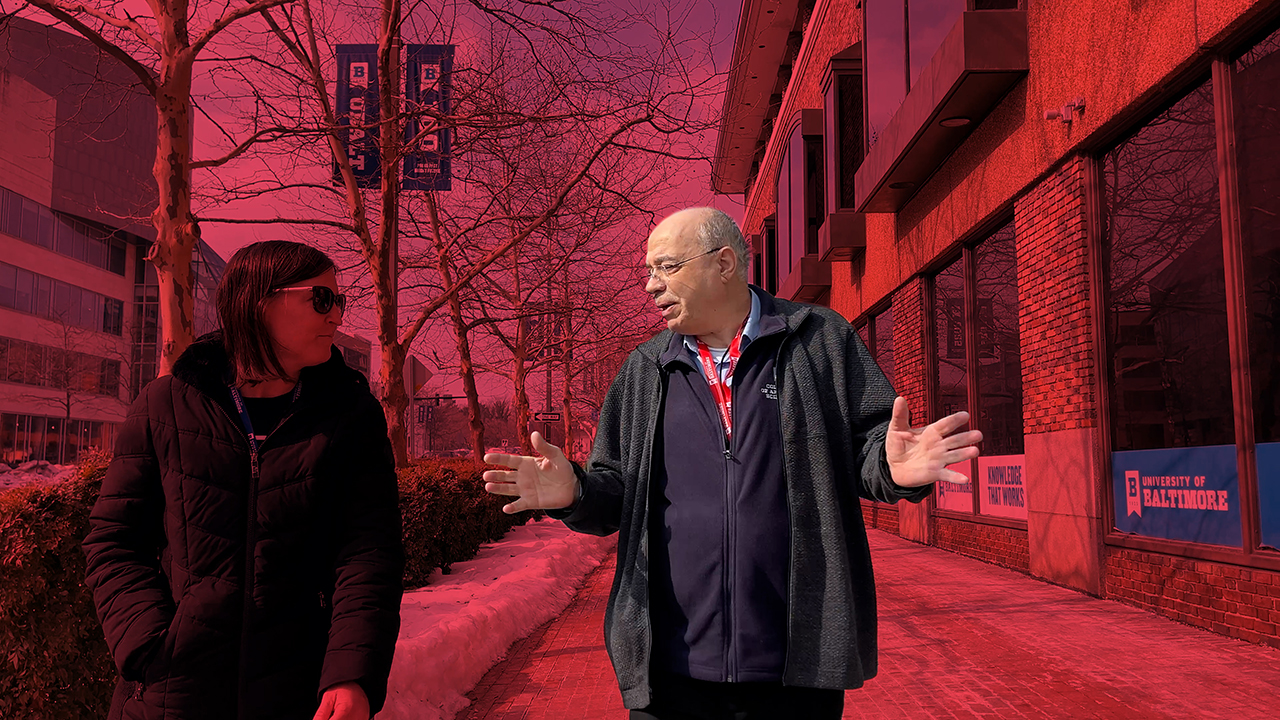
Q: You received the Accessibility Inclusion Fellowship from the National Federation of the Blind to develop accessible courses and integrate nonvisual teaching methods. What inspired you to focus on accessibility in your teaching, and what impact do you hope this work will have on students?
A: Accessibility has always been important to me because my teaching sits at the intersection of equity, learning and opportunity. As director of the mathematics program at UBalt, I work with courses like Introductory Statistics that serve a wide and diverse student population, many of whom are fulfilling general education requirements. I became increasingly aware that traditional, highly visual approaches to teaching mathematics, such as graphs, charts and data displays, can unintentionally create barriers for students with visual impairments and other access needs. In 2024, I was honored to receive the Accessibility Inclusion Fellowship, a one-year program awarded by the National Federation of the Blind (NFB), which gave me the opportunity to rethink how statistics can be taught using nonvisual and inclusive methods from the ground up.
My goal is to design courses where accessibility is built in rather than added as an afterthought. By using clear and consistent course organization, properly structured headings, descriptive text for images and graphs, and tables that are formatted for screen readers, I ensure that students can access course content regardless of how they interact with it. In addition, I provide multiple ways for students to engage with data, such as written explanations, verbal descriptions and hands-on analysis activities, so that learning is not dependent on visual interpretation alone. I want students to understand that accessibility is a shared responsibility among instructors, institutions and learners. This means being mindful of how materials are created, how information is communicated and how learning environments can be improved to support everyone.
Q: You attended the Winternational Embassy Showcase in Washington, D.C., which celebrates cultural diversity. How do experiences like this shape your approach to teaching and connecting with students from different backgrounds?
A: Experiences like the Winternational Embassy Showcase remind me of the richness and diversity of cultures, perspectives and experiences that students bring to the classroom. Engaging with ambassadors, cultural attachés and international delegates highlights the importance of actively listening and seeking to understand different viewpoints, traditions and ways of communicating.
In my teaching, this translates into creating an inclusive environment where all students feel respected and valued, regardless of their backgrounds. I intentionally include examples, case studies and applications from a wide range of cultural, social and professional contexts, and I highlight multiple approaches to problem-solving in mathematics and statistics so students can see how concepts apply across diverse real-world situations. I also provide multiple ways for students to engage with course content—such as visual explanations, written descriptions, verbal discussions, interactive exercises and hands-on activities—to accommodate different learning styles and accessibility needs. Ultimately, these experiences reinforce the idea that understanding and appreciating diversity is not only essential for personal growth but also enriches the learning process for everyone in the classroom.
My goal as an educator is to empower students to gain confidence, develop critical thinking skills, master mathematics and statistics and see themselves as capable problem-solvers. When students feel included and supported, they are more likely to persist, succeed and apply what they have learned beyond the classroom.