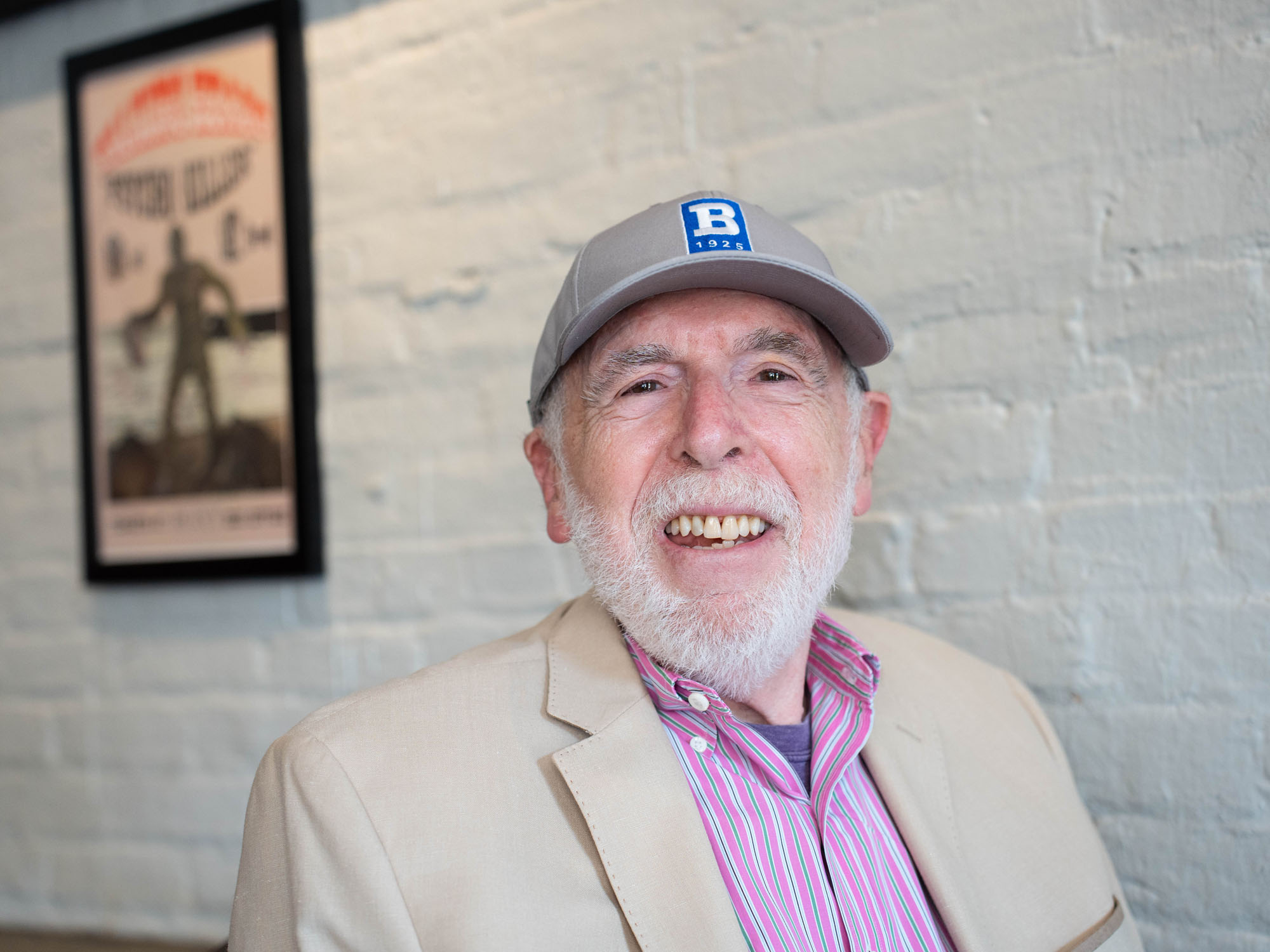
Joseph Adler found his calling in public service as a college freshman in the Bronx. He held an internship—one he held for four years—that put him on the frontlines helping New York City’s poverty crisis. With lessons on politics, human resources, and the impact one individual can have, Joe’s future as a public servant was set. Today, Joe serves as a lecturer with The University of Baltimore’s College of Public Affairs and director of its Master of Public Administration program. He shared his story about the different avenues of public service and his various roles and talks with us about why seeking a career in it is always valuable.
Q: What put you on the path of public service?
A: Since high school, I’ve had a keen interest in government and public affairs. That curiosity led me to volunteer in a campaign for a reform candidate running for mayor—the campaign was successful and it provided a wonderful hands-on experience in the nuts and bolts of campaigning and insight into how ordinary people can be a part of changing public policy.
Being involved full time in politics required a sacrifice that I wasn't sure that I wanted to make. Many elected officials have a wonderful compelling vision, but they need people to carry that vision out. So, I got much more into the policy and the administrative side, and that has guided my career into personnel/human resources.
I've been involved in government administration, human resource management, labor and employee relations for the better part of my career. Folks doing public sector work have something called PSM, which is public service motivation. Personally, I felt that I would rather do this because public employees strive to make a positive difference in people’s lives. And ultimately, we strive to make the state, the county, the local jurisdiction a better place to live and work. We strive to add public value. And that has motivated me and continues to motivate me.
Q: For students considering a career in public service but concerned about the viability of it, what might you tell them about the value of public service?
A: Let me start with the obvious: The current chaotic and demoralizing workforce policies at the federal level may have turned off some young or younger people from considering a career in public service. My advice is to focus on the larger picture. While there is no doubt of the importance of the services that federal employees provide, and hopefully will continue to provide, the lion’s share of public employees, over 14 million, work for state and local government.
The need for public services has not changed, if anything it has grown. Public service builds architecture for a dynamic and prosperous society. State and local government is where the rubber meets the road. It is where you can have a positive impact and can see it first-hand.
We in public service provide the architecture, the wherewithal, the foundation that allows the private sector to operate, to do whatever they might do safely and securely. For example, public employees certified our UBalt buildings as being fire safe and structurally sound. Firefighters, law enforcement, food safety, traffic control, medical providers, water safety—the list can go on and on. Without their contributions, society would ultimately collapse. Public employees are the ones that keep that from happening, to make sure that we don't go in that direction, that we go forward.
Public employees do tremendous, tremendous work. We, at UBalt, teach them to even do it better. We teach those employees to be relevant, to keep up with trends, to access the latest knowledge about whatever is going on in their field, and to give them the hard skills and the soft skills to be able to thrive in that kind of environment.


Q: What makes UBalt and its College of Public Affairs stand out as a University dedicated to public service education?
A: Of all the colleges and universities in the state of Maryland, the College of Public Affairs is the only one that's focused on adding human capital to students interested in providing efficient and effective services to residents—either through public agencies or nonprofit organizations providing front-line services.
What we're doing here in UBalt and colleges is we’re ultimately focusing on “Knowledge That Works.” That means you are coming here because you want to make a difference or are already in the labor force—you are working and balancing your employment needs and possibly caring for your family. Our goal is that when you receive your degree, you are much better prepared in terms of your career, not just to do what you do now, but five to 10 years down the road.
Q: Thinking back on your various public service roles, can you point to a particular moment or project you were most proud to have been part of?
A: There actually are a couple of them. The first one was, in Montgomery County—it took a year with all the stakeholders at the table—we established a plan for folks that wanted to be senior managers. The idea was, how do we capture in-house talent, folks that are not quite there but would like to be there, and what do they need to have the same gravitas or the same perception from hiring managers as folks from the outside with similar experience? So, we established a succession plan that took volunteers who went through a one-year program. Folks were assigned mentors. They had experiences with other agencies. So, there was a commitment on their part, and there was no guarantee that they were going to be selected—that's still up to the departments—but they were guaranteed an interview.
The second one was based on statistics that the highest unemployment rate was among folks that are considered disabled, a 50-75 percent unemployment rate, which is huge. Most jurisdictions have jobs that that these folks could easily do. So, we developed a program for folks with disabilities; they'd be verified by our occupational health folks, and then they went through an interview process. Then we held their resumes in a particular HR file. If there was an opening, we went to the departments and say, rather than going through this very elongated hiring process, we have a number of folks here who have already been vetted by HR and who have certain skills that look like it's a match. You can pick from that pool and hire these candidates. That particular program won an award. So, I'm very proud of those.