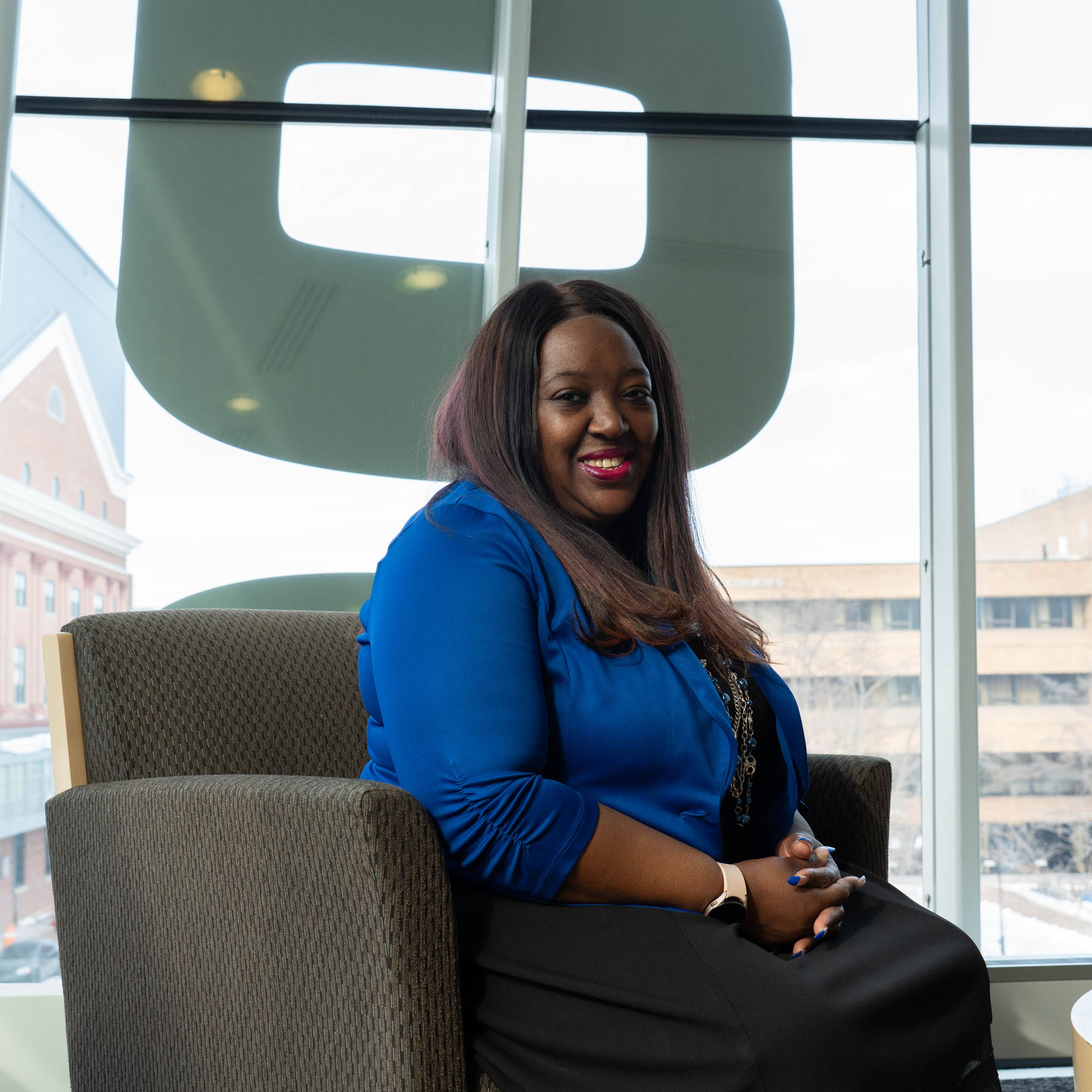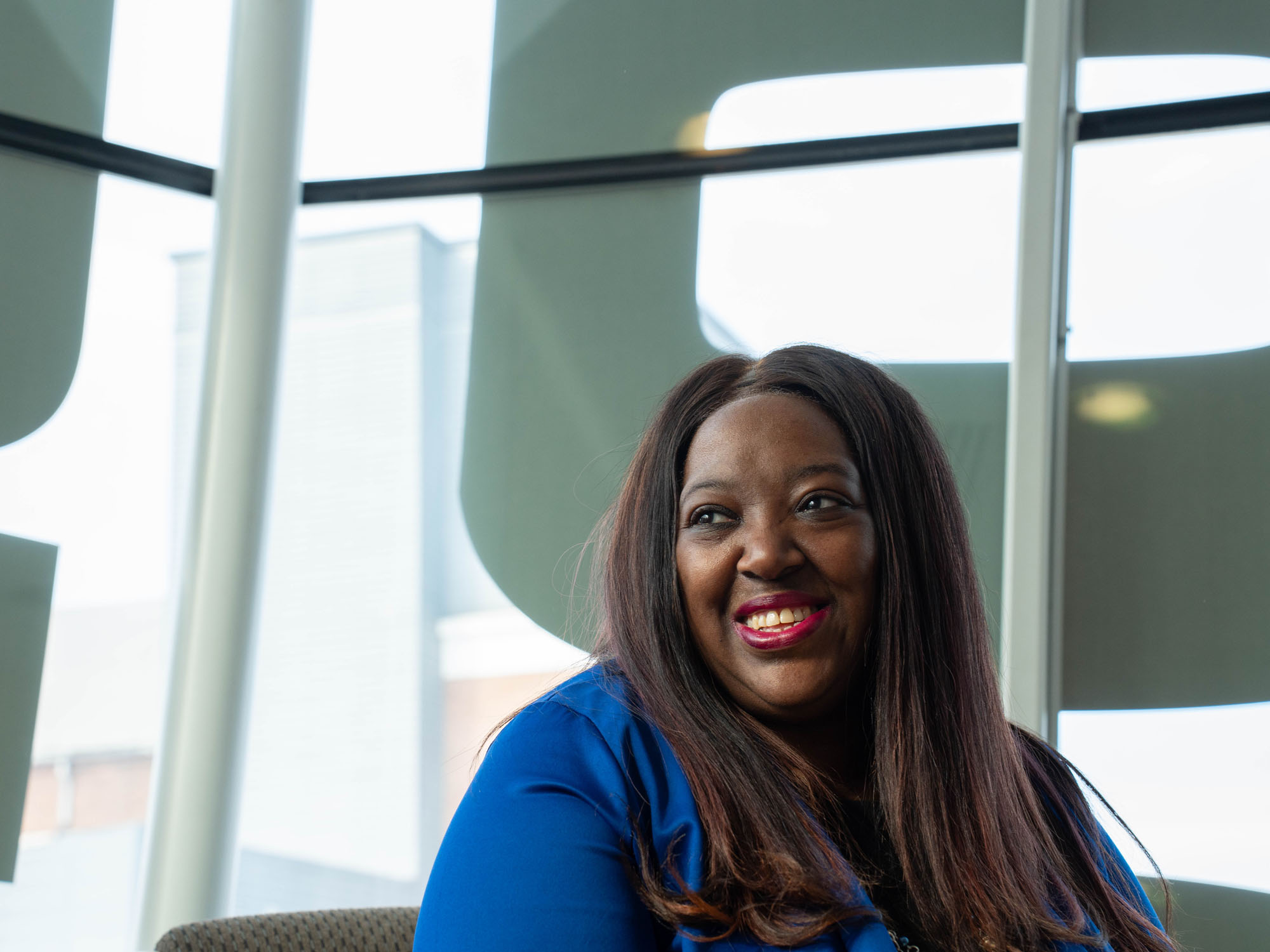
La-Toya Gomez has been working in career services since pivoting from the finance industry in 2018. Now she’s working as a career manager for The University of Baltimore’s Career and Internship Center and career coach for the Merrick School of Business.
Seeing the rising demand for knowledge about AI, La-Toya decided to enroll in the business school’s M.S. in Artificial Intelligence for Business program. She’s hoping to translate what she learns in the classroom to better prepare her students for the jobs they have now and will have in the future. After a quick stop at Soup’s On, La-Toya spent some time sharing about the intersection between her work and her degree program and how she keeps students motivated when facing a volatile job market.
Q: What do you find most rewarding about working in career services at a college?
A: The thing that I find most rewarding is helping adults realize their potentials or skills that they have. For the most part, when we are in our adulthood, we do things because people have told us that we're good at it, or because we feel like we had to do that in that moment. When we come to college, we realize, ‘You know what? I like this and I want to do this.’ Helping them figure that out and figure out their passion is what I love the most.
Q: You recently started pursuing a master's degree focused on AI in the workplace. Why did you decide to take up that challenge and how you hope to translate it to your work?
A: AI is the new thing in the world, and for me, the way I learn is to be taught, so, the ideal thing was to go back to school. If I go back to school, then I'm able to learn it, incorporate it, and say to my students, ‘This is how you can use AI on the job you're at now, and this is how you can use it to upgrade yourself to something different.’
Students who understand AI's role in their field will have a significant advantage in the job market. Employers are expecting recent graduate candidates to be AI-literate and able to leverage these tools in the workplace. Knowing how to use AI tools effectively can increase profitability for a company. Students who learn to delegate routine tasks to AI can focus on innovation and strategic work. This makes them more valuable employees and better positioned for advancement.


Q: Has being a student yourself changed your relationship with the students you serve?
A: Because I know the professors, what's being taught, the frustration of working all day and then having to go to school and figure out how to get the project done, I’m more relatable now. Students see me in the classroom and they're like, ‘What are you doing here?’ And I say, ‘I'm learning just like you, right?’ Being able to relate to them on that level has actually made my bond stronger with my students.
Q: How do you stay motivated and keep your student clients motivated when job markets are volatile, and the application processes are ever changing?
A: I keep myself motivated by learning different things and changing what needs to be changed. If I change, then I can teach my students how to change, or more so, how to pivot. I had to pivot from one career to the next.
I was working in banking and finance. I thought I hit the dream job and the dream atmosphere, but it wasn't where my heart was. I felt it was a great thing because I’m making money and I’m surviving; I'm doing everything that I want to do. I don't have to worry about anything. Being downsized helped me to realize that this is not what the real world is. The real world is actually getting up and loving what you do and being interested in what you're doing.
I use that story to encourage my students, to say, just because you're here, doesn't mean you have to stay here. You can try something different and be as successful or more successful. Realizing that and helping them to realize that is what I love.