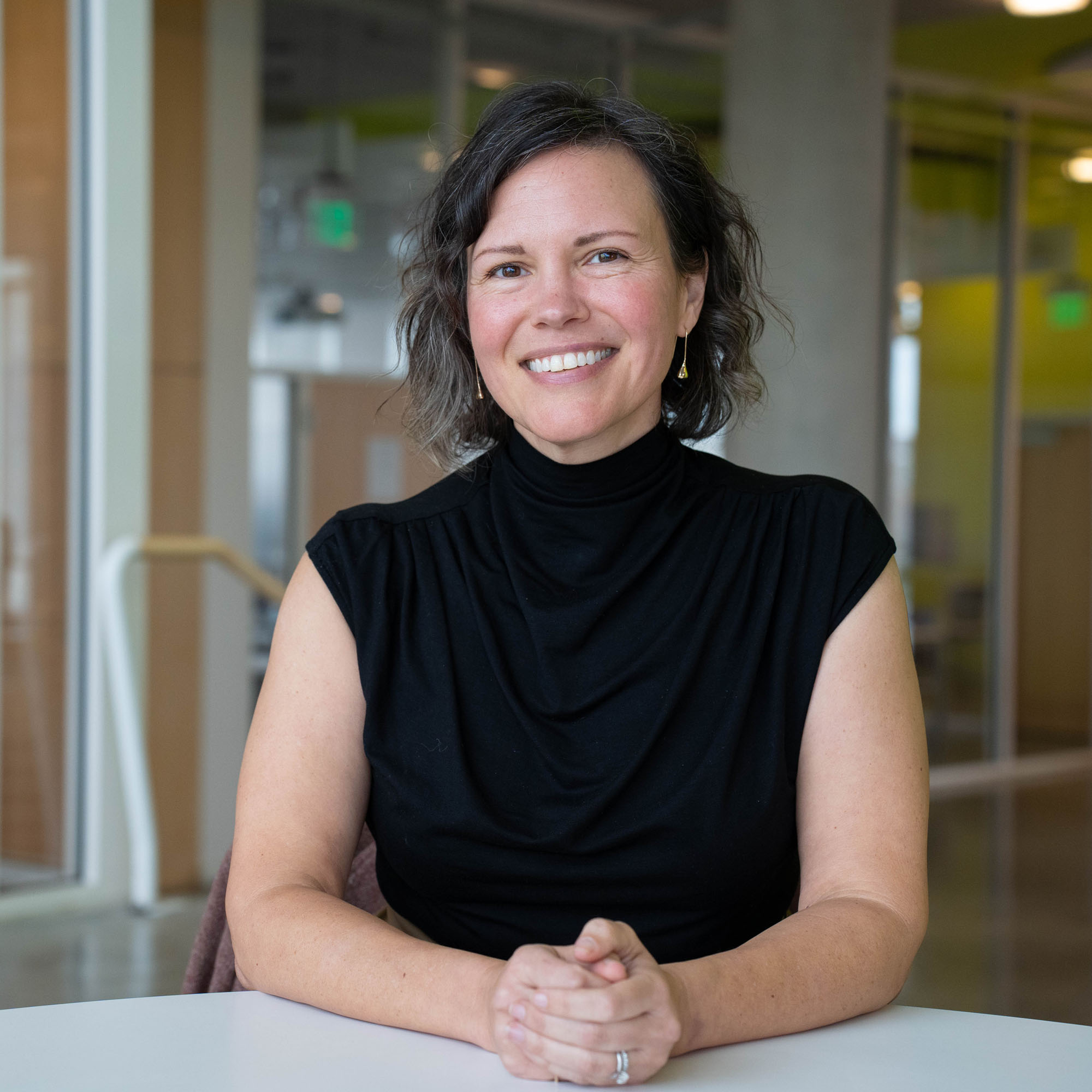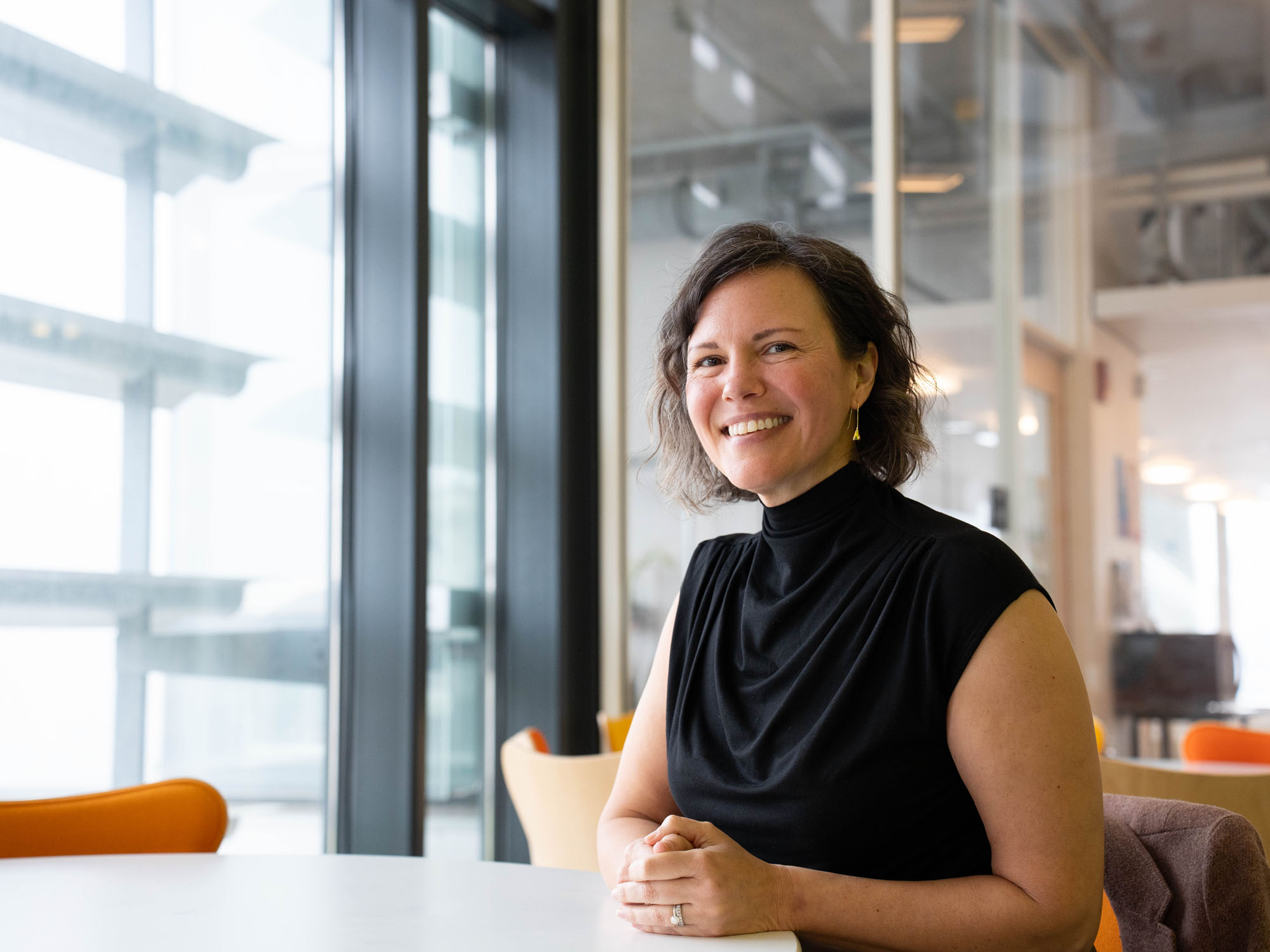
Dr. Shelly Clay-Robison earned her M.S. in Negotiations and Conflict Management at The University of Baltimore before going out into the world to advance research in critical areas such as peacebuilding and atrocity prevention. She decided to come back to UBalt. Now an assistant professor for College of Public Affairs’ School for Public and International Affairs, she teaches students in the same program from which she graduated, sharing her expertise in peace and conflict studies and helping them build connections to their local communities. Here, she shares what drew her toward her scholarship, her passion to shine a light on conflict survivors of oft-ignored histories, and what messages she hopes her students find the stories survivors leave behind.
Q: You have a stronger understanding of our student body as an alum of UBalt (M.S. ’13). What made you choose UBalt for your graduate studies, and how has having this University in your history helped make you a well-rounded professor?
A: I really wanted to study international conflict, but I also wanted to be in a program that was grounded in life experience. UBalt has always attracted students who bring rich life experiences into the classroom. Our students are balancing careers, families and education and that was me too. I was able to come into this program and tailor it to what I was interested in, while also learning a variety of concepts and skills about conflict management. This environment pushed me to think about how ideas connect to lived realities.
Now as a professor, I remember what it felt like to be a student here, and that helps me design classes that are both intellectually challenging and accessible. I know that students are not coming in as blank slates. They have so much already to bring to the classroom, and so I try to give them an experience that's intellectually rigorous and curious, while also being grounded in real life. My goal isn't just to deliver information, but to help them connect theory to the kinds of questions they’re already asking about the world, conflict and peace. Because of that, my classrooms are collaborative, where we produce knowledge together, instead of it being one directional. I love meeting students where they are while still pushing them to think critically and creatively.
Q: Your research and experiences show that you tend to focus on difficult subjects—social change after mass atrocity, peacebuilding and racial reconciliation—often with a unique lens. What made you decide to focus your work particularly on visual arts and culture within conflict?
A: When societies and communities experience violence or mass atrocity, the political and legal processes we often focus on are only part of the story. I became interested in what happens culturally and emotionally during violence and in conflict and that's where art and visual culture often play a powerful role.
Artists are able to engage with issues that are difficult to speak about directly. I've seen how the arts open up this metaphorical but also physical space for people to have discussions that they might not otherwise be able to have using things like painting, photography, film, theater and music, and it encourages people to access different parts of their brain to understand their world and to make meaning during and after conflict. The arts create spaces where memory, grief, hope, and resistance can be explored in ways that traditional political processes sometimes can’t.

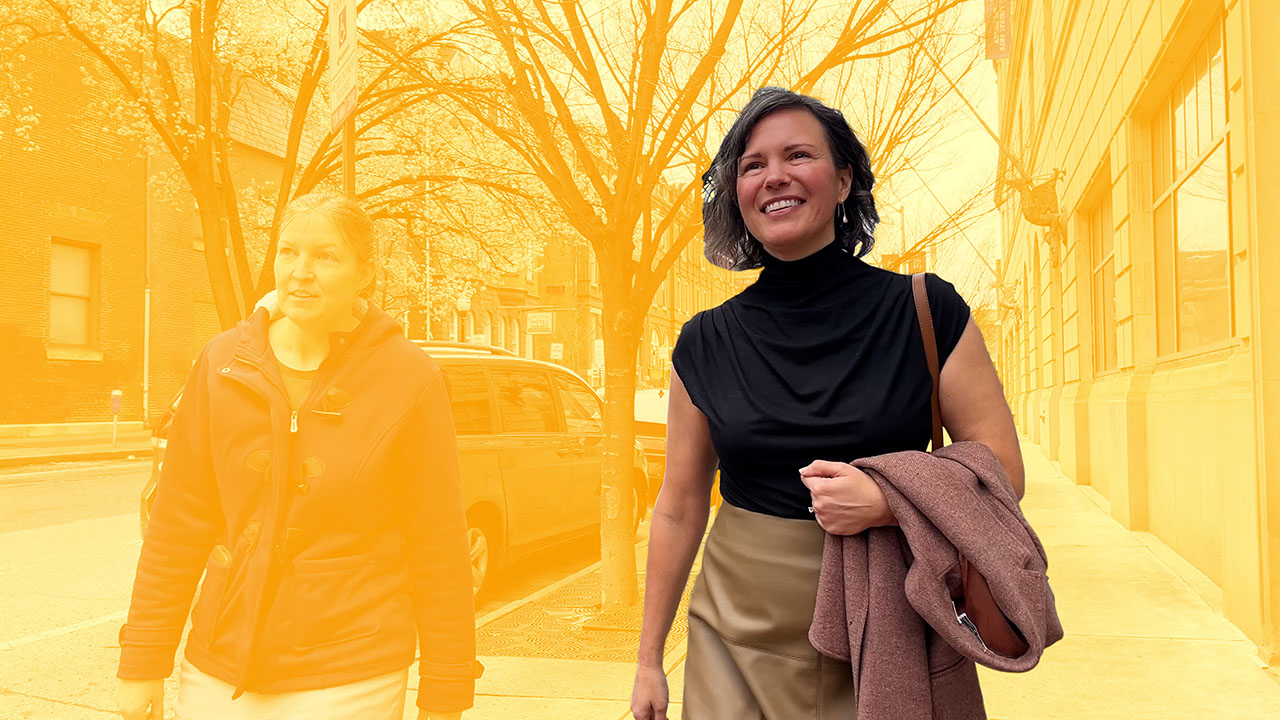
Q: What has seeing how various conflicts play out and how people respond in the aftermath taught you about human nature?
A: Humans have a range of reactions when it comes to violence and to conflict. People can react with fear. Some people react with denial. Sometimes people react with compassion. Some people react with collaboration. Conflict is part of the human experience, it's not something that we necessarily want to stop or avoid all the time. It's how we grow as people, it's how we grow as communities. If we know that conflict is part of the human experience, then we know that there are things that every community around the world is doing to handle it, to address it, to manage it.
I've also learned that violence prevention is happening in so many places in small, local ways. Artists, educators, community leaders, and activists are working to create spaces where difficult issues and conflicts can be discussed, but the larger public doesn’t always see this. These spaces build empathy which is critical for preventing the kinds of dehumanization that allow atrocities to occur.
Q: What kinds of stories do you see tend to be the result of people sort of coming to terms with their responses to conflict? How do you bring those stories into your classrooms?
A: Humans love to tell stories about everything, so of course, it's going to show up in conflict. In a lot of conflict settings, communities use the arts to remember the violence they survived, to challenge oppressive narratives, to imagine peaceful futures, and to share their stories of solidarity. In my own research on the aftermath of the Indonesian mass killings, I’ve worked with artists and activists who collaborate with local social movements and survivor communities to amplify their stories. The arts give us a way to engage with conflict intellectually but also physically, and emotionally.
I bring these concepts into the classroom by asking students to analyze cultural storytelling in their own environment. For example, we look at murals and public art across Baltimore and ask what stories the city is telling about itself, both to residents and to outsiders. By interpreting these visual narratives, students learn how the arts can provide deep and rich information about a community’s struggles and hopes. It’s a form of conflict analysis and intervention.
Q: How did you how did you get into studying Indonesia?
A: People ask me that a lot! I went there during my doctoral work and was able to do research on atrocity prevention and the arts. Indonesia had a mass atrocity event in the 1960s and still has a large community of survivors. The government has not officially recognized that upwards of a million people were imprisoned, tortured and slaughtered, and so there's a lot of stigma against the survivor community. When I first went there and started learning about this group of survivors and all of the amazing ways they're supporting each other and building peace in their own communities, and also using the arts to do it, I knew I wanted to continue working with and learning from them. When I go to Indonesia for fieldwork, I very much see myself as someone who is working alongside folks. They do not need me there to succeed. I am there to use my education and my own privilege to amplify all the incredible work they're doing to support each other and to create counter-narratives and solidarity.
Q: Based on the time you’ve spent time working with artists and activists in Indonesia, how do you apply what you learned from that research and experience for your students in Baltimore?
A: Part of my fieldwork means I get to listen to people's experiences of conflict and how they’re working for change. I'm able to bring back a lot of photos, artwork, and stories for the students here so that they can see what some of these lived experiences are like on the other side of the world: resistance, community reconciliation, conflict resolution, solidarity, human needs.
Most Americans don't really know that much about Indonesia, and they know almost nothing about the genocidal violence that happened there, so it's a chance for them to learn about how people organize for justice in other contexts. We also talk about how memory and storytelling shape politics and culture. We discuss the connections between global and local issues. It could be social movements in Indonesia or social justice efforts in Baltimore, but the questions are similar: How do communities confront painful histories? How do people build solidarity? And how can the arts contribute to social change?