We are excited to partner with the Global Peace Foundation in the years ahead—both locally in Baltimore and globally—because meaningful peacebuilding requires sustained collaboration across sectors, disciplines and communities.
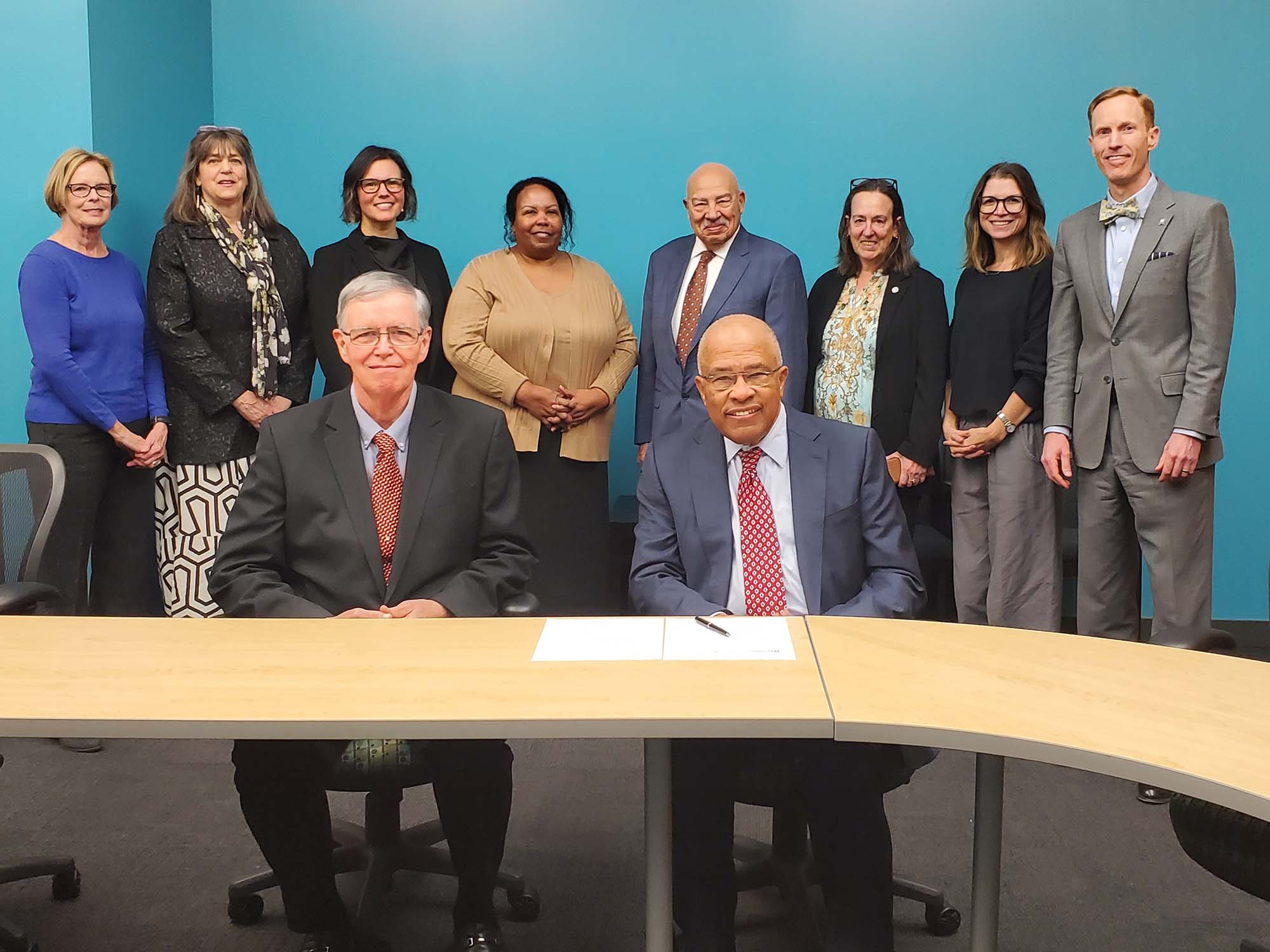
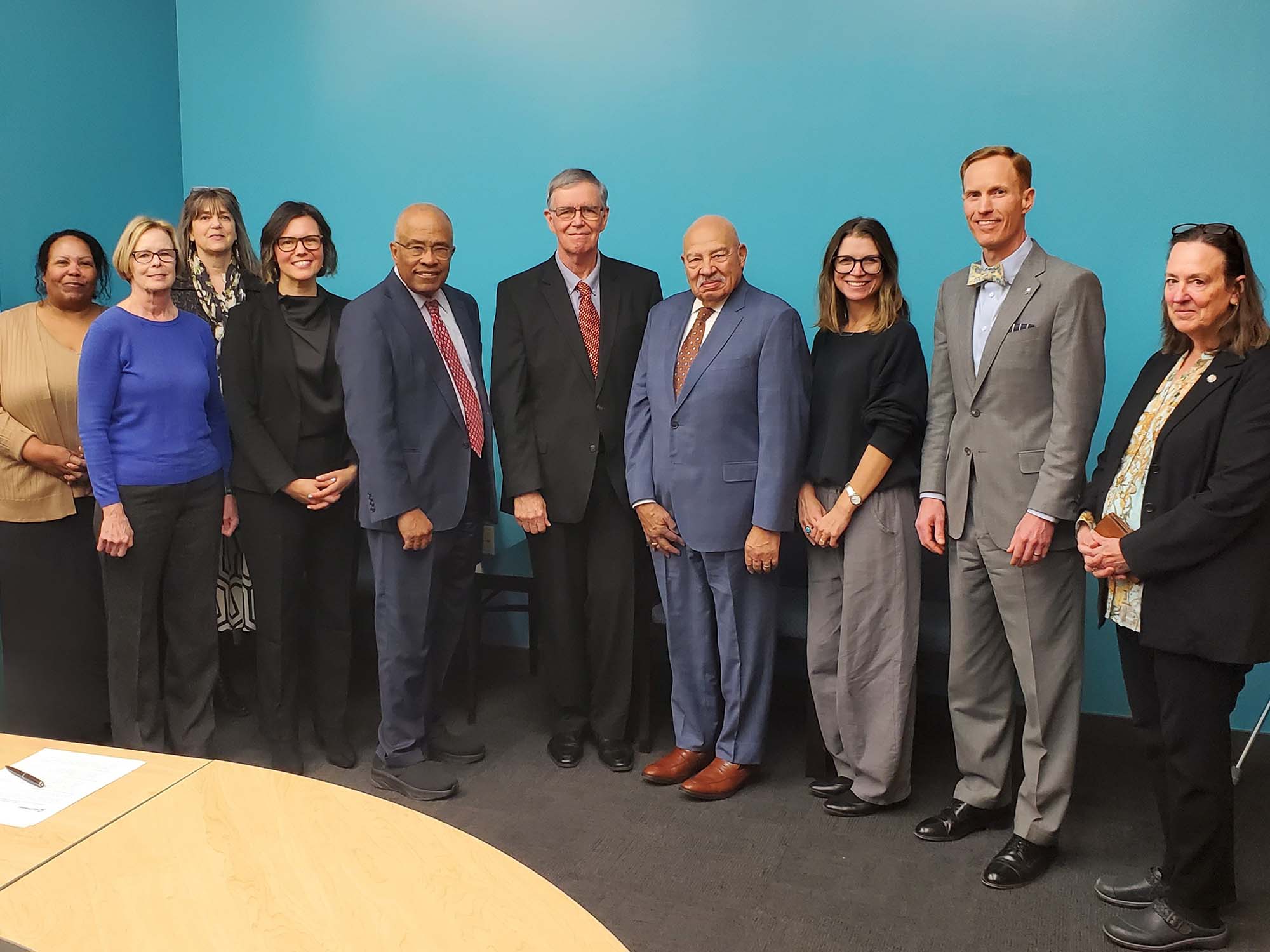
Leaders from The University of Baltimore and the Global Peace Foundation (GPF) marked an expanded institutional partnership during a signing ceremony on Jan. 20, 2026.
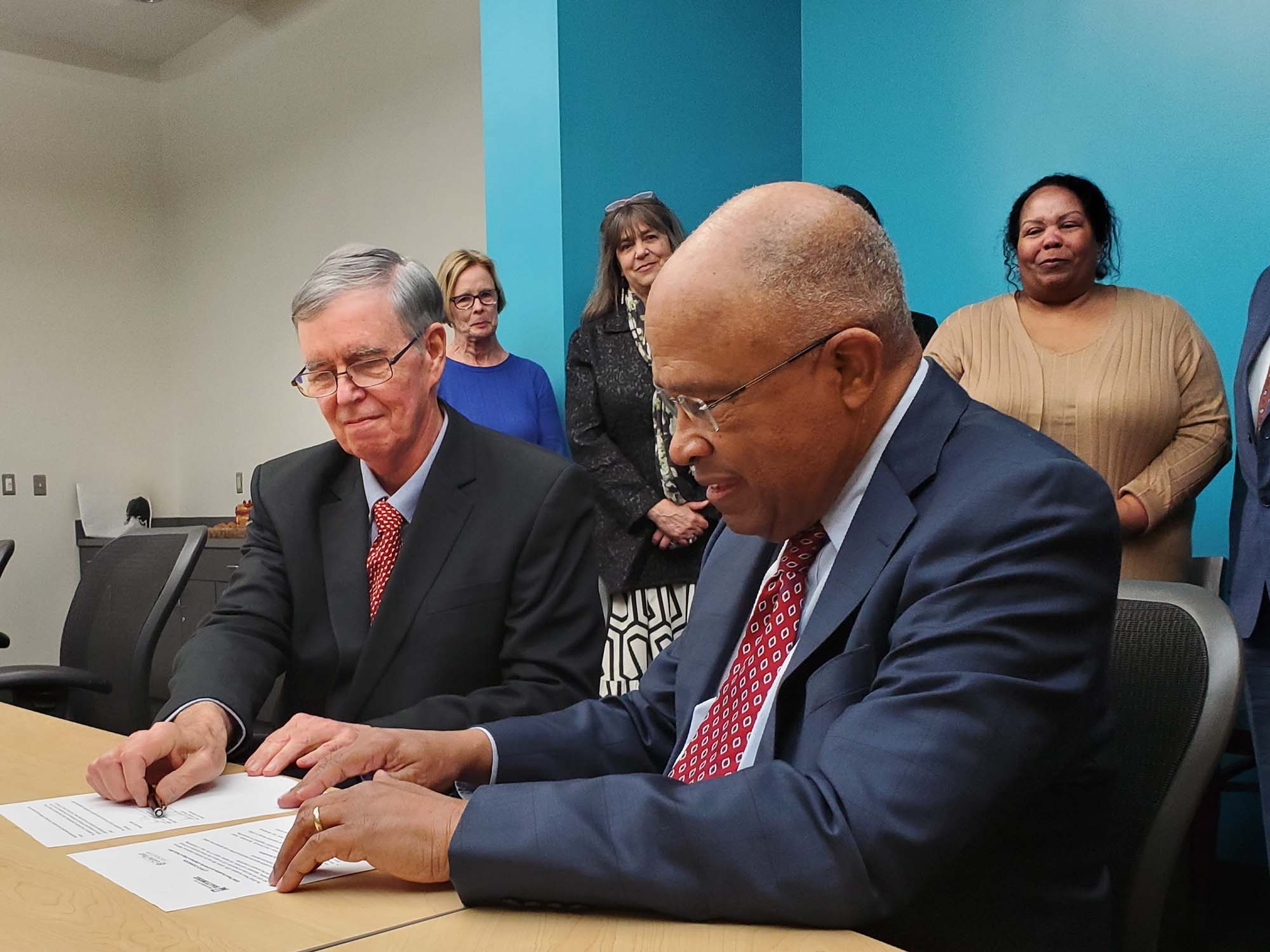
The formal letter of cooperation was originally signed in October 2025 by UBalt President Kurt L. Schmoke and GPF International President James P. Flynn. The three-year framework calls for joint educational initiatives, applied research and public engagement focused on peacebuilding and democratic leadership.
The signing ceremony brought together faculty, staff and community partners to celebrate a collaboration already shaping reconciliation efforts in Baltimore.
The partnership will deepen collaboration across education, research and public engagement.
Dr. Ivan Sascha Sheehan, interim dean of UBalt’s College of Public Affairs and professor of public and international affairs, said the collaboration reflects the university’s commitment to translating academic expertise into real-world impact.
“Our College of Public Affairs at the University of Baltimore brings distinctive faculty expertise in peacebuilding, public policy, governance and leadership development,” Sheehan said. “Our scholars and practitioners are deeply engaged in both rigorous research and applied practice, equipping students and community partners with the analytical tools and practical skills necessary to address complex societal challenges. This partnership allows us to translate that expertise into tangible impact—here in Baltimore and beyond.”
Emerging initiatives under consideration include expanded instructional engagement, graduate student involvement in the Baltimore Police Academy’s “Our Shared Humanity” sessions, enhanced internship pathways, graduate certificates in peacebuilding and global leadership forums.
Sheehan underscored the long-term vision: “Positive change in densely populated urban environments is essential to human advancement. By fostering dialogue, advancing research, and cultivating the next generation of civic leaders, urban universities can help transform cities into laboratories of peacebuilding and democratic renewal.”
“We are excited to partner with the Global Peace Foundation in the years ahead—both locally in Baltimore and globally—because meaningful peacebuilding requires sustained collaboration across sectors, disciplines and communities.”
The expanded partnership builds on ongoing work already underway in Baltimore through the Baltimore Cross-Community Reconciliation Project (BCCRP), a Global Peace Foundation initiative launched in 2022 and supported by UBalt’s College of Public Affairs.
Through facilitated dialogue sessions, the project brings together Black and white Baltimore city residents along with participants from surrounding communities to engage in structured conversation about race and racial bias. The structured conversations are designed to foster trust, strengthen relationships and build civic understanding across difference.
UBalt helped secure campus space for dialogue sessions. For Sheehan, providing space for sustained dialogue reflects the responsibility of urban institutions to engage directly with the communities they serve.
“Urban institutions are uniquely positioned at the intersection of policy, practice and lived experience. We operate in close proximity to the communities we serve, and that proximity creates both opportunity and obligation,” he said. “When universities step forward as convening agents—bringing together public officials, community leaders, practitioners, and residents—we help create the conditions for durable, inclusive solutions.”
That approach to partnership is an institutional value. In 2026, UBalt earned the Carnegie Foundation Classification for Community Engagement, a national designation recognizing universities that embed collaboration with their community into their core mission.
Dr. Sheehan explained: “We view community engagement not as outreach, but as collaboration—an ongoing partnership characterized by reciprocity and the mutually beneficial exchange of knowledge and resources. That framework guides our work with the Global Peace Foundation and strengthens the impact we can achieve together.”
Dr. Shelly Clay-Robison, faculty member in the College of Public Affairs at UBalt and a BCCRP stakeholder, has extended the initiative’s impact through research. As co-author of a qualitative study examining how cross-community engagement contributes to racial healing and community resilience, she documented the project’s outcomes in peer-reviewed scholarship. The study, published in August 2025 in the Journal of Transdisciplinary Peace Praxis, is titled “Building Peace Through Connection: The Baltimore Cross Community Reconciliation Project as a Model for Racial Healing and Community Resilience.”
Based in the Washington, D.C.–Maryland region, the Global Peace Foundation works with partners around the world to promote peaceful coexistence, ethical leadership and sustainable approaches to conflict resolution.
Schmoke emphasized the alignment between UBalt’s academic strengths and GPF’s global mission.
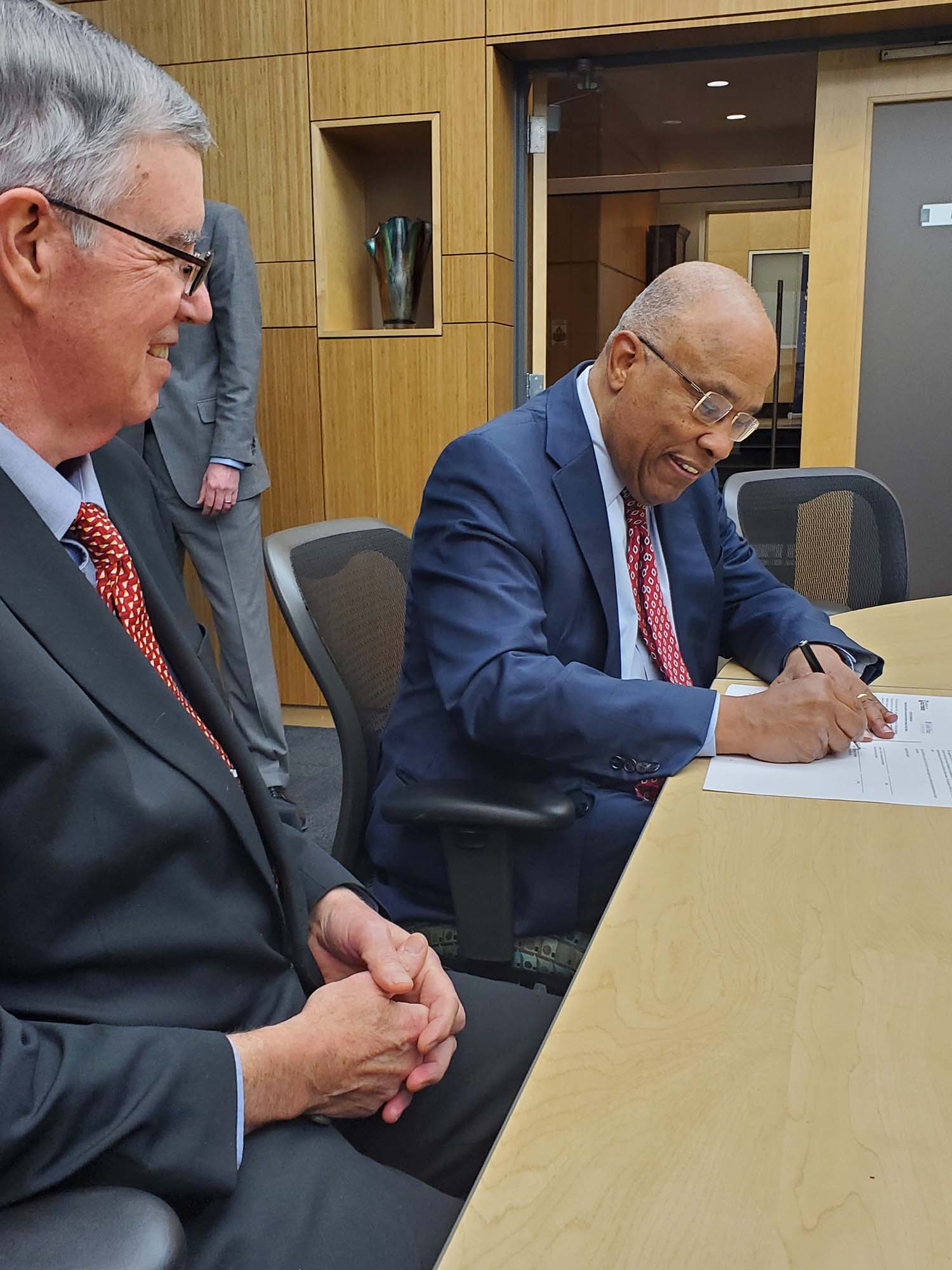
“I think that our students and faculty—our whole community—will benefit by this relationship, so I just want to come by to thank you very much. ... I appreciate the work you’ve done over the last 14 years. ... We’re excited because we have so many programs that are similar to the mission and goals of the Global Peace Foundation, both here domestically and abroad.”
Flynn described the Baltimore collaboration as a model for broader impact.
“We’re very excited about and committed to this project here in Baltimore. It’s a really important effort, and something that we can learn from and make a model. Thank you for all you do and for the opportunity to partner and collaborate.”
He framed peacebuilding as grounded in relationships and shared values.
“Building peace is simple; it’s about building relationships,” Flynn said. “It takes all of us working together...applying a values-based approach to peacebuilding. Our common humanity is our most important identity.”
Together, UBalt and GPF are advancing a shared goal: equipping communities with the knowledge, tools and relationships needed to build a more peaceful, connected and resilient Baltimore.
For current and prospective students, the partnership signals expanding opportunities to engage in applied research, leadership development and real-world peacebuilding at the intersection of public policy and community impact.
To discover how you can engage in applied research, public leadership and real-world peacebuilding, explore the College of Public Affairs’ graduate and undergraduate programs.