

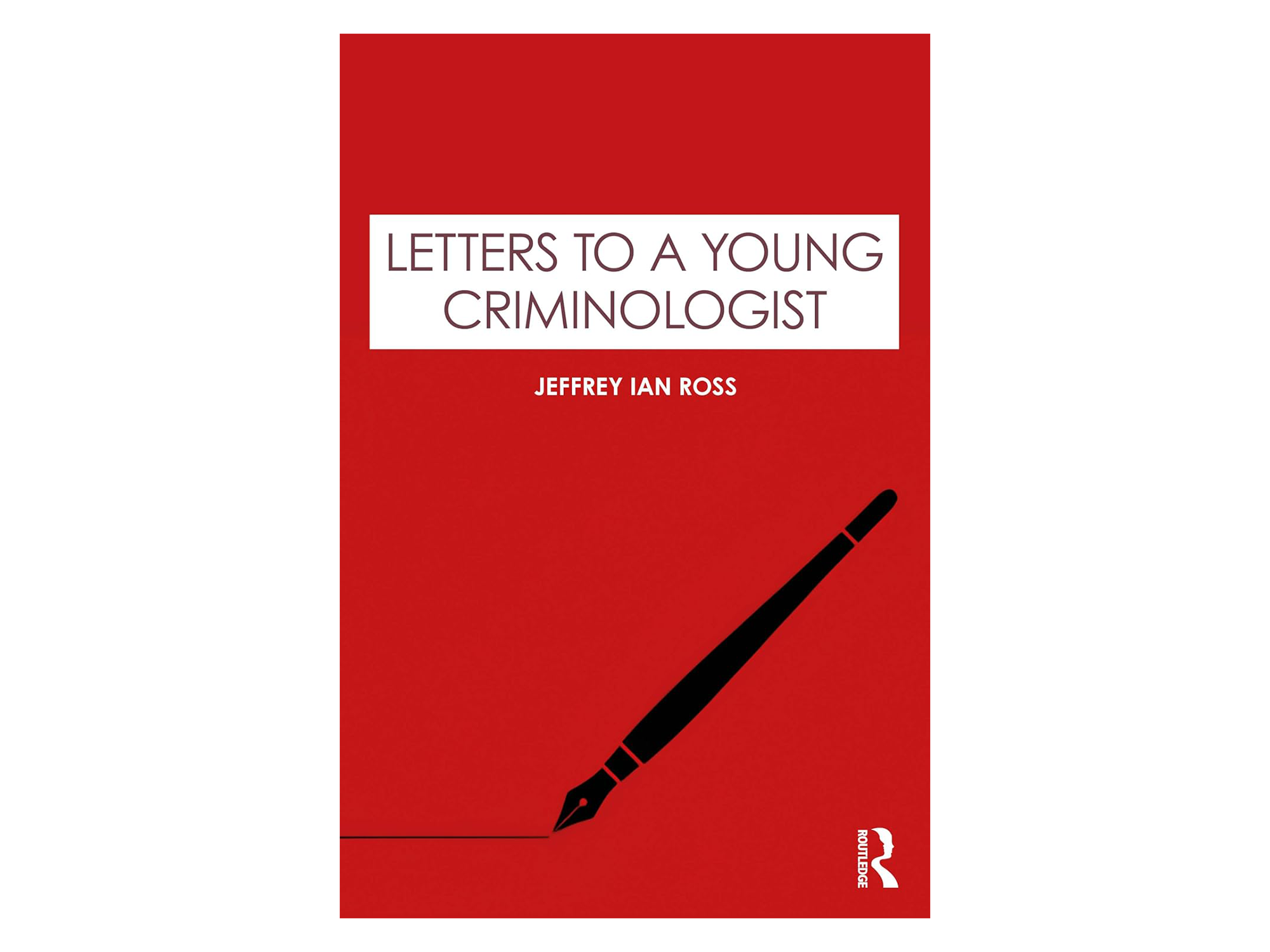
In April, Dr. Jeffrey Ian Ross, professor in The University of Baltimore's School of Criminal Justice, published Letters to a Young Criminologist. It's the latest of more than thirty books he has written or edited during his tenure in the field. The book's title places it within a long tradition of similar works, in which an experienced practitioner passes along hard-won guidance to others who are closer to the start of their journey. Ross's letters are addressed directly to students, early-career criminologists, and anyone else who's ever wondered what their criminology professor actually does for a living beyond lecturing in the classroom.
Criminology is the study of crime, including its causes and consequences, the lives and communities it touches and the institutions built to respond. Teaching is the most visible part of the job, but it's also often the smallest in terms of time and intellectual energy. Instead, most of the work happens elsewhere: designing studies, collecting and analyzing data, publishing findings, applying for grants and, for many, consulting with agencies or serving as expert witnesses.
For students who are current or former practitioners—police officers, corrections workers, probation officers, social workers—the book speaks to a specific tension. What they study in class doesn't always match what they've encountered in the field.
In Ross's own words: "At some point, many criminology and criminal justice students and early career criminologists start to feel that what they're reading doesn't quite match what they've seen, heard or lived. Some of them consider what it might be like to actually teach, conduct research and work as an academic criminologist. Letters to a Young Criminologist explores this issue in depth."
That kind of questioning is where criminological thinking begins. In his writing, Ross describes an approach that treats crime statistics not as simple facts but as numbers partly shaped by the institutions that collect, analyze and report them. It resists tidy single-cause explanations. It slows down to ask whether two things that appear alike—a jail and a prison, or a local police force and a federal agency—are actually the same.
The book doesn't pitch an academic career as straightforward or the field as free of contradictions. What it offers instead is an honest account of what the work involves and what it makes possible. At a moment when evidence-based policy is both more urgent and more contested, that kind of thinking matters beyond the academy. The ability to question a claim before accepting it, and to notice what a number might be leaving out, is an asset in law, in policy, in advocacy and in the daily work of policing, corrections and the courts.
Explore the School of Criminal Justice and the range of perspectives its faculty bring to the study of crime and justice. Letters to a Young Criminologist is available from Routledge Publishers.