

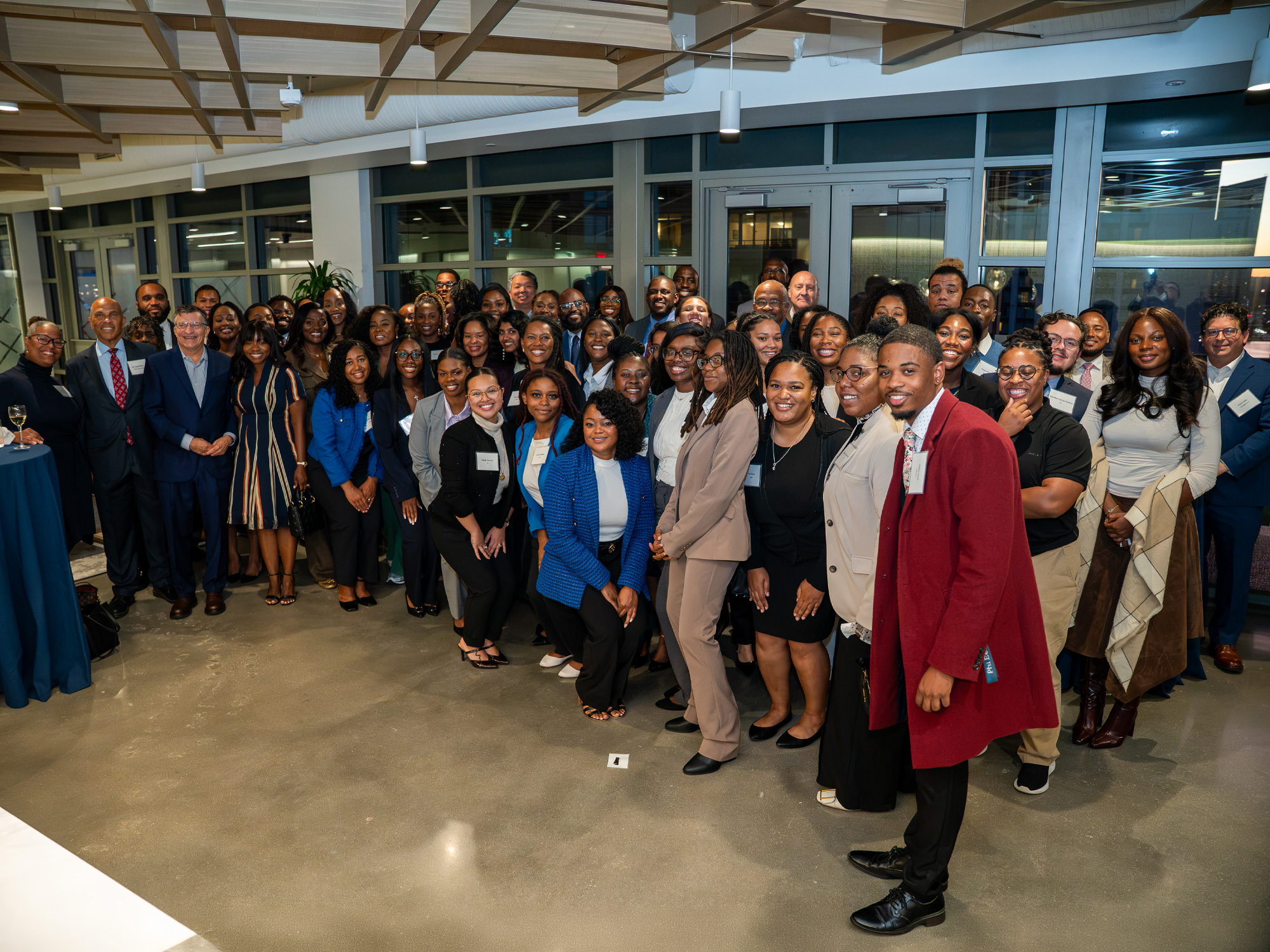
The University of Baltimore School of Law community gathered in late September for the cy pres reception to benefit The Fannie Angelos Program. The event brought together key stakeholders, program alumni, current and future members of the program, and UBalt Law faculty and staff to honor the continued work of the program for students of Historically Black Colleges and Universities.

The night featured speeches from several people, including the program founders, UBalt Law Professors Michael Meyerson and Michael Higginbotham. Both spoke about how the program has grown since its inception and that graduates of the program are now prominent figures across Maryland.
"This event was a celebration. First, we are celebrating a cy pres award, which will help support the academic and career success of future Angelos Scholars. Secondly, we are celebrating the extraordinary achievements of the more than 150 talented graduates who have graduated from law school and helped transform the legal community, in Baltimore and beyond," Professor Michael Meyerson said of the event.

The Fannie Angelos Program for Academic Excellence has proven that once the playing field is leveled, students can excel. The program is a unique collaboration between the University of Baltimore and Maryland’s four Historically Black Colleges and Universities (HBCUs): Bowie State University; Coppin State University; Morgan State University; and the University of Maryland Eastern Shore. This highly selective, race-neutral, merit-based program represents a revolutionary approach for finding talented students and empowering them to gain admission to law school, succeed in law school, and thrive in their legal careers.
More than 140 scholars have been accepted to law schools, including the University of Baltimore School of Law, Columbia Law School, the University of Maryland Francis King Carey School of Law, North Carolina Central University School of Law, the University of Minnesota Law School, Howard Law School, and the University of Southern California Gould School of Law. They have served on law journals, won national moot court competitions, and obtained prestigious judicial clerkships and employment at both large and small law firms, government offices, and public interest organizations.