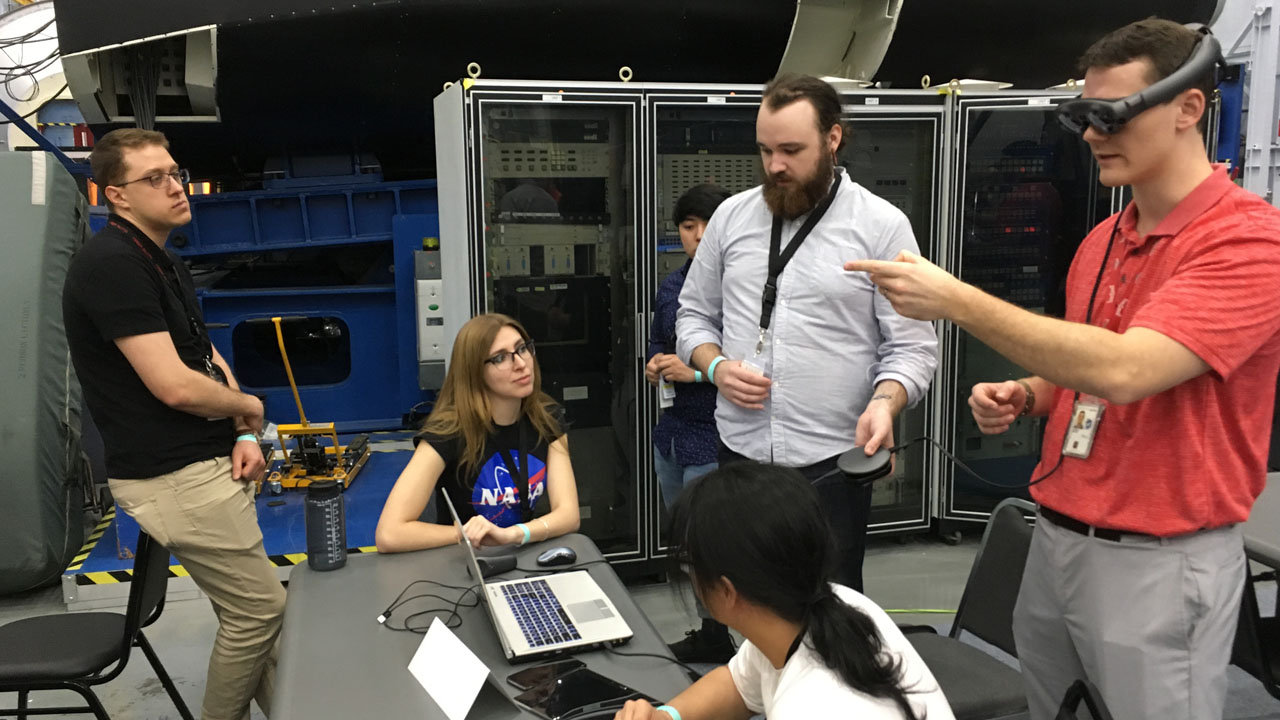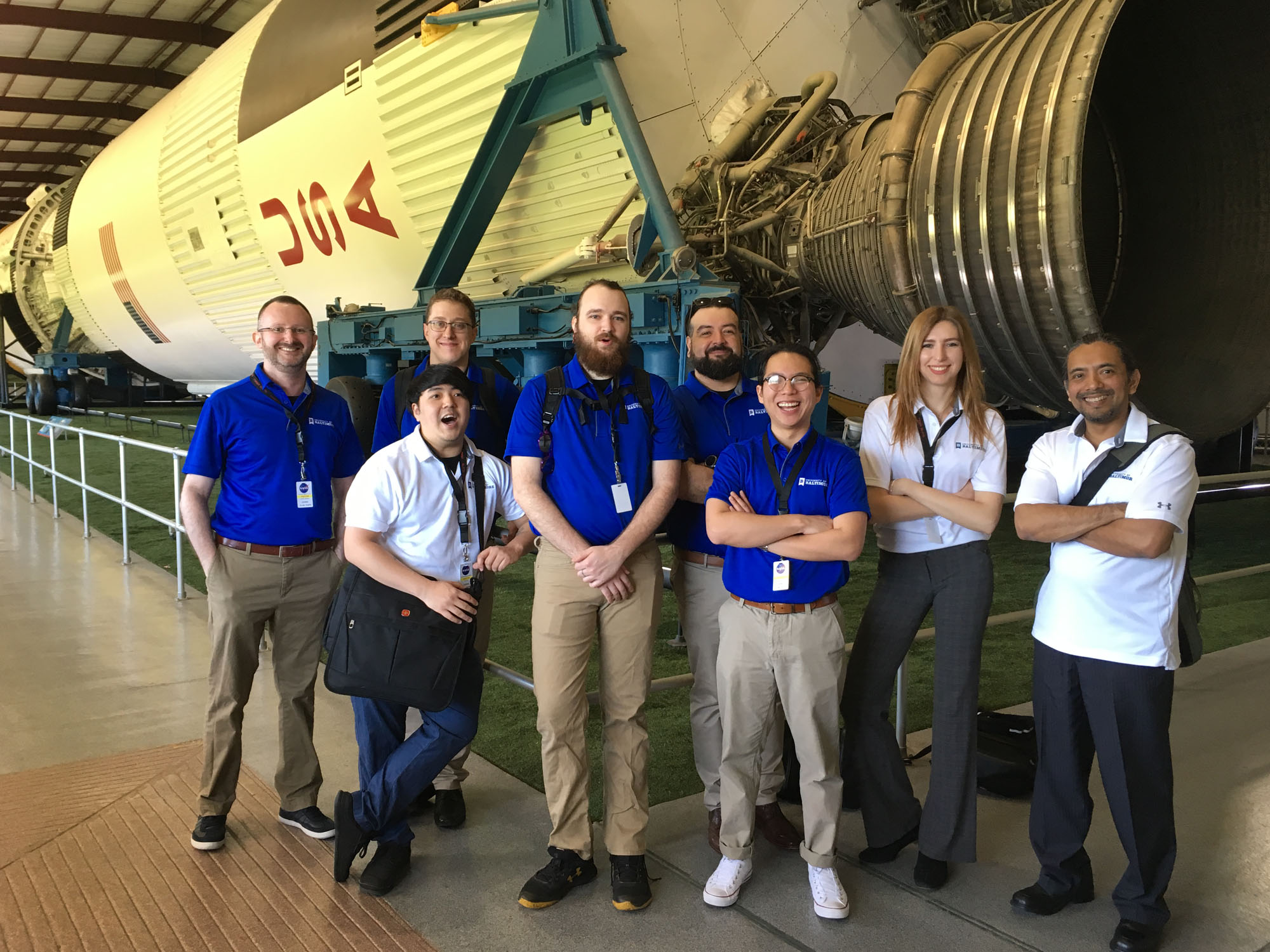
A team of students from the University of Baltimore has been invited to travel to NASA's Johnson Space Center (JSC) in Houston, Texas, to test heads-up display prototypes they designed within an augmented reality environment to enhance task communication during spacewalks. The online Merriam-Webster dictionary defines augmented reality as "an enhanced version of reality created by the use of technology to overlay digital information on an image of something being viewed through a device."
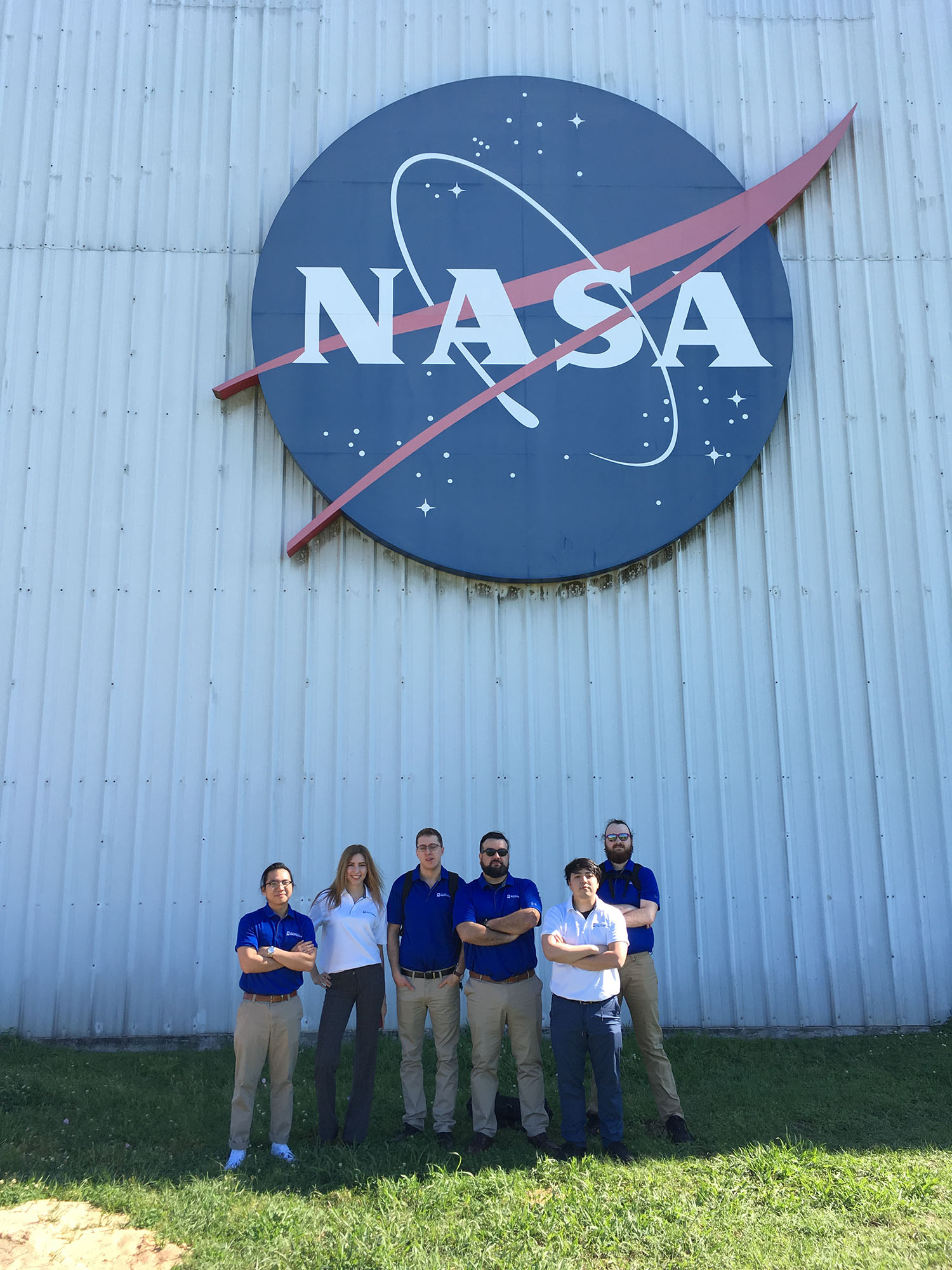
The team of students is one of 12 teams out of 19 advancing to the testing phase in NASA's Spacesuit User Interface Technologies for Students—NASA SUITS. The students have spent the past several months coding their augmented reality-based prototypes and preparing for the test, which will take place in NASA's Human Integrated Vehicles and Environments, a facility used to develop and build human interfaces for human-in-the-loop testing. Teams are traveling to Houston in mid-April for the test.
The NASA SUITS challenge addresses an authentic, current space exploration challenge.
Upon successful testing, each of the proposed displays has the potential to aid in
a future NASA spacewalk or exploration mission.
The UBalt team—who call themselves the "PoeGrammers"—have proposed a way to implement
multiple modes of interactions to navigate the heads-up display and to toggle between
different menus using eye tracking and hand gestures. Their design concept ensures
that the user interface is as minimalistic as it is informative, and that spacewalk
missions are as efficient as possible.