

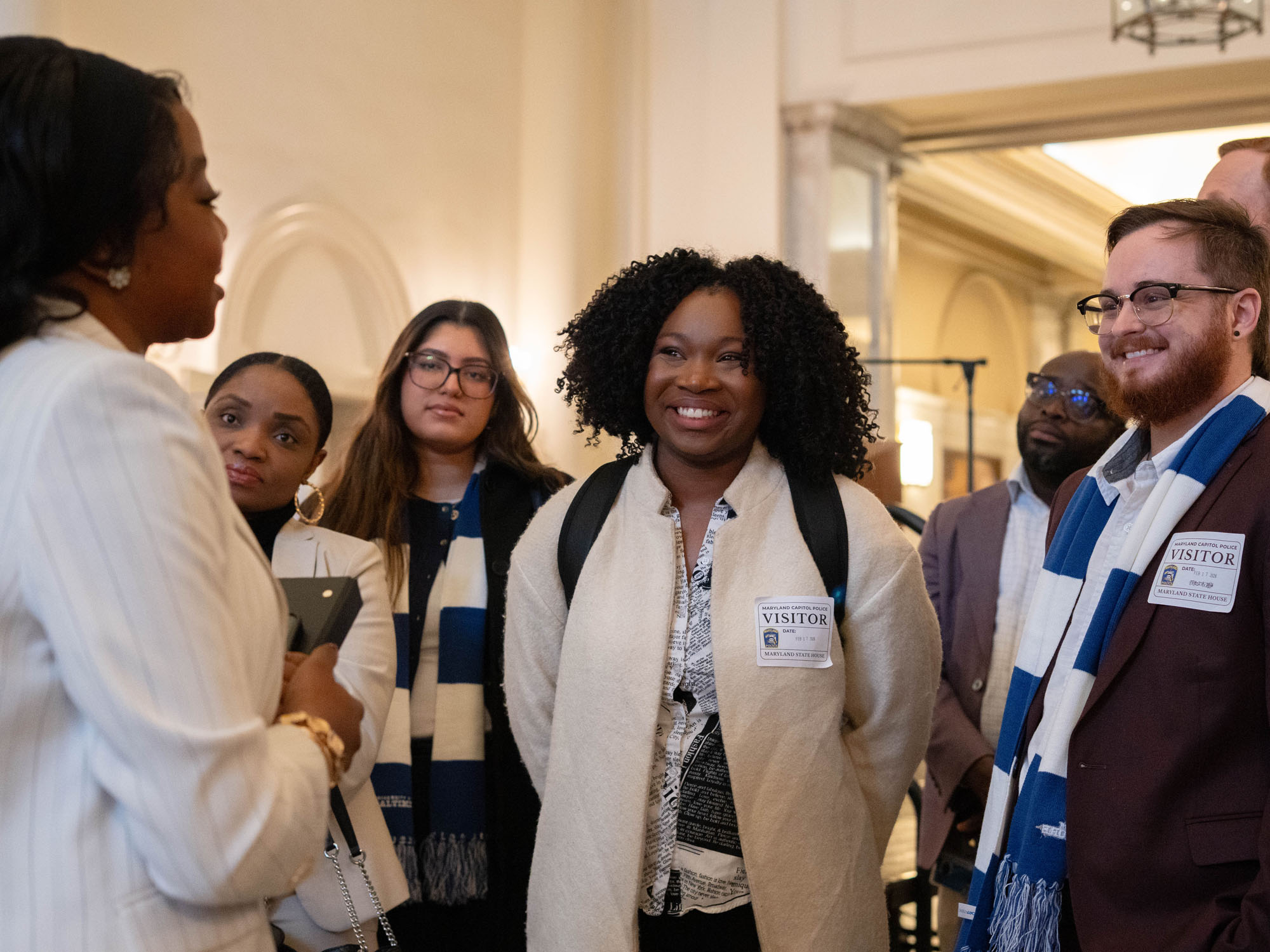
Students were often looking up as they walked slowly through the halls of the Maryland State House. They stopped to admire colored glass ceilings, marble stairways and the pieces of history on display. They wanted to soak in every moment on this special day that is growing to be one of The University of Baltimore’s bigger traditions.
For the past 25 years, UBalt’s Office of Government and Public Affairs, the William Donald Schaefer Center for Public Policy and the Rosenberg Center for Student Engagement and Involvement have invited students for the Day in Annapolis event during General Assembly. This year’s group included about 70 people, forcing a waitlist.
Ivan Sascha Sheehan, interim dean for UBalt’s College of Public Affairs, praised the growing interest. He noted the immeasurable value of giving UBalt’s students—whether interested in careers in public service or otherwise—a day dedicated to hearing from state legislators and seeing their work in action.
“These moments bridge the gap between classroom learning and the lived realities of policymaking,” he said. “Concepts discussed in lectures—coalition-building, governance structures, fiscal constraints, ethical decision-making—come alive when students witness them unfolding in real time.”
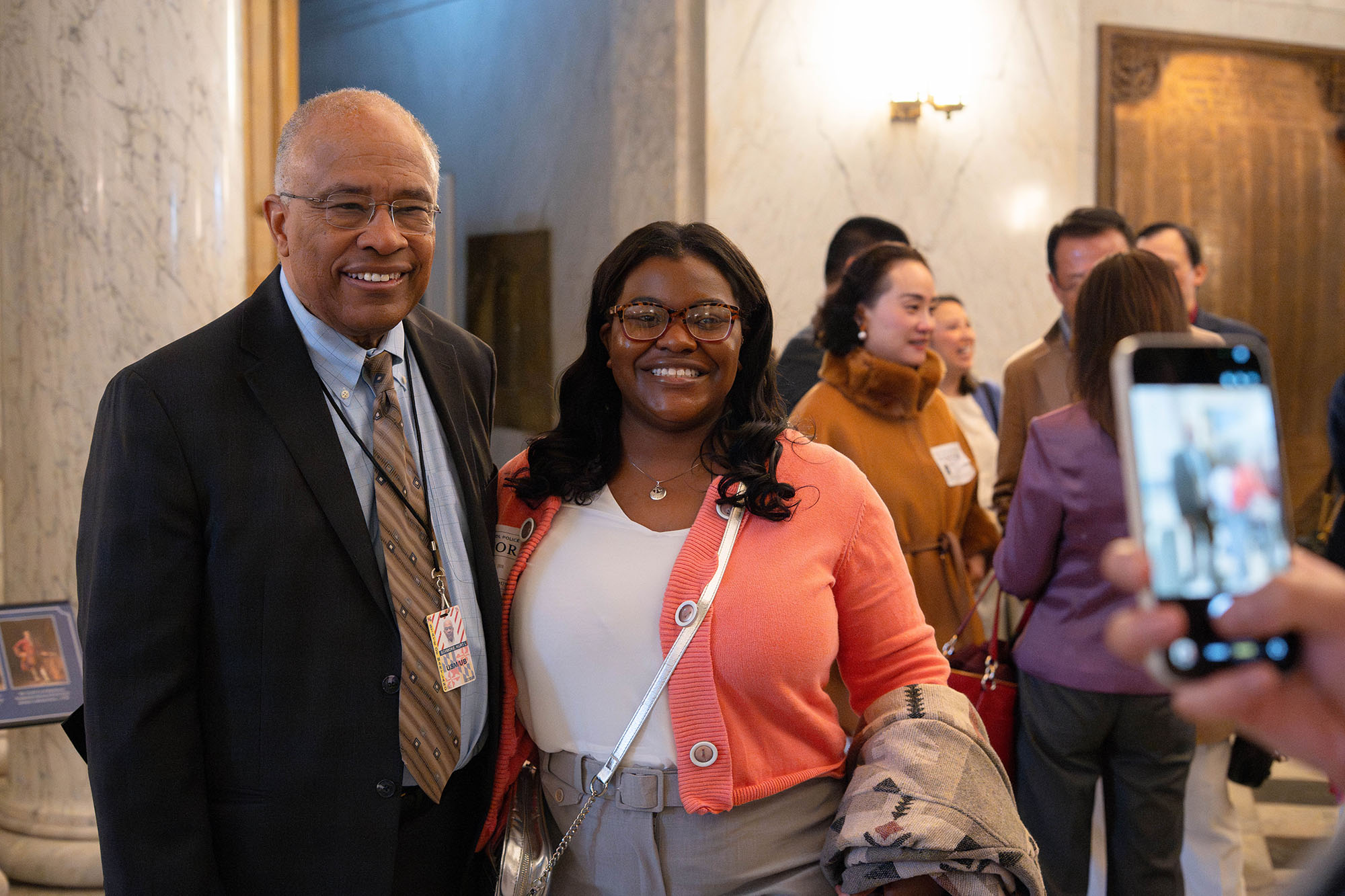
The students meet on campus and travel to Annapolis. In the capital city, they get to tour the State House, sit in a live session of the House and Senate, and hear from a series of guest speakers—including many UBalt alumni—with various roles in state government.
Yvonne Cox, an MPA student focused on public policy, felt inspired as she strolled through the building. She has never been to the State House before but hopes to someday frequent it as one of the changemakers within its chambers.
“As a Baltimore city native, I feel that it is imperative for me to show up for the city of Baltimore and more so, the youth of the inner city and urban communities,” she said. “As a delegate or senator, I would be able to help children who are struggling that oftentimes get looked over and unfortunately, life passes them by.”
A Day in Annapolis to Remember
The day included many memorable moments beyond the tour of the country’s oldest state capitol in continuous legislative use.
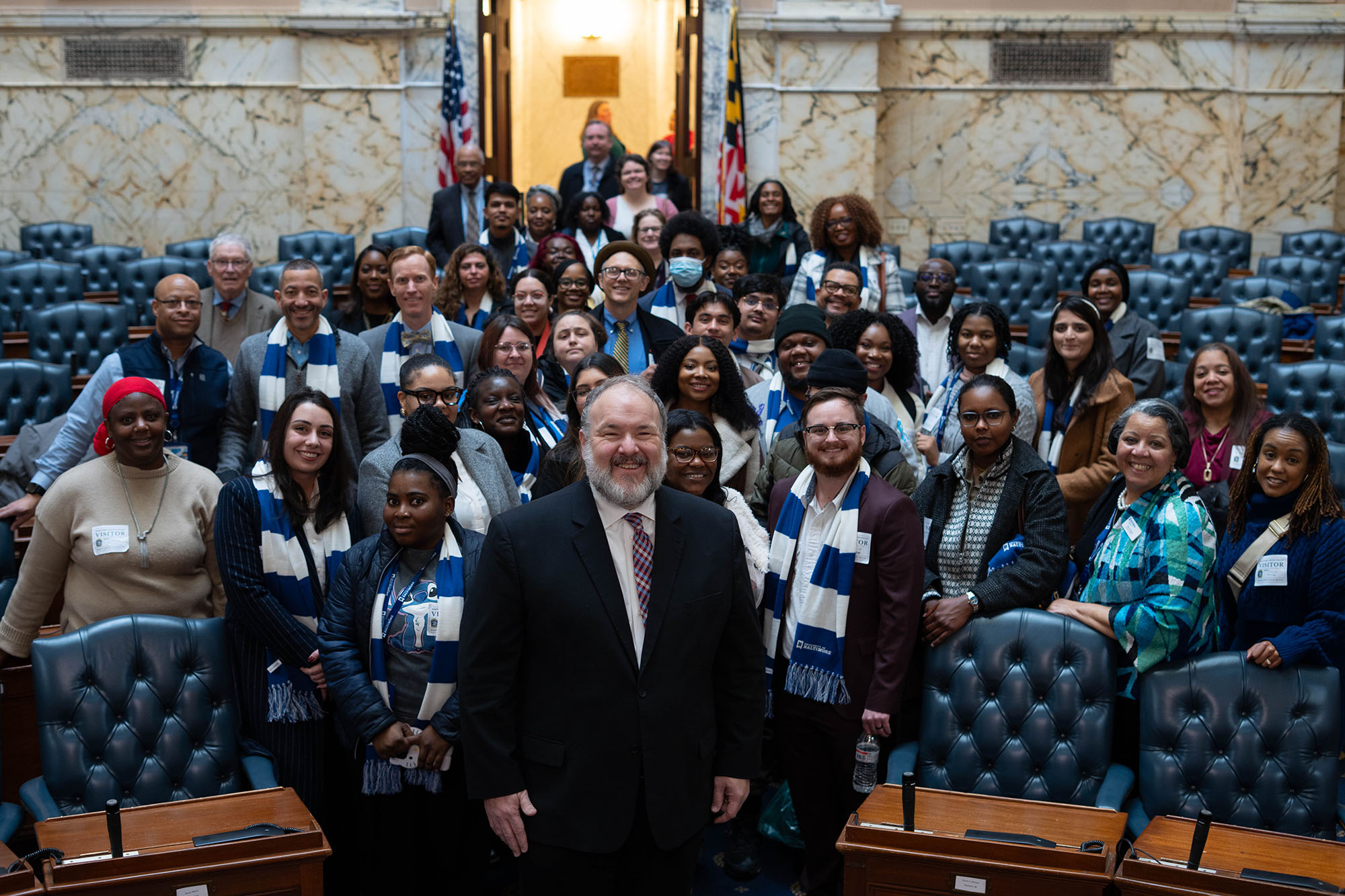
UBalt President Kurt L. Schmoke introduced the group to Delegate Luke Clippinger, District 46, who invited the students onto the floor of the House Chamber for a brief history lesson.
There was already excitement felt among the group of budding public servants. They were joined on the tour by Stacy Rodgers, MPA ’99, who that morning was appointed acting secretary for the Maryland Department of Human Services.
As students were enjoying the tour, word got out there would be a bill signing that slightly adjusted the day’s schedule. Delegates Regina T. Boyce, MPA ‘14, District 43A, and Adrian Boafo, B.A. ‘16, District 23, both College of Public Affairs alumni, sponsored the bill from the House.
Gov. Wes Moore signed the bill, prohibiting Maryland jurisdictions from deputizing officers for federal civil immigration enforcement, as John Willis, research fellow and senior executive in residence for the College of Public Affairs, gave the students an impromptu lecture on what happens during a bill signing.
Sheehan said being there on the day of a signing made the occasion more memorable.
“Students can truly say they were present when history happened,” he said. “Experiences like this underscore that public policy is not abstract; it is dynamic, consequential and deeply human.”
Rodgers, an executive in residence with the Schaefer Center, told the students the value of the day was seeing what happens over the 90 days of the General Assembly but also seeing themselves in the process.
“As students, you're learning and sharpening your skills to be outstanding administrators and public servants, but what we also want to emphasize is that engagement as a citizen, as a person in your community, is just as important,” she said.
Alumni Power in Annapolis
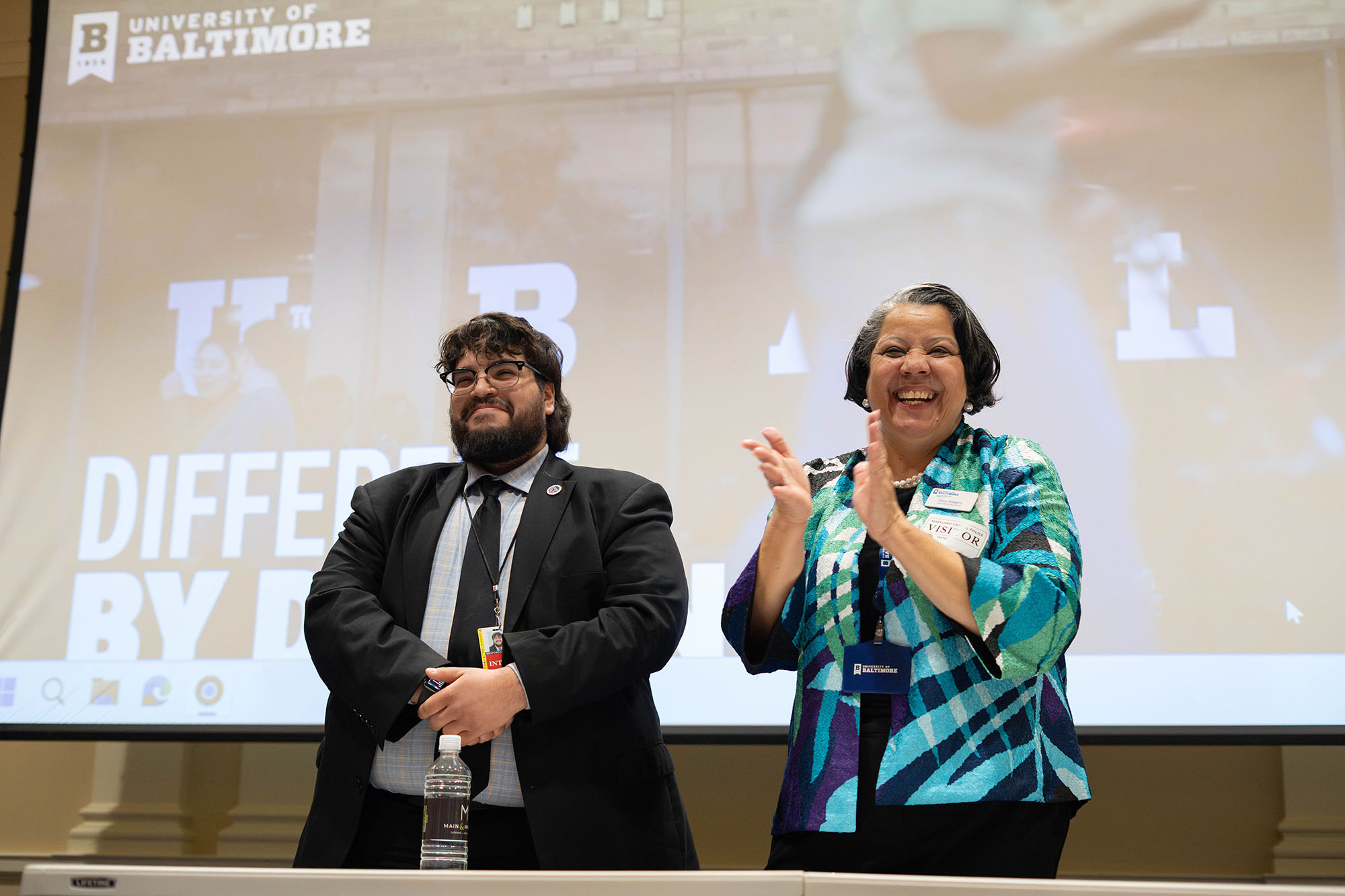
The ubiquity of UBalt alumni in Annapolis was evident through the day, but even more apparent in the final program. While students ate lunch, several delegates, senators and public service professionals—many of whom are UBalt alums or work closely with them—dropped in to offer advice and insights based on their experiences.
Malcolm Ruff, J.D. ’11, told the students he grew up in the city’s Park Heights neighborhood and now represents the 41st district—a position he never imagined but loves.
He said he came to UBalt School of Law unsure if he belonged there, but he pushed himself toward the idea that he could do more and the University supported him toward the finish line.
“The University of Baltimore produces real players. We produce real change makers. I am an example and living proof of that,” Ruff said. … “Live in your purpose, set that vision, and then determine every single day the elements of your day that make up that final goal, and you will achieve it. I know you all will make University of Baltimore very proud.”
Manny Welsh, MPA ’16, deputy chief of staff for the Maryland Governor’s Office, touted the University’s unmatched value because of its professors, staff and mentors. He spoke, too, of the students’ value in public service.
“Your voice and your leadership are needed now more than ever,” he said. … “Your voice matters, your advocacy matters, and thank you for your leadership and your commitment to service.”
Nilesh Kunwar and Anish Deuja, both B.S. in Applied Information Technology students, were impressed with the number of alumni involved in state government. Heading home, Deuja said he was now even considering public service as a career, potentially from a technology angle.
A Mission in Civic Engagement
Maryland Sen. Cory McCray, who gave Schmoke a shout-out during the senate session, also stopped by to talk to the students. He represents District 45, where UBalt’s campus sits, and spoke about his proud partnership with the University.
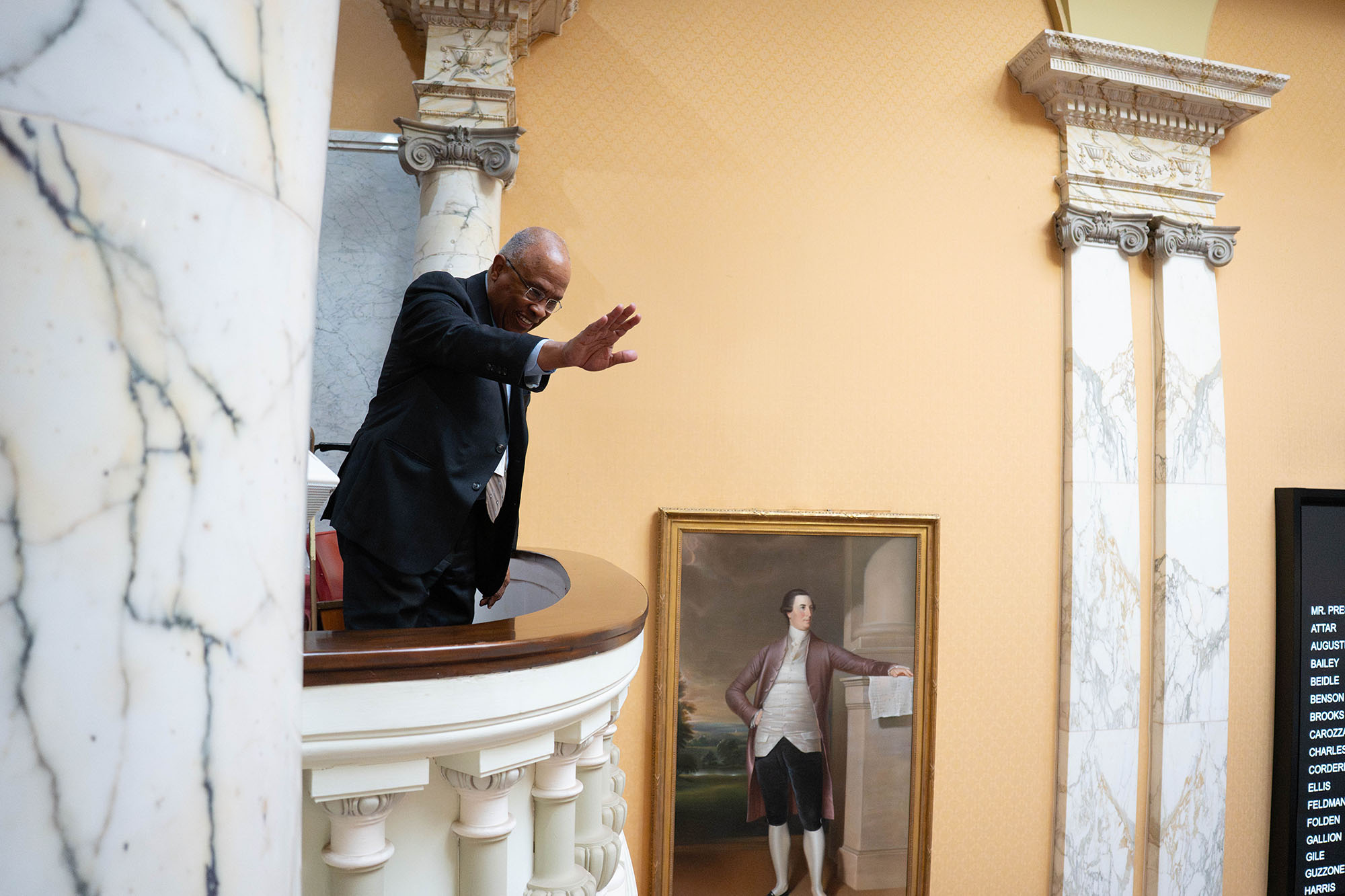
McCray gave special attention to the Schaefer Center’s NextGen Leaders for Public Service program.
NextGen helps students find paid internships in public service roles in the city and nearby counties. It is one of several ways the University of Baltimore, building on a long tradition of civic and community engagement, creates pathways for its students to work with and for the city and region.
Programs such as the Day in Annapolis and NextGen foster an interest in civic engagement that has earned the University national accolades, including most recently recognition from the ALL-IN Challenge for best-in-class voter participation. Since 2016, UBalt has been among the best in the nation on voter registration and participation.
UBalt was also recently received a 2026 Carnegie Elective Classification for Community Engagement.
"At The University of Baltimore, civic engagement is not peripheral to our mission—it is central to it,” Sheehan said. “The College of Public Affairs is deeply committed to preparing informed, thoughtful and active citizens who understand both the responsibilities and opportunities of democratic participation.”
Nicole Marano, vice president for student success and chief student affairs officer, praised the advocacy day as another way students get to connect with local leaders, see their impact and envision a future of making their own impact.
“Our goal is to see more UBalt students transcend into public service to make an impact on other Marylanders lives just like the leaders they met with in Annapolis,” she said. “We are the University of Baltimore, for Baltimore, and this event expands exposure to the state level. Not only do we want to promote civic and democratic engagement at the University, but we want to create opportunities for our students to actively learn and interact in a deep and meaningful way and the Day in Annapolis is one way to do this!”
Seeing Government in Action
Justice Dangerfield, a B.A. in Policy, Politics and International Affairs student, hopes to go on to earn master’s and law degrees. The day in Annapolis helped cement her path.
“When I first stepped in here, I was pretty much in awe,” Dangerfield said. “It did solidify for me that I want to be here in the future.”
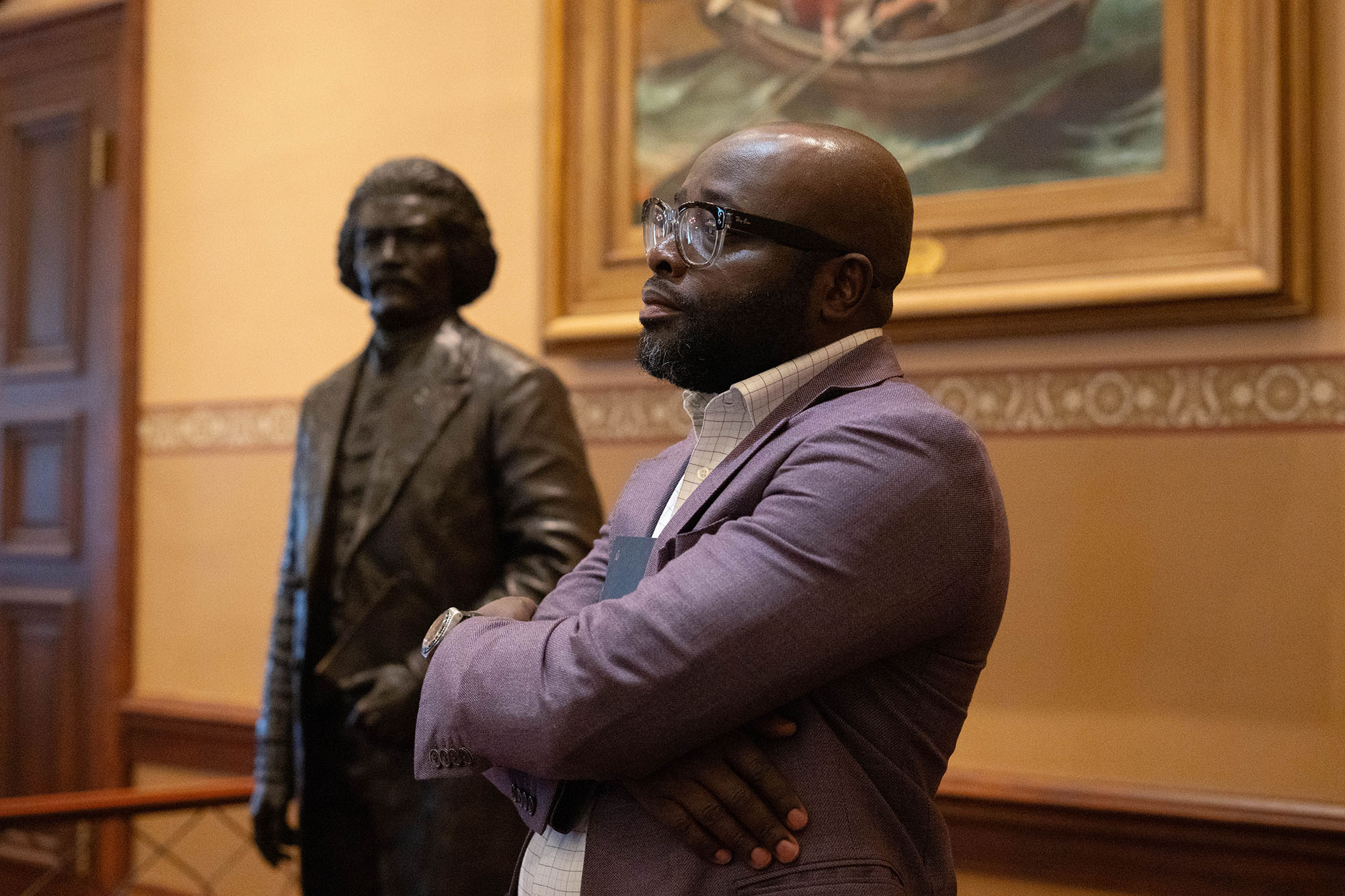
Hammna Asif, also a B.A. in Policy, Politics and International Affairs student, felt like she learned a lot from the experience, particularly the guest speakers.
“Since I am doing policy for one of my majors, I think seeing that in action today was extremely important because you read about it all the time, but actually seeing it in person just solidifies the information,” she said. … “I'll definitely cherish this event.”
Tinatin Guruli, a M.S. in Negotiations and Conflict Management student, learned more than she even imagined.
“I learned a lot more about Maryland representatives in the Senate, how they were voting in and talking about very important issues such as immigration currently,” she said. “I also want to go into immigration law, so it's very interesting and to see it in person and hear these people out. It really opened up my eyes even more.”