

This post was written by Danica Nelson, B.S. ’25, an M.S. in Criminal Justice student.
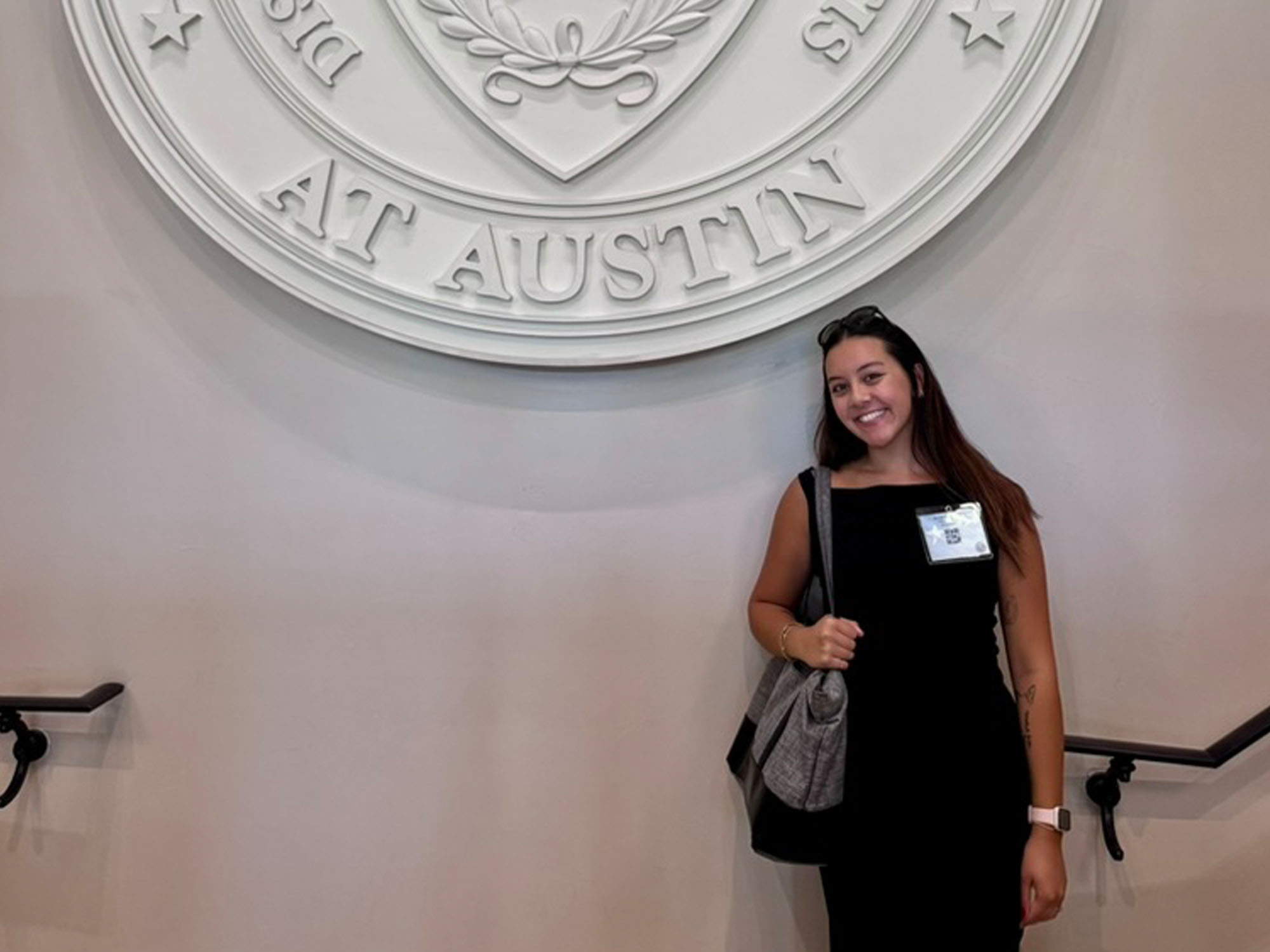
This September, I had the privilege of attending the 2026 Crime Victims Conference in Austin, Texas. The conference took place over a span of two days, and each day I was fully immersed in the knowledge and wisdom from each speaker in the sessions I attended. I joined five sessions, all of which provided me with a deeper understanding of how the criminal justice system is working to support crime victims. The sessions covered: “Victim Services: Domestic Violence High Risk Team Model,” “Texas Evidence Collection Protocol,” “Understanding the Child Advocacy Center Model,” “Holding Steady in Change: Strengthening Advocacy Together,” and “Safe Connections: Supporting Survivors in the Child Support Process.”
The first session, “Victim Services: Domestic Violence High Risk Model,” focused on an individualized intervention plan with the goal of increasing victim safety and offender accountability. For the second session, “Texas Evidence Collection Protocol,” a forensic nurse spoke about clinical versus forensic toxicology when collecting evidence from sexual assault cases.
“Understanding the Child Advocacy Center Model” was my favorite session of Day 1. Catherine Henning, director of external relations at the Children’s Advocacy Centers of Texas (CACs), discussed how to support child victims. She explained the differences between treating a child victim compared to an adult. Children are more vulnerable; therefore, they need professionals who know how to talk to and understand children. The goal of the CAC is to minimize revictimization of child victims and to facilitate successful outcomes in both the child’s protection and the criminal justice system. Henning noted that the CAC is the gold standard for how child victims should be treated. My dream job is to work in the Crimes Against Children unit at the FBI one day, so I found this session particularly fascinating.
The first session on the second day was “Holding Steady in Change: Strengthening Advocacy Together,” by Haleh Hekmat and Virginia Rueda from the Texas Association Against Sexual Assault. The main focus of this session was the importance of the Sexual Assault Training Program (SATP) to obtain the necessary skills and knowledge needed to help victims and survivors. Additionally, Hekmat emphasized adult learning within the training program. She discussed how we need more than just lectures and how important self-assessments are several days after the completion of the training program, and again 30 days after completion. This is to ensure professionals know and understand what they have learned so they can succeed in this field. The last session was “Safe Connections: Supporting Survivors in the Child Support Process.” This session focused on child support cases when there is violence in the home and discussed the child support process and how conservatorship works when violence is present.
As a graduate student in my early 20s, I believe that experiences like this help me grow both academically and professionally. At this conference, I had the opportunity to meet many wonderful professionals, share my career goals and receive thoughtful advice and encouragement regarding my passion for this field. I was also able to connect with fellow graduate students, and we shared how we became interested in criminal justice and victim advocacy. The opportunity and experience to travel from Baltimore to Austin to learn more about victim services would not have been possible without the gracious funding I received from the College of Public Affairs’ Student Professional Development Grant fund and the Featherstone Foundation, for which I am extremely grateful.