

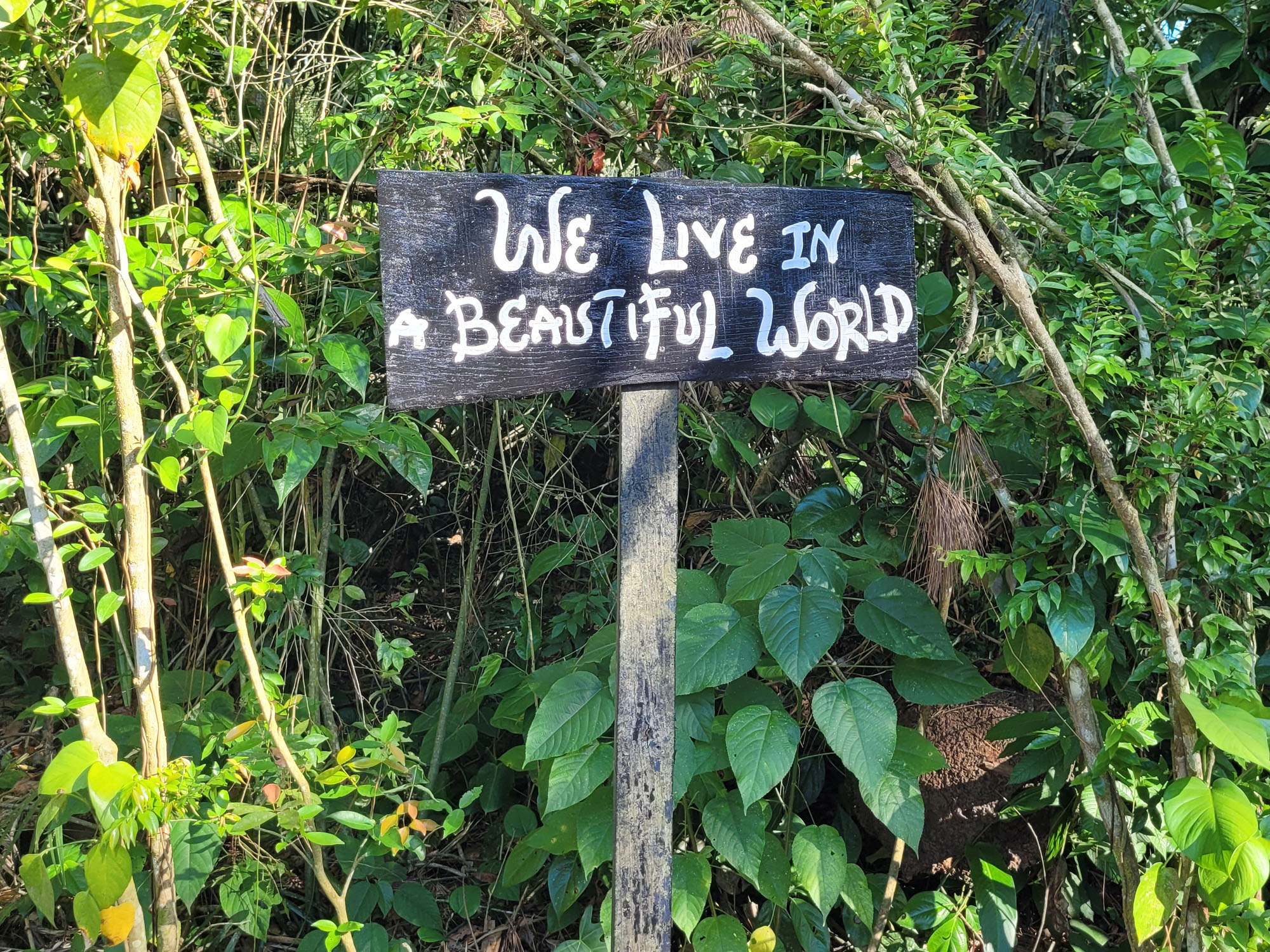
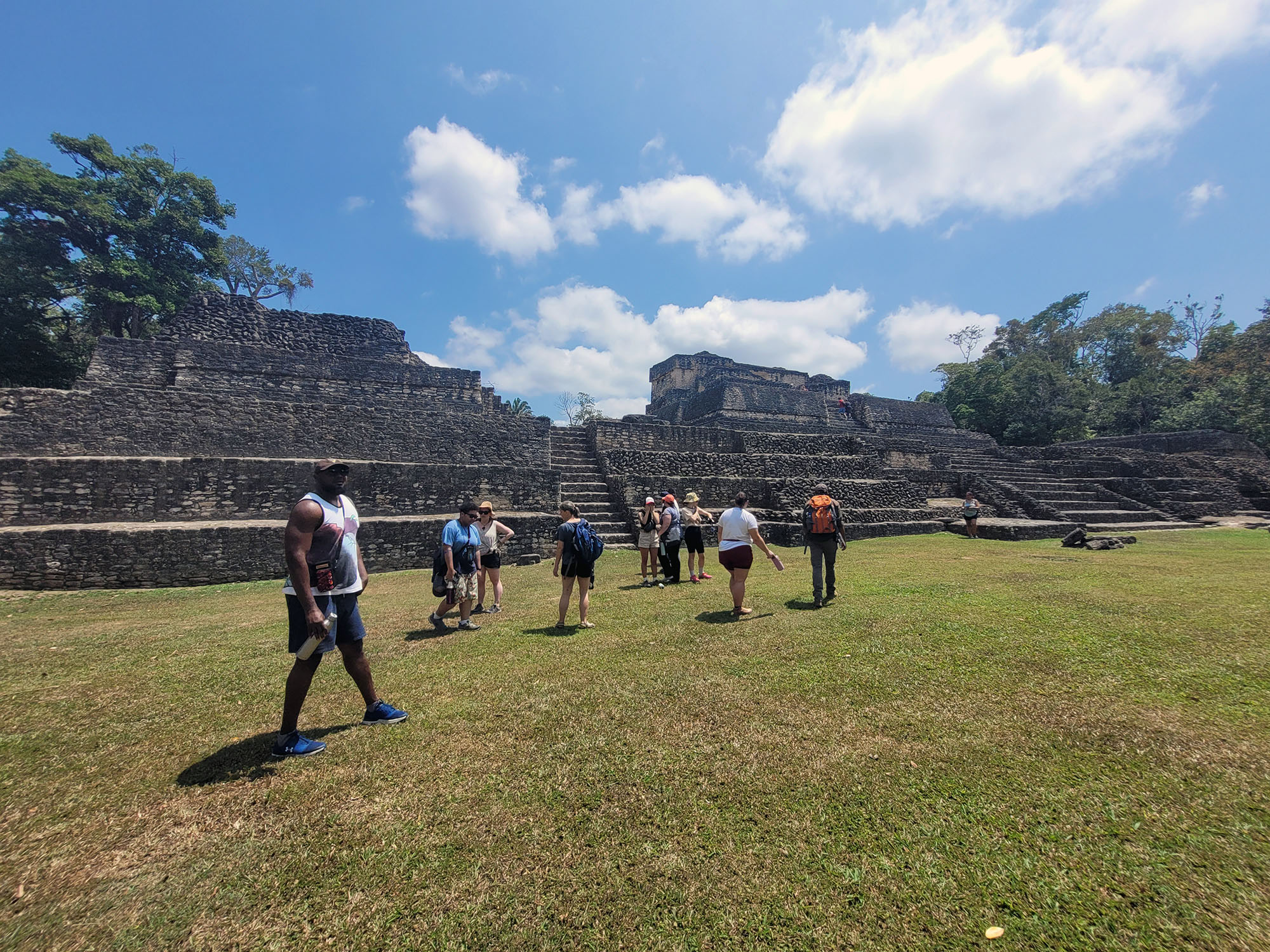
It took a lot of time to get there—half a semester, plus an early-morning flight and a slow drive on unpaved roads—but when Rebekah Opher stood at the base of the Mayan ruins in Belize, she knew the wait was worth it.
“These are stone structures, they're built by hand, and they're so high that I could only walk up to the first landing. And just to think for more than a thousand years, this is where they lived, this was a society, a civilization. I was definitely in awe.”
This perspective-shifting moment was possible because Opher, a B.A. in Interdisciplinary Studies student, elected to take Dr. Sally Farley’s Nonverbal Communication class during the spring semester. The psychology course had an optional component inviting students to travel to the Central America country over spring break.
The excursion may be a blip in Opher’s overall college experience, but the moments like what she experienced are why The University of Baltimore integrates global field studies into several of its academic programs.
“Global field experiences are life-changing,” Farley said. “Stepping away from your family, responsibilities, school, possibly your job and your culture to explore something novel strips away your regular way of thinking and opens your mind up to intellectual, social and existential growth. … When you step away from all that you know, I often think that is when you find yourself.”
After a nearly three-year pause on travel prompted by the COVID-19 pandemic, Dr. Sharon Glazer accompanied her applied psychology students to Spain. The successful trip was a turning point.
“That was the trip that signaled it was time to begin traveling again,” explained Eleftherios Michael, director of UBalt’s Diversity and International Services, who helps analyze risk management, policies and procedures for the experiences.
Over the course of 2023, UBalt students would trot the globe, landing in London; Bangkok, Thailand; Lucerne, Switzerland; Tel Aviv, Israel; San Juan, Puerto Rico, and Aberdeen, Scotland.
These global field studies differ from the traditional study abroad model in many ways, most notably because they only last about 10 days and take place during breaks in the academic calendar. That’s by design. Many UBalt students have families to care for and jobs to work around so a 15-week venture is largely unaffordable or unattainable.
“UBalt doing this is really giving people that are older or people that have a full-time job or a family an opportunity that they would never have anywhere else,” said Jessica Marin, a B.S. in Business Administration student who traveled to Thailand over spring break. “I don't have any kids, but I have a full-time job, so I cannot just take off for a semester.”
Another key advantage is the scholarships that help subsidize the total cost so more students, regardless of their background, can participate, Michael said.
Vernon Wright, B.S. ’69, and his wife Lucy have been sponsoring Global Field Studies for over 20 years.
“Growing up, I was fortunate to live abroad, travel and be exposed to cultural differences—and similarities,” he said. “Being able to see things from a different view definitely helped my career. I hope this experience does the same for these students.”
Students also often earn college credits for the program-based experiences. While most trips include some sightseeing, most of the time abroad is spent on academic opportunities, such as attending conferences, factory visits, and discussions with local leaders of various industries and fields.
“The best part of the experience is moving the classroom to some other part of the world,” said Kathea Smith, the business school’s assistant dean for enrollment, academic affairs and student services. “You have to stretch your understanding. While the world is certainly connected, there are still big gaps between countries, and sometimes minor things in the USA are major things elsewhere. It’s also important to see other places that are getting things right like equality in the workplace or environmental sustainability. Getting beyond the book is important for everyone and global field experiences make that possible.”
For many students, and even staff, like Smith, the experiences are also their first chance to travel abroad.
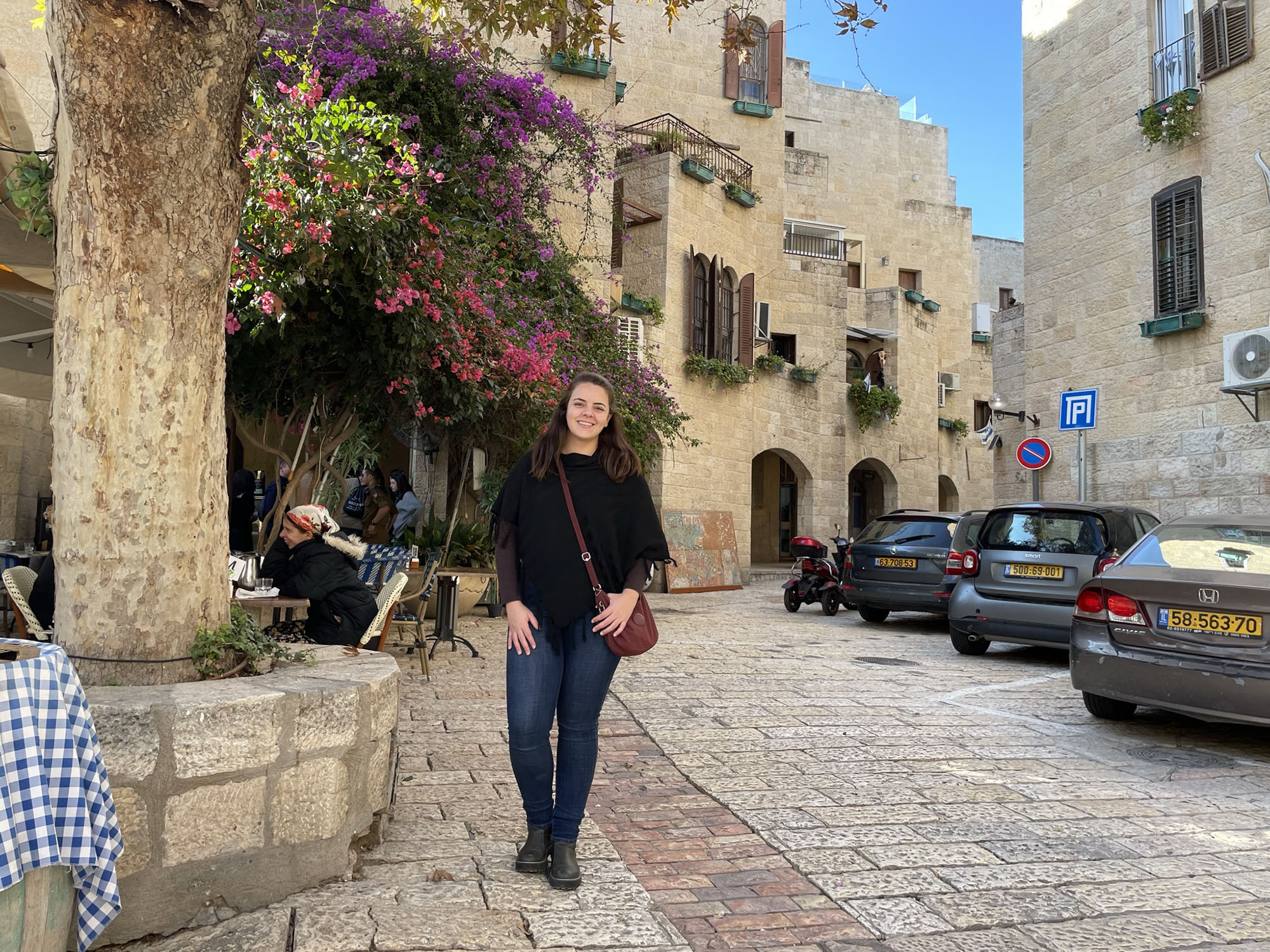
Andressa Carvalho Viscone, B.A. ’22, had an opportunity to present research she conducted with Glazer at the Israel Organizational Behavior Conference at the University of Tel-Aviv in January.
For Viscone, now an M.S. in Applied Psychology student with Industrial-Organizational Psychology concentration, it was an opportunity to meet professionals already in the field she’s working toward.
“Having the opportunity to talk with people who have been in the field for a while who are doing focused research in specific topics gives a good idea of all the things that we can do,” she said.
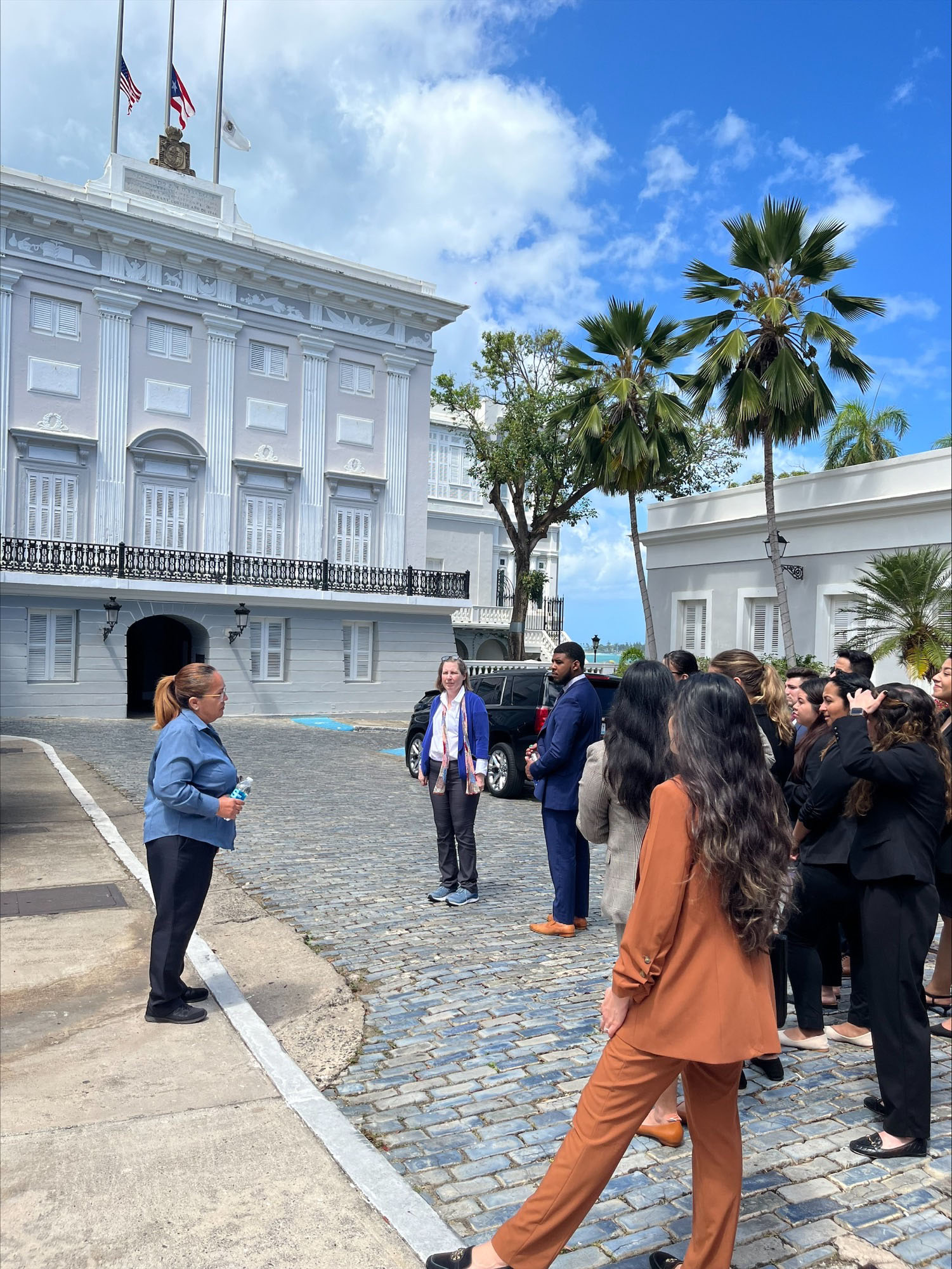
Networking was a key aspect of the alternative spring break in Puerto Rico. Angely Luna and Karen Cedeno, two UBalt law students, spearheaded the trip as the leaders of the Latin American Law Student Association (LALSA). They did community service and laid groundwork for future opportunities, such as internships and proposal writing. They also learned about the legal system through meetings with the governor’s chief of staff and a federal magistrate judge and visits to the court of appeals and house of representatives.
“I thought through this trip we could bring more awareness to Baltimore and LALSA, and see how we could help the Puerto Rican community through our organization and also through the legal community,” Luna said.
The students’ enthusiasm and commitment to service and learning was on full display during the trip, Keyes said, and that made room for new confidences to arise.
In Puerto Rico, she said, “It was kind of wonderful to see students who are quiet in the classroom in Baltimore blossoming, just in charge and demonstrating their leadership.”