

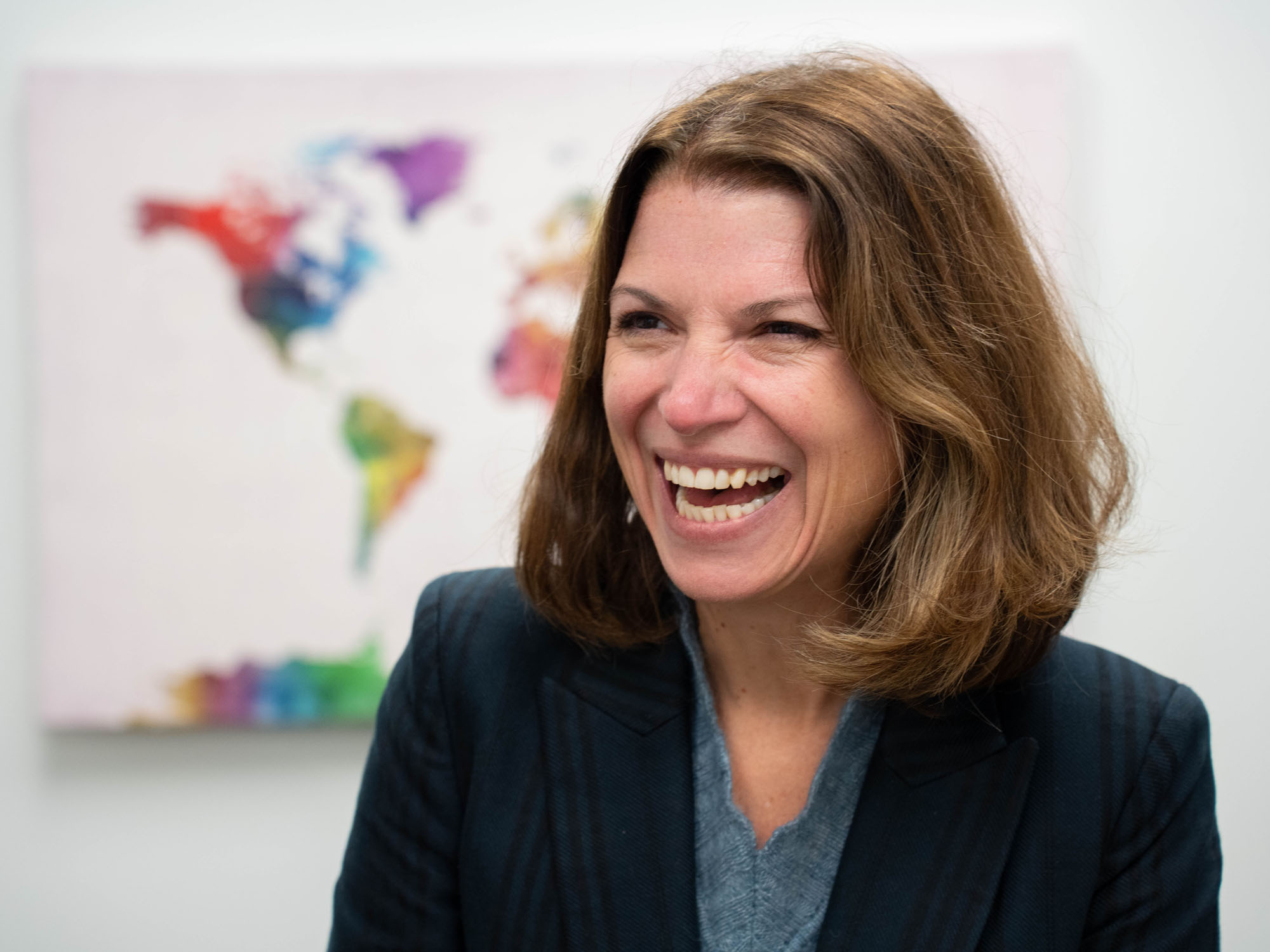
Writing in Maryland Matters, Dr. Jennica Larrison, executive director of The University of Baltimore's School of Public and International Affairs and associate professor in its College of Public Affairs, says the nation's immigration laws—specifically a provision called temporary protected status (TPS)—are in need of reform. Two current Supreme Court cases, she says, reveal the vulnerability of TPS.
Dr. Larrison and her co-author, Ben Coleman, a UBalt graduate student and former caseworker and refugee advocate at the International Rescue Committee, write that the Trump administration has moved to cancel TPS for more than a dozen countries.
"On April 29, the Supreme Court heard arguments in the case of Trump v. Miot, that will decide the fate of TPS for Haitian and Syrian nationals," they write. "Running concurrently through the courts is the case of African Communities Together v. Markwayne Mullin, which addresses the fate of TPS for Somali immigrants. Maryland Attorney General Brown joined 15 other state attorneys general this spring to defend TPS status for Somali immigrants."
Larrison and Coleman call for strengthening TPS to eliminate its uncertainties.
"The vulnerability of TPS should be urgently fortified with clearer guidelines for cancellation and a path to long-term residency," they write. "Otherwise, the cruel and sudden prospect of statelessness and deportation for thousands working and living in Maryland will continue to plague communities across the state and fuel the chaos of immigration enforcement.
"The TPS program was designed to give deportation protections to individuals already living in the U.S., whose country of origin is deemed by the Department of Homeland Security as unsafe for their return. But the parameters for designating safe and unsafe countries of origin are vague and subjective, leaving the policy and people's lives and communities in the hands of the DHS secretary."
Read the opinion piece in Maryland Matters.
Learn more about Prof. Jennica Larrison and UBalt's School of Public and International Affairs.