

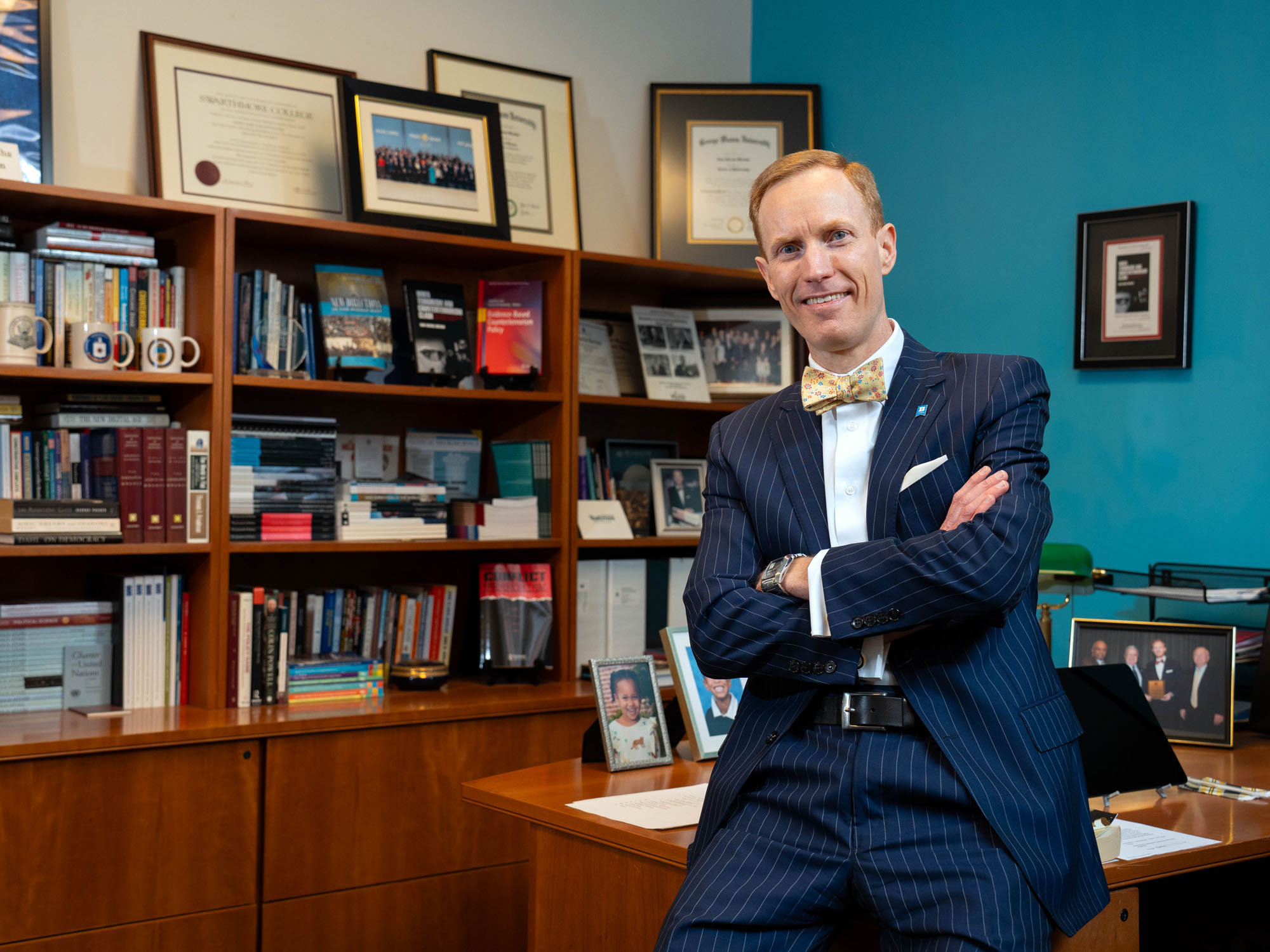
Speaking out on two hot zones around the world—Iran and Russia—Dr. Ivan Sascha Sheehan, interim dean of The University of Baltimore's College of Public Affairs and a widely recognized expert in international affairs, calls for the United States to keep a close eye on the internal affairs of both countries, as their aims are intended to thwart efforts by the West to promote democracy and advance an agenda based in reform.
Writing in The Baltimore Sun, with co-author Ramesh Sepehrrad, a visiting scholar at George Mason University's Jimmy and Rosalynn Carter School for Peace and Conflict Resolution, Dr. Sheehan says the Iranian regime is following a strict policy of internal repression, as it deals with American military incursions intended to destroy or disable its nuclear capabilities. With growing signs that the Iranian people are enduring multiple hardships, including economic deprivation, the imprisonment and execution of dissidents, and mass homelessness, the U.S. must craft a policy that goes beyond eliminating weapons systems and targeting political leaders.
"Iran should not be viewed only through the nuclear file, maritime security or regional proxy networks," Sheehan and Sepehrrad write. "Those issues matter, but they are symptoms of a deeper problem: a system that exports violence abroad while crushing society at home."
They continue: "A serious U.S. policy should put human security at the center. It should make executions and political imprisonment central to any engagement with Tehran. It should expand support for secure internet access and censorship circumvention. It should target financial networks that enrich security institutions while ordinary people go hungry. It should also support accountability for torture, enforced disappearances and executions."
Writing in Townhall, Dr. Sheehan calls for an evolution in American policy toward Russia and other nations within its sphere of influence. The Kremlin is intent on disrupting Western behaviors, chiefly those tied to pro-democratic values. Washington should, he says, act accordingly:
"Russian interference today is adaptive, decentralized, and psychologically sophisticated. Social media disinformation blends with activist pressure campaigns, economic leverage, intelligence operations, and cultivated relationships with business elites or political influencers."
In Armenia, for example, U.S. policy should work to undo the Russians' preferred state of affairs: "frozen conflict."
"Americans should closely watch Armenia because it illustrates how Russian interference campaigns are evolving globally," Dr. Sheehan writes. "The Kremlin has refined its playbook through decades of experience across Europe, Africa, and the former Soviet Union.
"The United States cannot afford complacency. Russia exploits open societies."
Read Dr. Sheehan's latest opinion pieces in The Baltimore Sun and Townhall.
Learn more about Prof. Ivan Sascha Sheehan and The University of Baltimore's College of Public Affairs.