

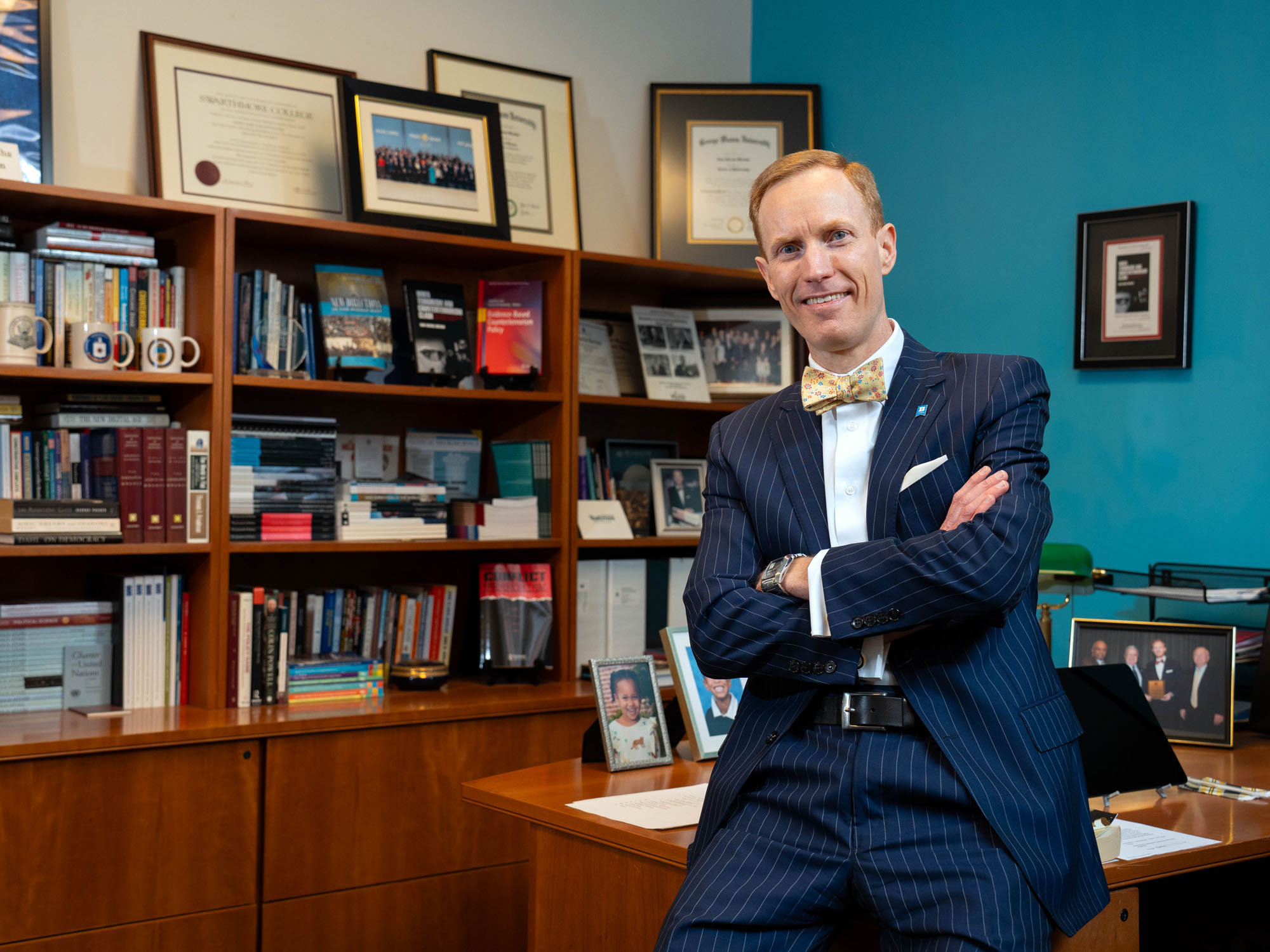
Writing in Newsweek, Dr. Ivan Sascha Sheehan, interim dean of The University of Baltimore's College of Public Affairs and an internationally recognized expert in international affairs, says that the war in Iran is providing clarity on some key United States partnerships and alliances in the region. That's especially true, he says, of Qatar.
"With the Middle East undergoing what may be its most significant security realignment in a generation, a persistent chorus of critics has nevertheless trained its fire on the independent emirate," he writes. "Critics raise legitimate concerns—particularly about Qatar's alleged ties to hostile sub-state actors—but these concerns must be examined contemporaneously and evaluated pragmatically against alternatives. Against these metrics, the critics' claims appear obsolete."
Understanding what an American partnership in the Middle East looks like, and how it functions, Dr. Sheehan writes, takes some doing. But the basic logic is intact, and the generally recognized hallmarks do apply.
"The most basic test of a foreign policy ally is simple: what does it do when bombs begin falling?," he says. "Not in white papers or panel discussions, but in the uncomfortable immediacy of real time."
While Qatar pursues its own aims, Sheehan observes, it does assist the U.S. at crucial moments. In this extremely volatile part of the world, that matters.
"Washington has always required interlocutors capable of navigating terrain that American officials cannot access directly. Qatar fills that role with a consistency and effectiveness that few others can match. Its ability to maintain working relationships across hostile divides is not a liability, it is precisely what makes it useful."
Dr. Sheehan notes that this does not go unrecognized at home:
"For scholars of international conflict resolution and students like mine at the University of Baltimore—who are quick to point out when theory and practice diverge—Qatar represents something rare on the global stage: a small state that has converted geographic position and political relationships into sustained leverage as an intermediary."
Read the opinion piece in Newsweek.
Learn more about Prof. Ivan Sascha Sheehan and The University of Baltimore's College of Public Affairs.