

Claes Oldenburg, American; 1929-2022
Coosje van Bruggen, Dutch American; 1942-2009
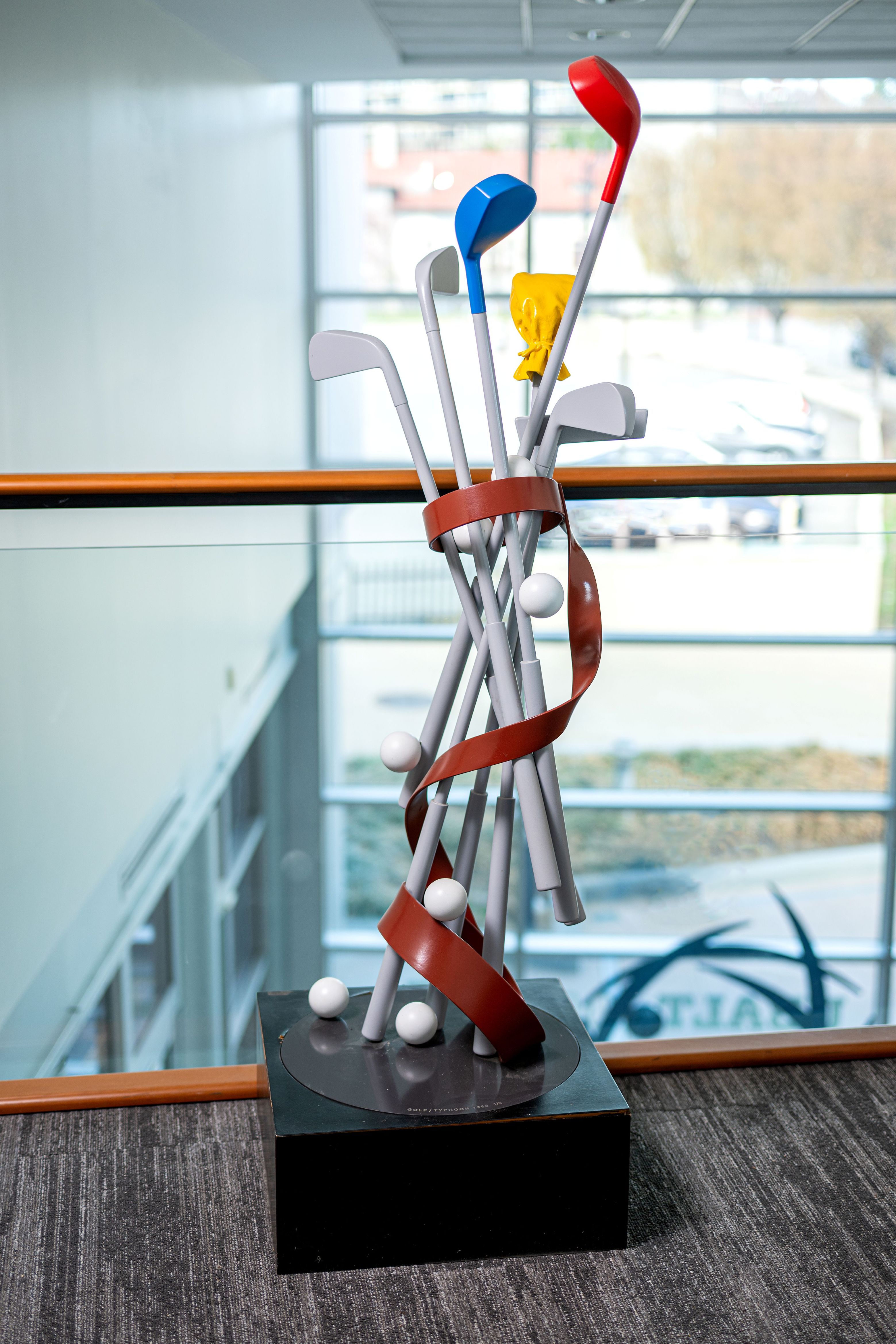 Golf Typhoon, 1996.
Material: Bronze, acrylic, aluminum and wood
Measurements: 60.5” x 19” x 19”
Location: UBalt Welcome Center
Second Floor, balcony overlooking Main Lobby
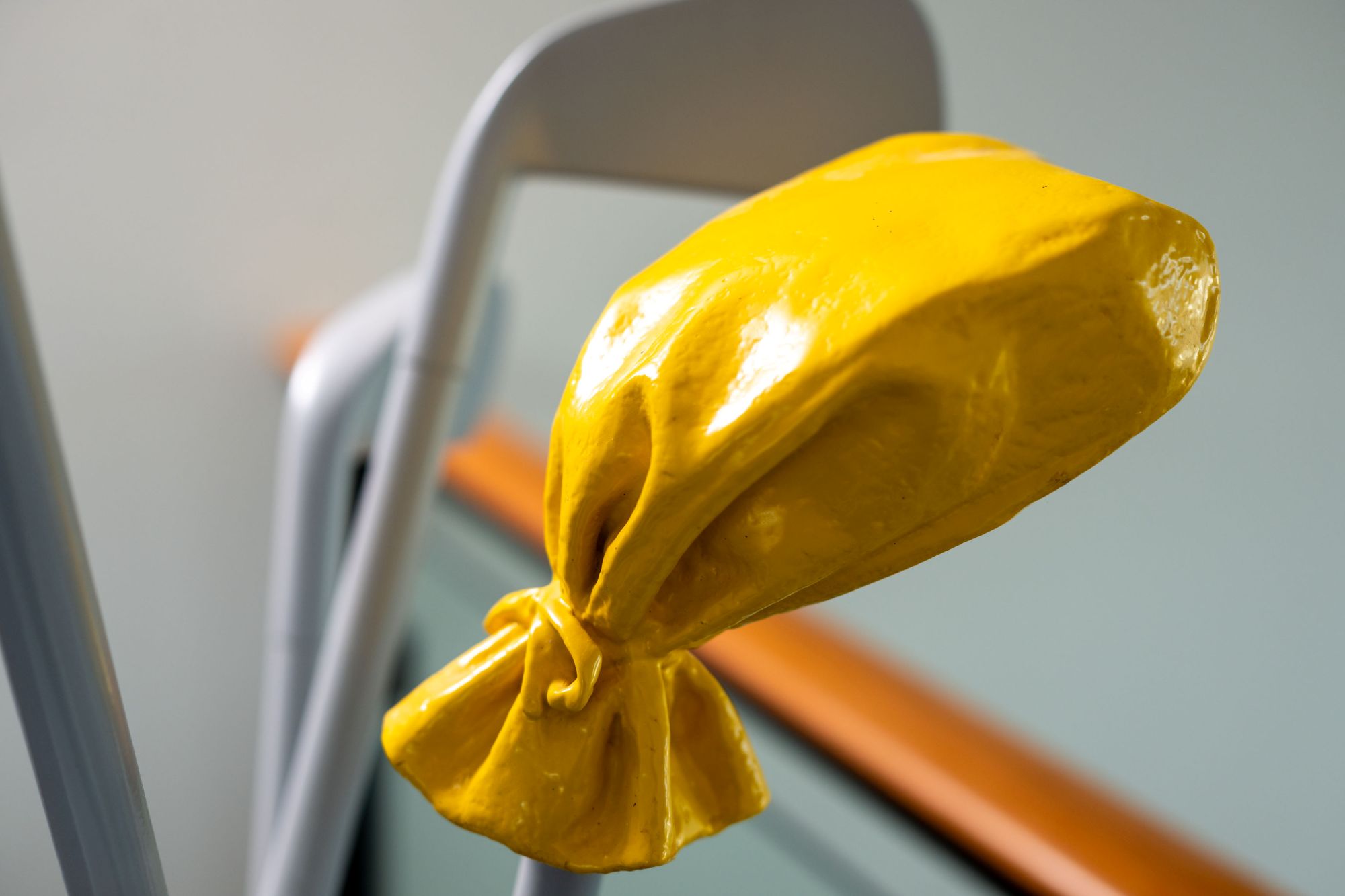
Golf/Typhoon depicts a group of seven haphazardly intertwined golf clubs, four of which hover in mid-air. Three golf balls balance themselves on the clubs, and another two lay at the base. Instead of a traditional golf bag, a brown leather-like ribbon curls around the clubs in a way that is more decorative than functional. The swirling ribbon, bright primary colors of the clubs and defiance of gravity evoke a sense of magic and playfulness.
Oldenburg frequently collaborated with his wife, Coosje van Bruggen, in his later years. Their 1992 purchase of a house and surrounding grounds in the French countryside inspired them to create variations on traditional garden sculptures such as statues, vases and fountains, along with games connected to landscaping such as croquet and golf. Golf/Typhoon was conceived as a twenty feet tall sculpture intended for a public park, with five smaller “patio-sized” editions to be installed in other spaces, of which this particular sculpture is one. The oversized version currently occupies a garden at the Wadsworth Athenaeum Museum of Art in Hartford, Connecticut.
A leading figure of the Pop Art movement, Claes Oldenburg was best known for his sculptures of everyday objects reproduced on a massive scale and installed in public spaces. Most pieces (such as a clothespin, an ice cream cone or a typewriter) are intended to provide a whimsical, lively element to buildings and parks. Others, such as Lipstick (Ascending) on Caterpillar Tracks, in which a giant lipstick emerges from an army tank, take on a more serious meaning. Like other Pop artists, especially Robert Rauschenburg and Andy Warhol, Oldenburg’s work simultaneously celebrated the mundane and critiqued modern consumerism.