

American; b. 1964
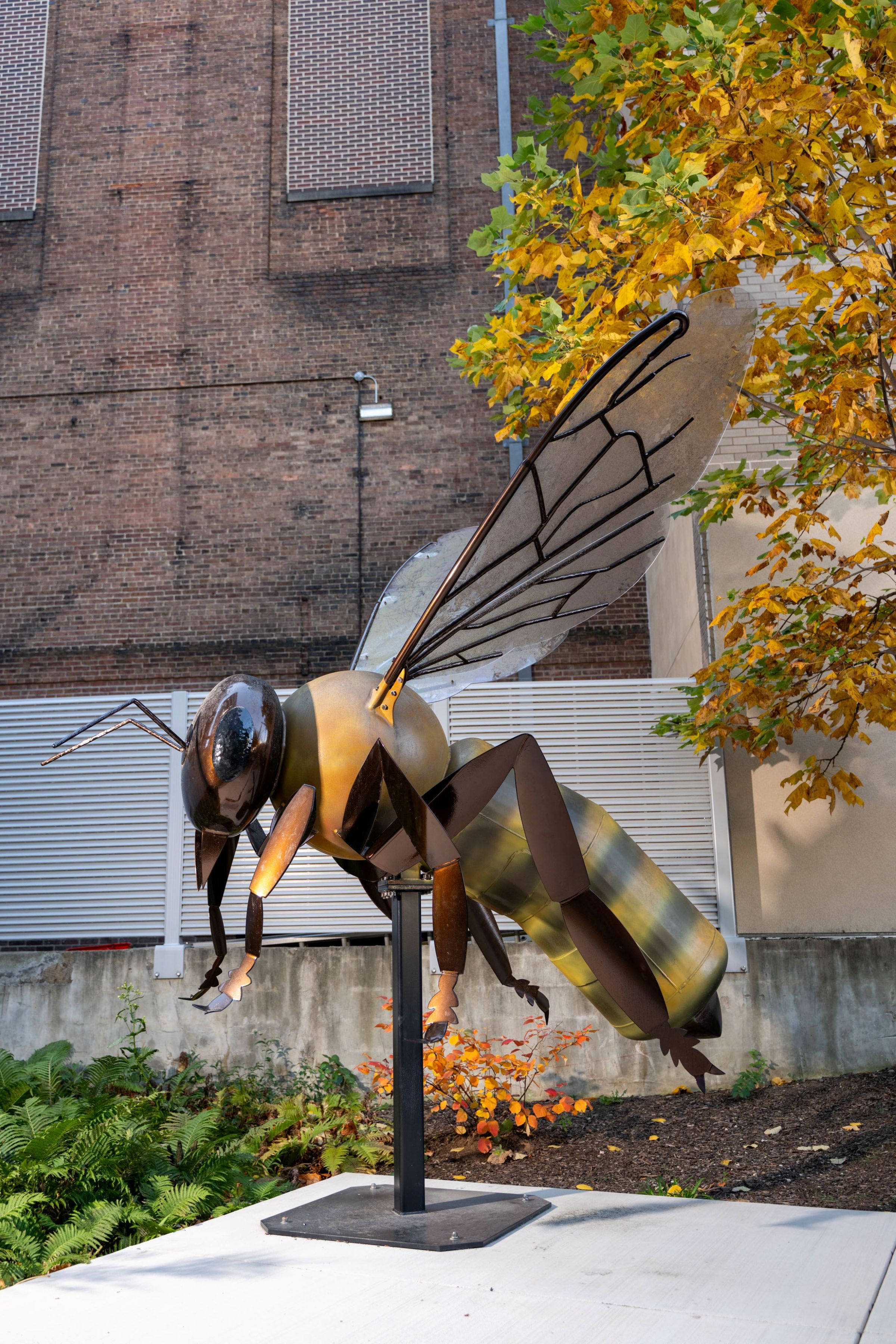 Honey Bee, 2023.
Material: Salvaged steel propane tanks, recycled metal, plastic pipe and spray paint
Measurements: 127” x 120” x 120”
Location: Robert L. Bogomolny Library
Courtyard, Oliver St.
Crab, 2023. IMAGE TO COME
Material: Recycled steel propane tanks, powder coat paint
Measurements: 48” x 120” x 60”
Location: Angelos Law Center
Appendisphere, 2019. IMAGE TO COME
Material: Recycled steel propane tanks, powder coat paint
Measurements: 68” x 68” x 68”
Location: Angelos Law Center
California-based sculptor Colin Selig focuses on sustainable, environmentally friendly
materials for his pieces. Selig believes art should be accessible to everyone and
creates playful designs intended to engage the public and enhance shared spaces. He
has completed numerous commissions across the United States for public locations including
streetscapes, parks and plazas, municipal buildings, healthcare facilities, museums
and commercial properties, spanning from functional seating to biomorphic sculpture.
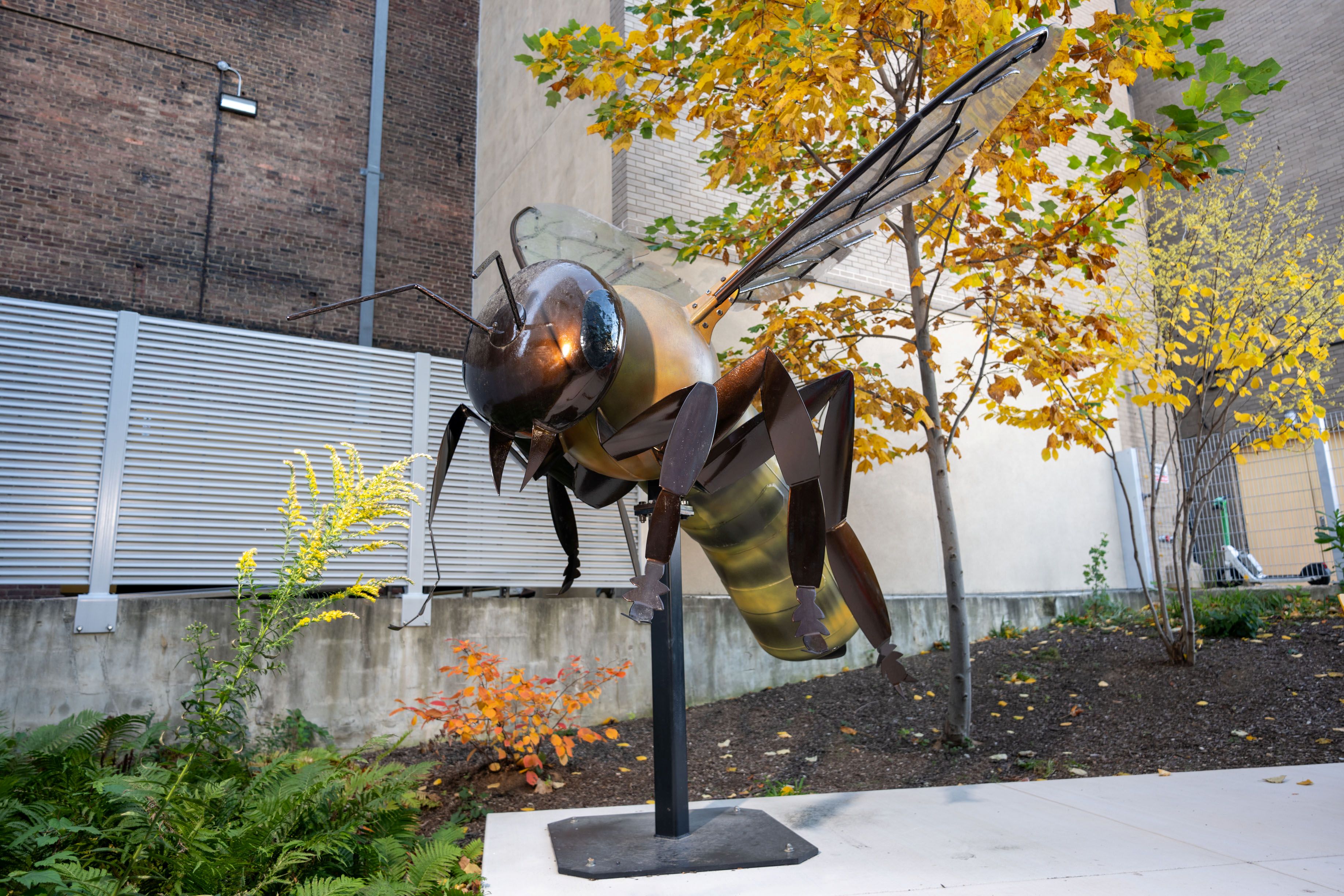
"Honey Bee" was originally commissioned for art collector Samuel G. Rose to honor Rose’s long-time beekeeping hobby. However, Rose later believed the sculpture would be more at home at his alma mater given UBalt’s Eubie mascot, and donated "Honey Bee" to the University in 2025. The bee’s body and legs are made from regionally sourced salvage steel propane tanks, while its wings are fabricated from used plumbing pipe and polycarbonate plastic. The choice of materials, along with an assembly method that requires no additional shaping, represents Selig’s commitment to sustainable artistic practices. Culminating in a minimal carbon footprint and producing durable objects containing 99% post-consumer reused content, Selig’s art reflects his belief that creativity and functionality need not be stifled by environmental awareness.
"Appendisphere" is an ideal example of Selig’s biomorphic innovations. With its wavy limbs sprouting from an orb in the middle, the form resembles an organic yet otherworldly creature. The sprawling "Crab" is equally striking due to its raised back legs and bright red hue directly referencing the animal’s coloring. The sculpture is fitting for UBalt’s campus, as the crab is part of Maryland’s cultural identity through their cultivation in the Chesapeake Bay. The crustacean also serves as a reminder to protect their habitat in the Bay, which is threatened by climate change and pollution – problems that Selig actively strives to offset in his ecologically-conscious work via recycled materials and a minimal fabrication process.
Selig’s upbringing in an ecologically conscious household imbued the importance of conserving the planet’s resources at an early age. As a child he would often search through his neighbors’ garbage on his way home from school, retrieving appliances and furniture to repair. He studied metal sculpting at The School of the Museum of Fine Arts in Boston while earning a degree in Philosophy from Tufts University in 1987. During that time he apprenticed with a machinist, race car fabricator, and public art sculptor, exposing him to a wide variety of design, conservation, and artistic practices and philosophies. He continued to master his craft while restoring antique cars before focusing on sculpting. Selig has won several major awards, including “Most Interesting Products" from the American Society of Landscape Architects and “Exhibitor’s Choice Gold Award” at the Smithsonian Craft Show.