

The Shona are a group of culturally similar Bantu-speaking peoples living chiefly in the eastern half of Zimbabwe (Encyclopaedia Britannica). While the Shona’s rich history goes back hundreds of years, it wasn’t until the mid-20th century that their sculpture gained international recognition. While the authenticity of Shona sculpture has been hotly contested, some art historians claim that it represents a unique dialogue between the artist and the indigenous stone: traditional sculptors do not have a pre-determined subject in mind when they begin carving. Rather, they believe the form is inherent to the stone, and their task is to release it via carving.
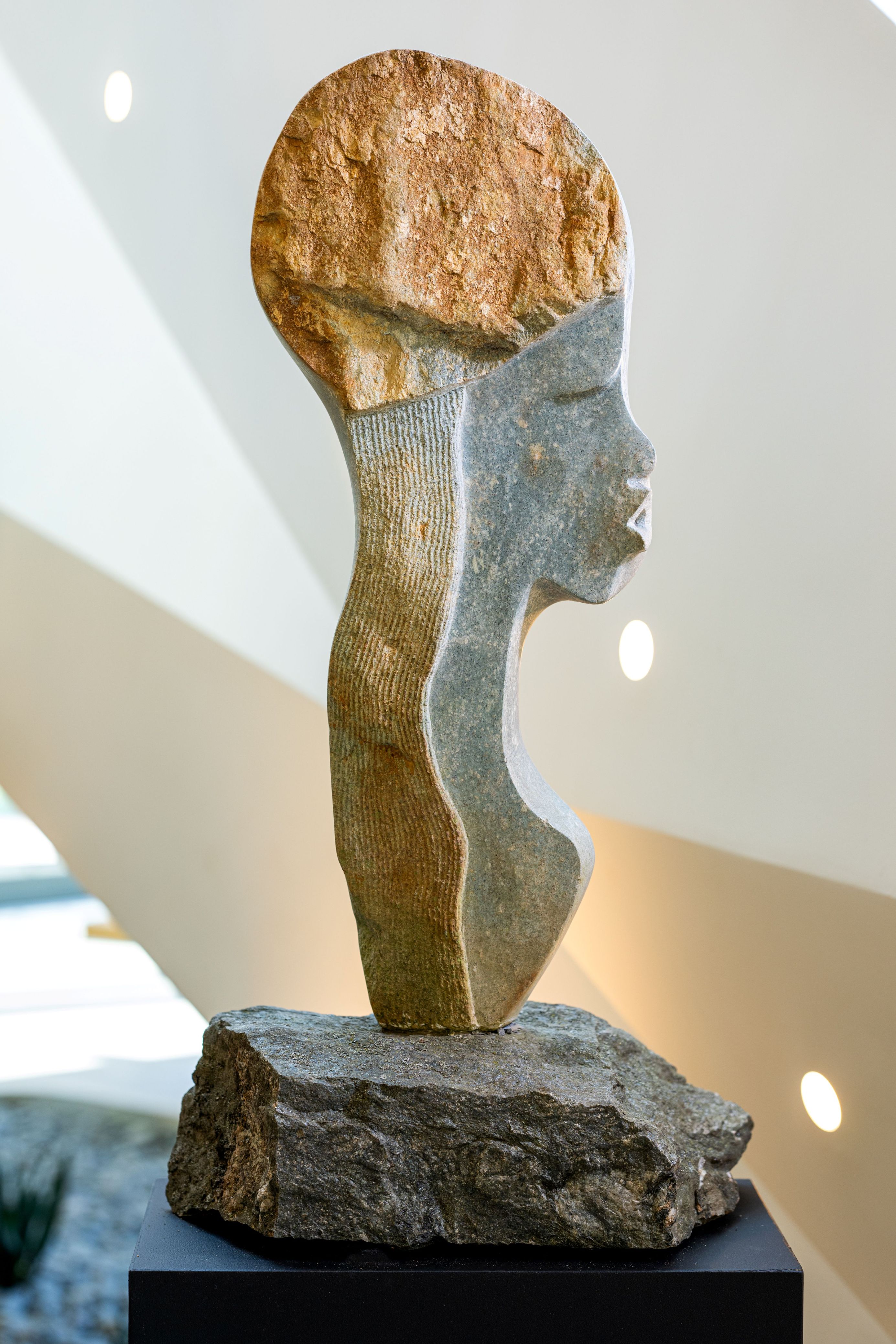 Untitled Carving (Face); 20th/21st Century
Material: Serpentinite (likely Soapstone or Springstone)
Measurements: 32” x 15” x 5”
Location: Robert L. Bogomolny Library
Main Floor
Rough and smooth surfaces combine to form a visually striking and surprisingly harmonious human profile. Appearing both modern and ancient at once, the sculpture’s varying textures and lines speak to the timeless essence of humanity. Though likely, it is unclear whether this sculpture was produced by the Shona, the ethnic majority residing in Zimbabwe, or a different group within the country that shares a sculpture heritage with them.
Untitled Sculpture (Pelican); 20th/21st Century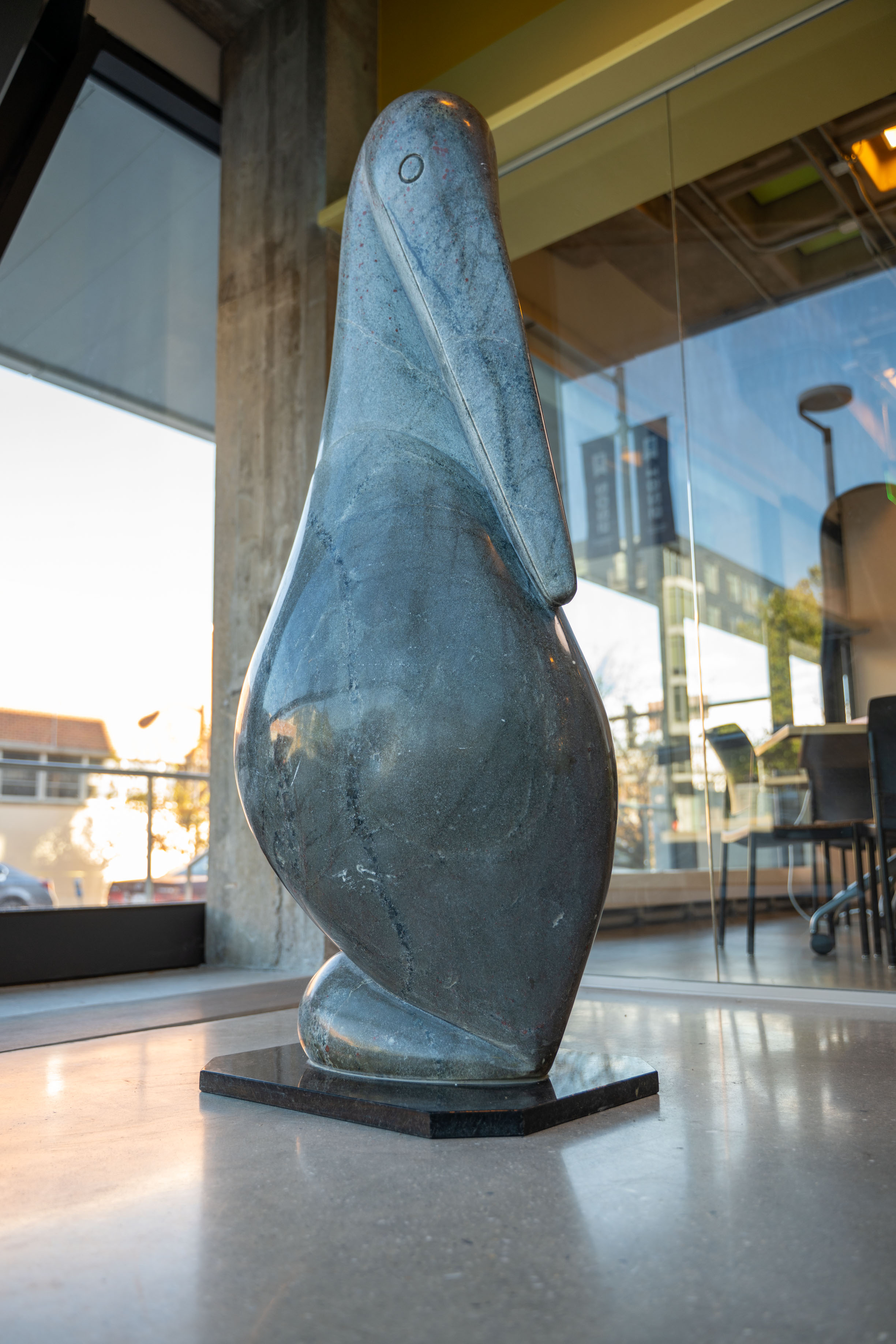
Material: Serpentinite (likely Soapstone or Springstone)
Measurements: 62” x 16” 25”
Location: Robert L. Bogomolny Library
Main Floor
Shona sculptors reveal forms that usually explore family, nature, and spirituality. Upon first glance, many Shona sculptures appear stylistically and thematically similar in that they are figurative rather than abstract, solid without much negative space, and a direct expression of Shona culture and ancestry. However, there are an equal number of Shona sculptures that are entirely abstract in form. represent a wide variety of concepts and reflect the artist’s individual perspective rather than the collective ethnicity of the Shona.
Serpentine rock, including soapstone or springstone, are the primary materials used for Shona sculpture, as they are native to the land. As early as 1250 CE the Shona were using soapstone to create sculptures of birds, which would later become Zimbabwe’s national symbol. The artists carve and finish their sculptures using basic tools and techniques. The pelican, with its elegant, graceful lines and polished surface, is exemplary of the high-quality craftsmanship that comprises Shona sculpture.