

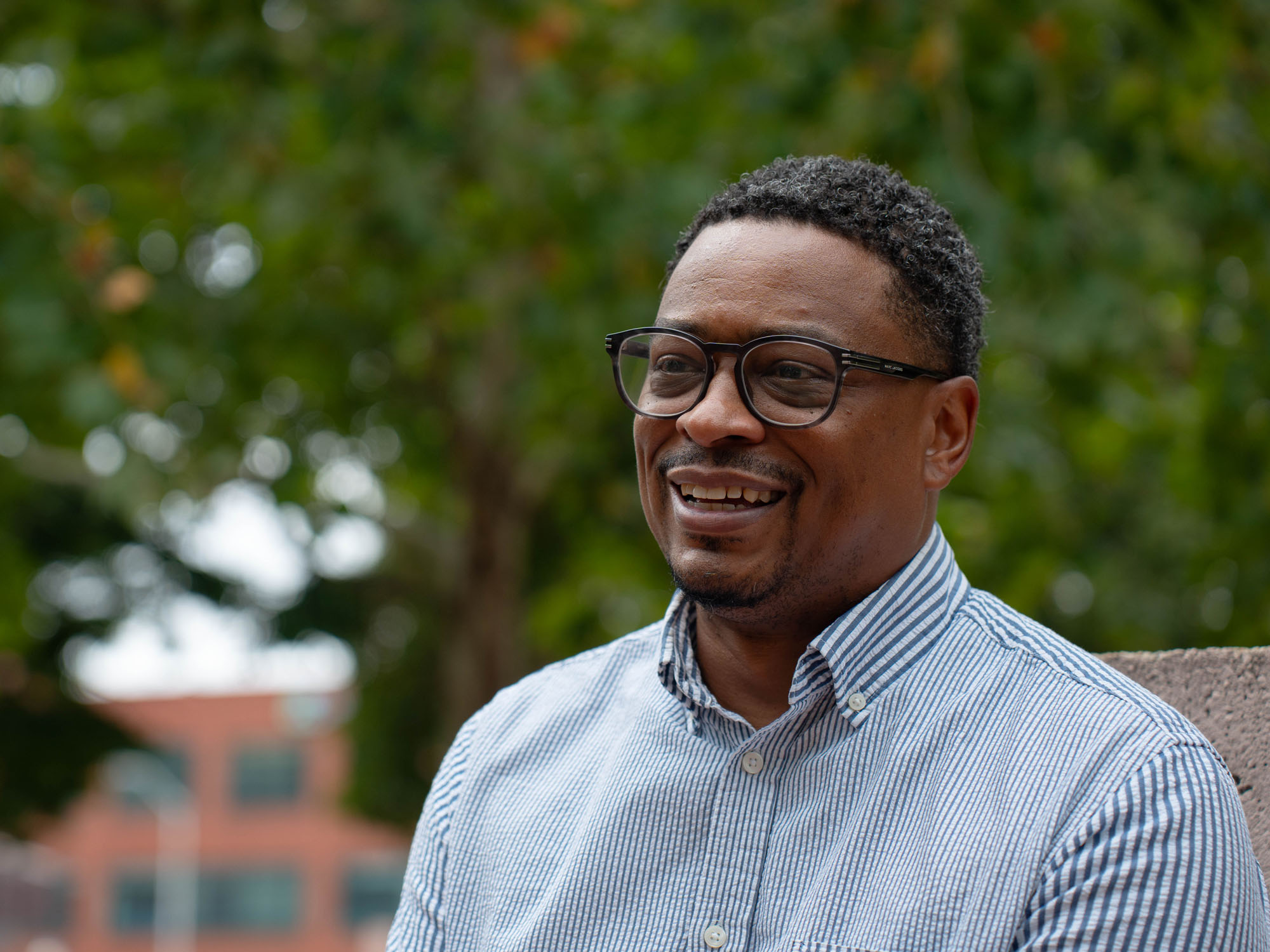
Carey Miller, director of student success and retention, came to The University of Baltimore 13 years ago to see where he could support students toward their goal of graduating. His various positions have connected him with students facing the biggest obstacles of the college experience. He’s helping first-time undergraduates or first-generation college students who are completely new to the college experience, and transfer students who are looking for a seamless transition into their new program. Every student he helps is a reminder of why he got into higher education.
Q: You've worn many hats in your time at UBalt. Tell me about the part of your work that makes you the proudest.
A: The project piece of my job, and specifically the Open Education Resources experience, has been the most fascinating because I got to work with faculty, design my own book, and be able to give free texts to students at the University.
Open Education Resources (or OERs) allow faculty and instructors to identify text that is open sourced, meaning it is free to use, revise, remix, reuse, retain and redistribute. Thanks to my friends in the library, they were instrumental in taking up this work and being OER champions. Collectively, we were able to enlist faculty from multiple disciplines to engage in OER work, which ultimately results in low cost or no cost textbooks.
It was rewarding, fulfilling because we're giving something that students need for free. Anytime you can lower the cost of attendance, lower the cost of books, it really helps students, and it allows them to know we’re putting students first.

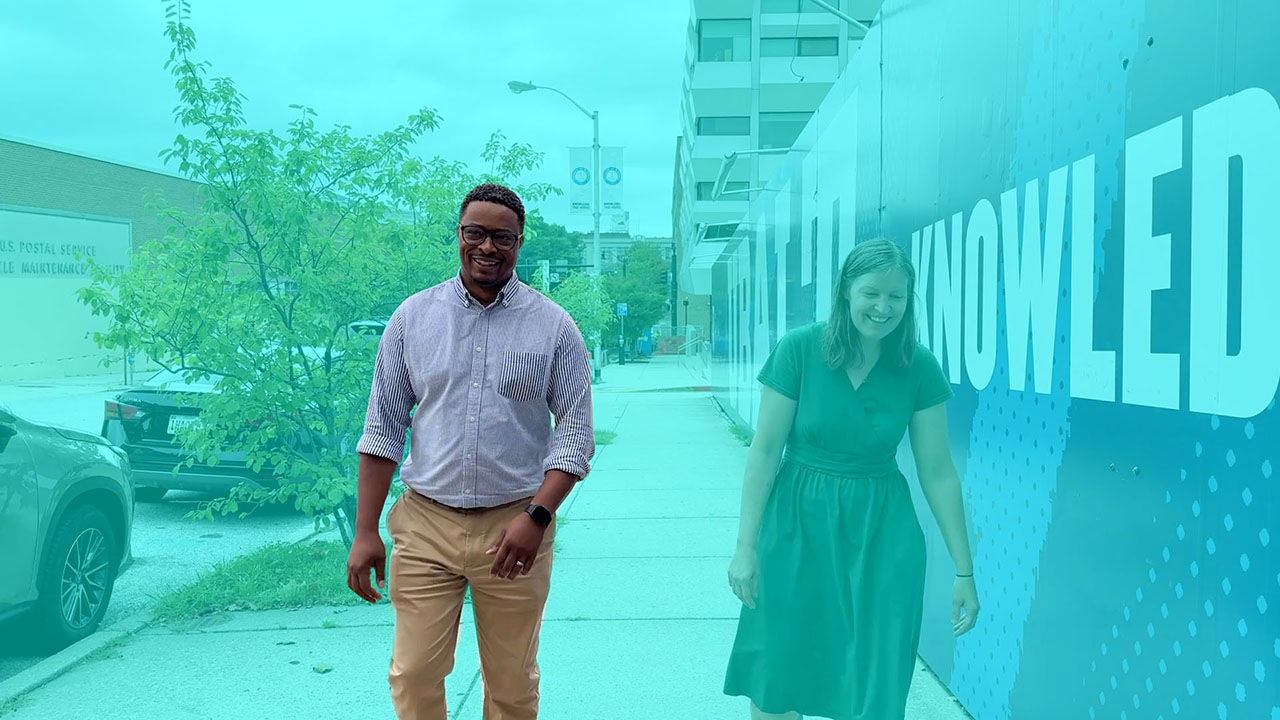
Q: What led you to UBalt and the position you have now?
A: My first job here was as a coordinator. I oversaw placement testing and freshman initiatives, in addition to being an adviser for the Interdisciplinary Studies program.
I've been asked to take on certain responsibilities, partially because of various university transitions, so the Division of Student Success and Support Services is my third department. I started out in the Yale Gordon College of Arts and Sciences. Then I moved to the Office of the Provost, and then I landed with Student Success, and that was the path to my position now. I worked at private institutions pretty much all my life before coming to the University of Baltimore. Coming here in 2013 was an opportunity to move into a public institution. Then, with that opportunity came other opportunities, and ultimately, you find yourself in a position to be student centered, and so that's kind of how I landed where I am now.
Q: Getting into college is difficult enough. Finding the support to stay in college brings its own challenges, especially for first-generation college students. What can colleges like UBalt do to ease students' journeys?
A: I was recently a part of the Aspen Institute's transfer intensive, and the real goal of that was to remove barriers to admission and transfer for students. You get a bird's eye view of what the challenges are for students once they transfer or if they are going to a different institution, and so you want to make sure you remove those barriers. Some of the barriers could be: How are my credits going to transfer? What is my financial aid going to look like when I transfer? When should I submit my transcript from a previous institution? Those are the things that the University of Baltimore tries to answer proactively and provide students with more information. Students do have to hold their end of the bargain up. We try to encourage them to reach out to us early and often, attend all the events that we have going on that are going to benefit them when they transfer. We just want them to be more aware of what options they have as the University works to remove the barriers they may experience.
Q: Based on your experiences, what advice would you give students in their first year of college?
A: I would most likely tell a student who's entering their first year to take the time to read—read the syllabus, read your email—and build relationships with your faculty and staff members that are there to help you. Also, pay attention to what's going on around you. Things change quickly; you may be enrolled in the class, and that class may be dropped for whatever reason, and then you need to pivot and find another class or find someone to help you with that course enrollment.
As a student, I wasn't the best. I almost failed out my first term because I didn't read anything. I had all the support given to me, and I didn't care. But I found a mentor. I didn't know I needed a mentor. They found me and took me under their wing. To that point, I'd also say find someone who can advocate for you, build that relationship, find a mentor who can help guide you, not only in academic life but regular life, and then continue to build those relationships with your classmates. Those things are important.
It reminds me of home. It reminds me of my hometown of Chicago: the people, the environment, the city grit. Baltimore is my second home.