Dr. Giovanni Vincenti started at The University of Baltimore in August 2013. After experimenting with a few career paths, he landed an opportunity to teach college courses while pursuing his master’s degree at Towson University. It set the course for his future in higher education. Today, Giovanni is an associate professor and director for two undergraduate level programs, Applied Information Technology and Artificial Intelligence for IT Operations. In his time at UBalt, he’s helped students develop their own passions in a field he loves, whether it’s guiding them in developing new mobile apps or re-imagining communication during space missions.
Q: Where did your interest in technology begin?
A: It all kind of started when I was much younger. Both my parents were medical doctors, and I thought I wanted to be a doctor.
I'm originally from Italy. I really loved the United States, so I came here as an exchange student in 1995 and applied to three universities. Towson University said yes. My degree was in biology, and I spent many years working as a volunteer at several hospitals in different departments, usually emergency rooms. Then I went to shock trauma for a while as well, and that's where I got my first hint that medicine was not my calling. Also, I did not get a good score on the MCATs.
A couple of days after I graduated with my bachelor's, I went to the admissions office seeking a second degree in computer science because bioinformatics was starting to pick up, and I liked computers. I was originally seeking a second bachelor's, and then somebody in admission said, "You actually qualify for the master’s, you just have to take a couple of courses in computer programming.” I took those courses, I loved them, and I got introduced to this world that made a whole lot more sense than medicine for me.

Q: How did your interest in computer science eventually lead you here to UBalt to teach?
A: During my master's degree, I focused on machine learning, which is a subset of artificial intelligence. I was also interested in software engineering, so I did a bunch of programming, and then the machine learning/AI side when it wasn't cool yet. Then I went on to my doctoral work, and that was in a different area, but it was still related to artificial intelligence. While I was doing that, I learned about graduate assistantships. At first, I started working for the university in office jobs, and then somebody said, "Hey, why don't you come and teach as an adjunct?” So, I started being a teaching assistant. I was in charge of my own course very early on, and that's how I learned that I appreciated teaching. Usually TAs only grade, but I was in in charge of the course. My name was on the course. And that kept growing. They asked me to stay as a lecturer. When my visa for the lecturer position was coming to an end, I was looking to stay in Maryland, and two openings attracted my attention here. One was at the Naval Academy, and one was at the University of Baltimore. I applied to both, University of Baltimore called, and that's how I eventually ended up here.
Q: What's a moment that has made you most proud as a professor?
A: One that is constant is when something clicks for a student. They're not necessarily easy topics but whenever the student gets that spark, meaning, oh, I get it now. There are always a couple of students who stick out in terms of that aha moment. I try to cling on to those as the reason why I keep doing this job. I want to keep helping students have that aha moment.
In terms of grand events, here at the University of Baltimore, we had a few years run with the Poegrammers and the Astrobees getting selected to participate in the NASA S.U.I.T.S. Challenge. Whenever our students ended up at NASA, that was that was certainly a big one. Personally, I grew up around the aerospace because my parents were doctors, but my dad was a doctor in the Air Force, so I got to spend a bunch of summers at military airports. During his lunch break, we would go to see jets. We would go around the hangars and around the runways, and watch planes take off and land. I’d get on these huge planes and pretend I was a pilot, so I grew up with the Air Force world, always hearing about astronauts. One of my dad's colleagues was chosen to be an astronaut. He never flew into space, but to me, that was always a huge deal. So personally, NASA S.U.I.T.S. and going to Johnson Space Center was a big moment, and seeing some students, and in particular, one that realized that students from other very big universities—very big-name universities—are not that different from our students, that was extremely meaningful. That was a moment that made me proud. Ultimately, it's how much you trust in yourself, how much you learn and you develop yourself, and if you can apply yourself, you can challenge yourself. It doesn't matter where you studied, doesn't matter your background; if you put in the effort, if this is a genuine approach, and if things make sense to you, you can get it.
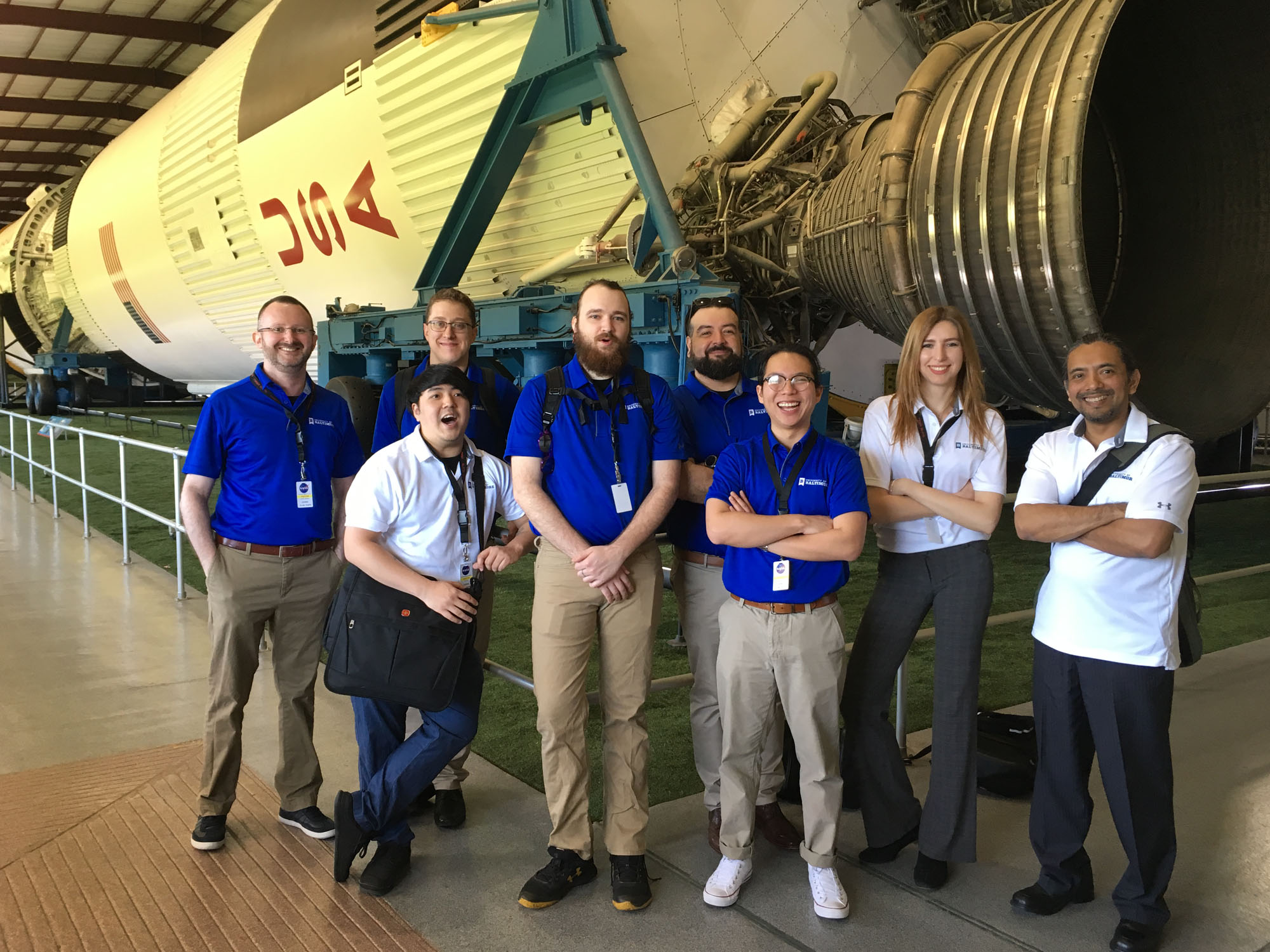
A team of students from the University of Baltimore has been invited to travel to NASA's Johnson Space Center in Houston, Texas, to test heads-up display prototypes they designed.
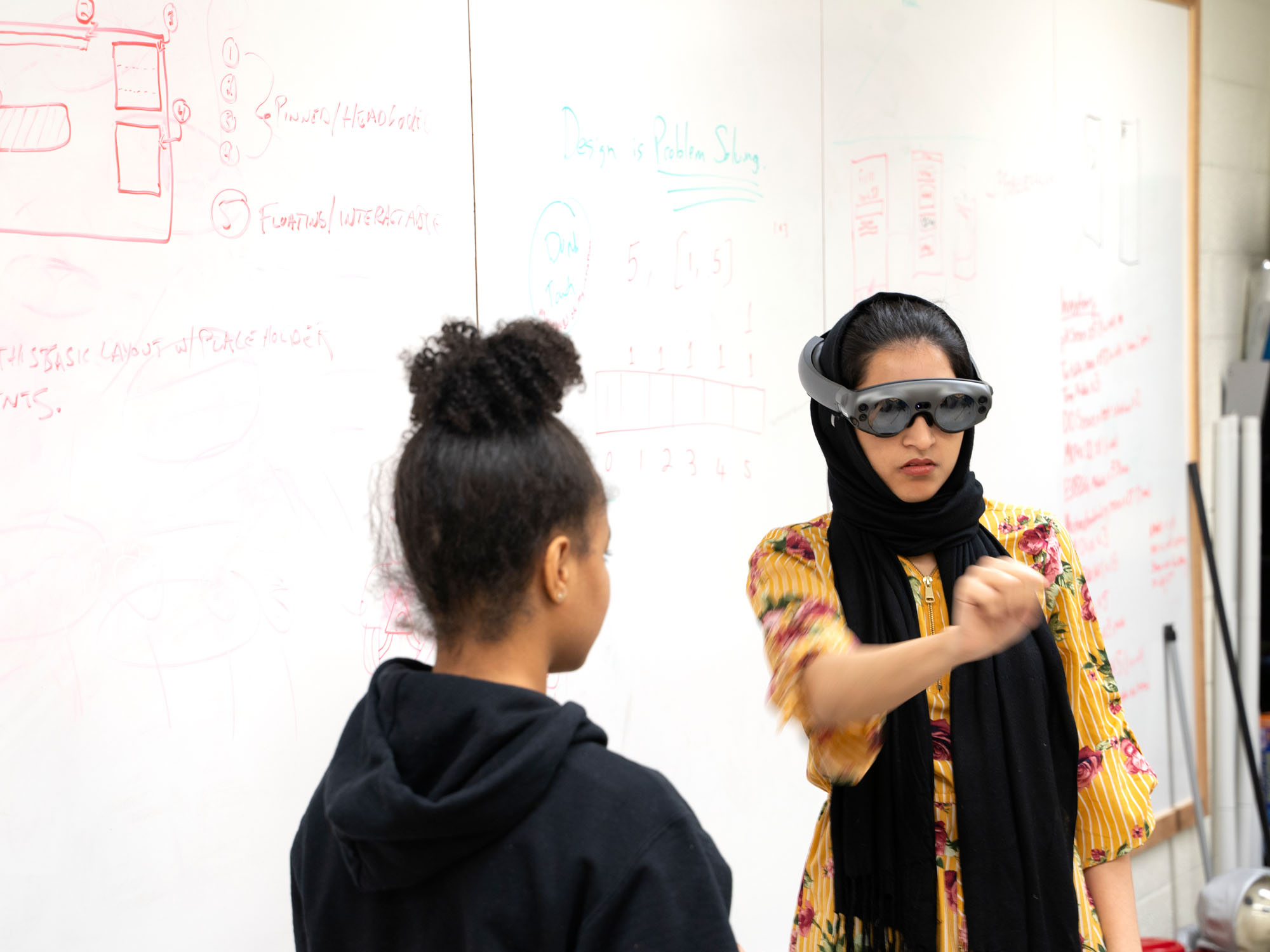
For the second year in a row, a team of University of Baltimore students have been invited to be part of NASA S.U.I.T.S. (Spacesuit User Interface Technologies for Students)—a challenge by the nation's space agency to design and create spacesuit information displays within augmented reality (AR) ...
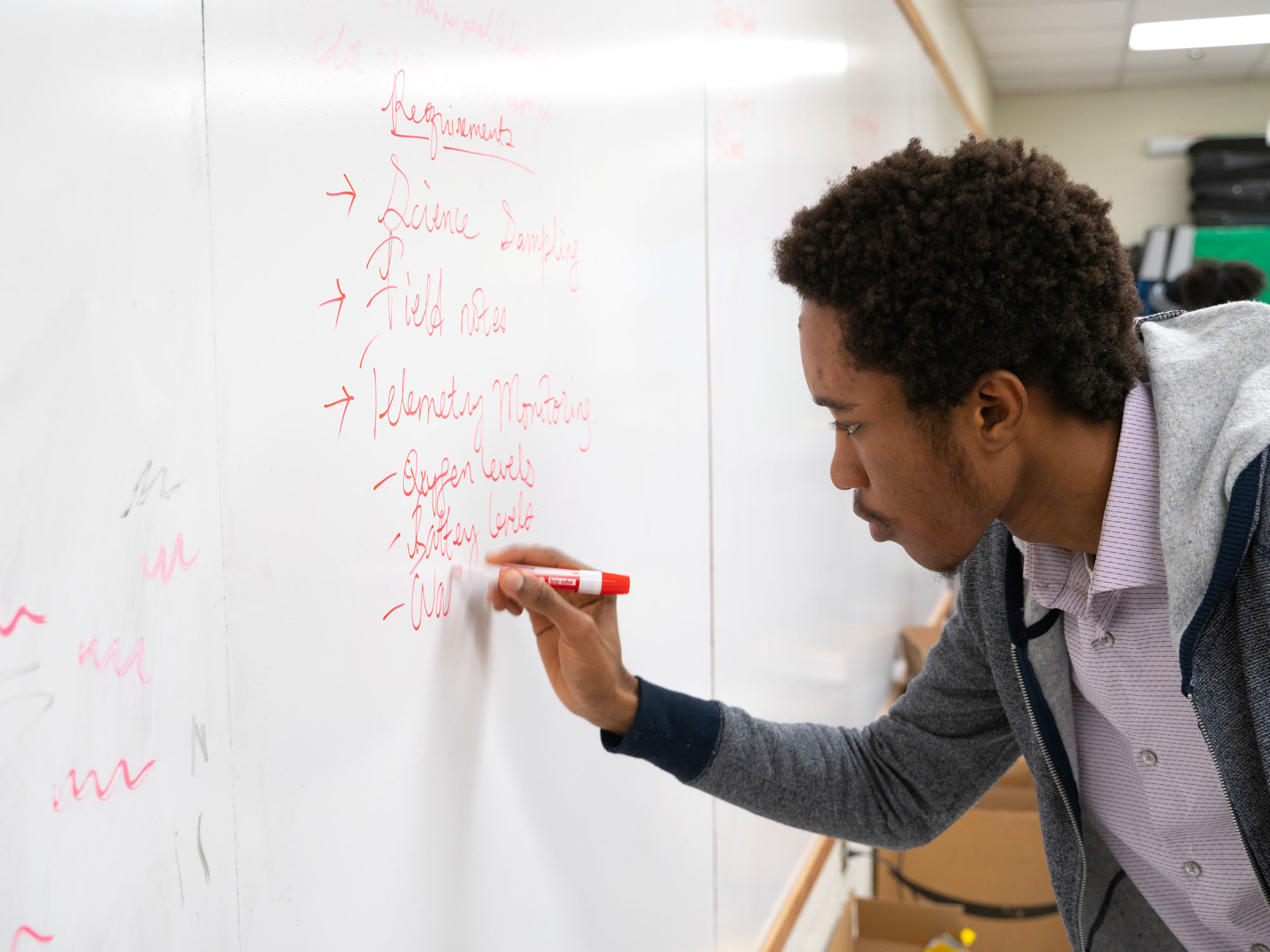
For the third consecutive year, The University of Baltimore is proud to have a team of students participating in the NASA Spacesuit User Interface Technologies for Students (SUITS) Design Challenge.
Q: Tell us something you'd like to spend more time researching.
A: Over the last few years, there have been a couple of areas that are very much of interest to me. One is space-related systems; how could we help astronauts explore Mars, for example? This did stem from the work that our students did with NASA. Their work was primarily focused on the spacesuit or on the user interface: How do we deliver more information more efficiently and effectively to astronauts, and how do we build that system? As we were thinking about this, then we started asking, since our degree here is in information technology, how do we provide a cloud-like infrastructure to the moon or to Mars one day? That's what really interests me from a research perspective. If your computer breaks, then all you really need to do is just get another computer, hook it up to the same system, and then you get the same files. The question with my own research is, if you entrust the work to a spacesuit, what happens if the spacesuit stops working? Sure, there's going to be redundancy, but then you're actually putting a lot of work onto the spacesuit, can't you offload some of that onto the IT infrastructure that we're going to bring? So, the spacesuit focuses on basically sensors and vitals, but then all the computing work is shifted maybe to the infrastructure and off the astronaut. Maybe we can give the astronaut more time doing work on the surface of the Moon or Mars because the infrastructure is taking care of the storage and the interpretation, especially with AI everywhere. The infrastructure is worrying about analyzing the image and telling the astronaut, “Oh, this is this particular kind of rock formation,” or “You're going to need this particular kind of tool,” or even just text transcription, so mission control can review immediately what the astronaut did.
Q: Considering your history with AI started during your master’s, what do you think of the recent explosion of use?
A: It's positive in the sense that there are a lot of amazing applications that are coming out, but the speed at which it has been happening, and the magnitude, gets a little bit scary. There are a lot of great possibilities, such as in the medical world. I believe firmly that every day people are intervening in medical situations earlier because AI detected something that a human probably may have detected, but maybe it would not have gone past that threshold of the gut instinct. Further testing or further evaluation of certain cases are certainly worth the application of AI. In in other contexts, I think that it's become a bit overused in the sense that we have outsourced trust to something that cannot explain itself. So many people seem to go by whatever AI says in terms of explanations or what to do. I want to make sure that everybody sees the connection between the foundations and the answer that was given, otherwise, there’s a significant learning gap there. There is a discrepancy between how we could use AI and how we should use AI.
Q: How are you teaching your students to understand and appreciate the applications of AI without concern that it will replace them?
A: I keep reiterating that these are tools. These are not collaborators. These are not interns that are going to do the job for you. These are tools that collect information, that may evaluate information, but eventually it should still be our students' responsibility to make, hopefully, an informed choice of whether to use that output or not. I'm also a big supporter of foundational concepts. So especially since there's so much obscurity in the world of AI between what you put in and what the system spits out, the most valid way of evaluating it, is to compare the output to what we know in terms of foundational knowledge. We do use it in the Applied Information Technology program, again as a tool. In the Artificial Intelligence for IT Operations Program, we take a bit of a different approach in the sense that we look at the hardware and the infrastructures that's necessary to provide these tools to a company or make these tools available to people. Our degree is not a degree in AI, unlike many other universities; we look at ways to connect AI to people through their IT infrastructure. The students understand the importance of being able to tell whether something that was produced is appropriate or not for deployment because throughout history, we've experienced ourselves a big shift. Imagine how many people cannot read a map because there is GPS. We have agents doing all this work for us. And now we have agents using agents that are collaborating, and the system starts getting a little bit murky in terms of following something from the question you ask to the output you're expected to use in a real world. I'm hoping that we keep the human in the center, and we keep using these tools as tools rather than as a trusted collaborator that can do things for us.