

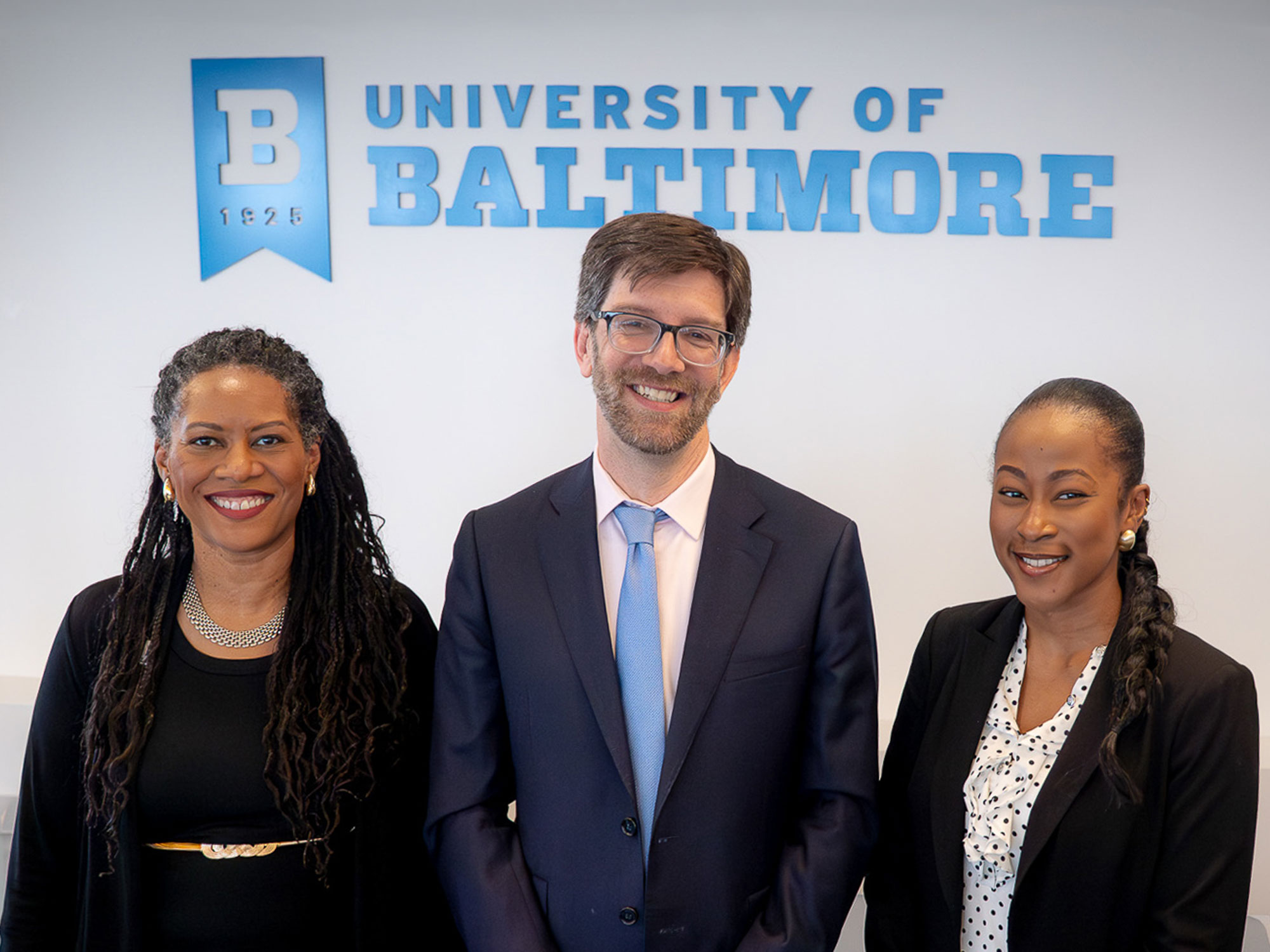
When third-year law student Adria Obonyo sat down to plan this year's University of Baltimore Law Review symposium, she knew she wanted to do something that mattered — something that reflected the urgent legal moment the country was living through.
The options were plentiful. The second Trump Administration had produced a cascade of unprecedented legal controversies: questions about executive removal power, the constitutional dimensions of DOGE and mass federal layoffs, First Amendment challenges to the Administration's sanctions on law firms and its treatment of campus speech, and a deepening immigration crisis that was reshaping American law in real time.
After conversations with Professors John Bessler, Matthew Lindsay, and Kimberly Wehle, along with attorney Kamryn Washington, Esq., Obonyo made her choice. "I also reflected on my own experience as a daughter of Kenyan immigrants," she said. "Immigration felt not just timely, but personal."
What followed was months of meticulous planning — coordinating 12 panelists, managing logistics, designing graphics, corresponding with scholars from across the country, and building a program rigorous enough to anchor serious academic discourse. It was, by any measure, a significant undertaking for a law student.
Identifying the keynote speaker sealed the event. Obonyo had been closely following news coverage of Kilmar Ábrego García, the Maryland man wrongfully deported to El Salvador, and had been watching Simon Sandoval-Moshenberg's fierce advocacy on his behalf. On Super Bowl Sunday, she sent him an email asking to serve as a keynote speaker for the symposium. Within five minutes, he said yes.
"I was floored," she recalled.
On the day of the symposium, Mr. Sandoval-Moshenberg delivered a keynote that wove together his firsthand experience representing Mr. Ábrego García, his perspective on the broader immigration crisis, and reflections on what it means to practice immigration law in this moment. His remarks landed as a kind of capstone, threading through the themes the panelists had spent the day exploring.
The response from faculty, students, staff, and members of the public was overwhelming. For Ms. Obonyo, that feedback cut through the noise of logistics and minutiae and reminded her of what she wanted to execute when she began to plan the Symposium months ago.
"It's so easy to get caught up in the details," she said. "But the feedback we received was incredible. What an honor."
She describes the experience through a Steve Jobs lens: "Musicians play their instruments. I play the orchestra." The symposium taught her to recognize expertise in others, bring it together around a shared purpose, and create something meaningful from that convergence. It's a lesson she plans to carry into a career as a transactional attorney — one where corporate governance, negotiation, and dispute resolution will demand exactly those skills.
When asked what she learned from leading the event, her answer was four words: "I can do anything."
After the symposium wrapped, Obonyo celebrated the only way that made sense after months of work: a trip to the National Aquarium, dinner at La Scala, and a long weekend of rest.
The University of Baltimore Law Review's 2026 Immigration Law Symposium featured 12
panelists and was made possible through the support of Dean LaVonda Reed, Associate
Dean Elizabeth Keyes, and faculty, staff, and student contributors across the law
school community.