

If “Etiquette is the science of living,” as Emily Post once said, then The University of Baltimore’s Career and Internship Center found another way to give its students a competitive advantage.
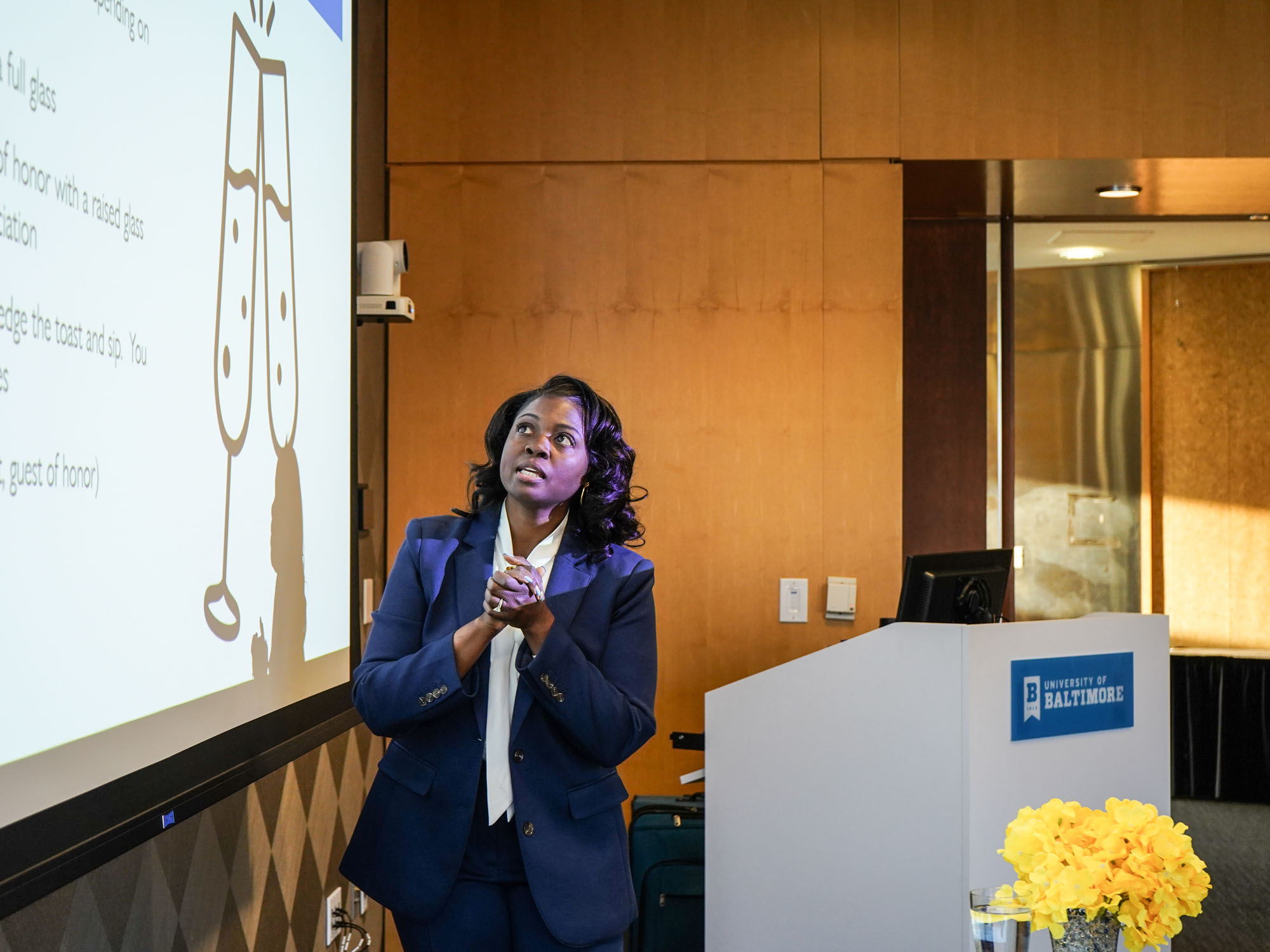
This spring, Dr. Lakeisha Mathews, center director, co-hosted an etiquette dinner with Dr. Tiffaney Parkman, senior lecturer for the College of Public Affairs’ School of Health and Human Services. This marked the 11th year of the event, held for B.A. in Human Services Administration students and student employees.
Parkman said the dinner serves as one more lesson in professional development for students in their final semester of her program. Years ago, she attended a conference dinner with a group of students and noticed how uncomfortable some were in the formal setting.
“The assumption that everyone has had training is really erroneous,” Parkman said. ... “I wanted to make sure our students had those skills or those experiences so that when they go off into the real world, they are representing well for themselves and for the University.”
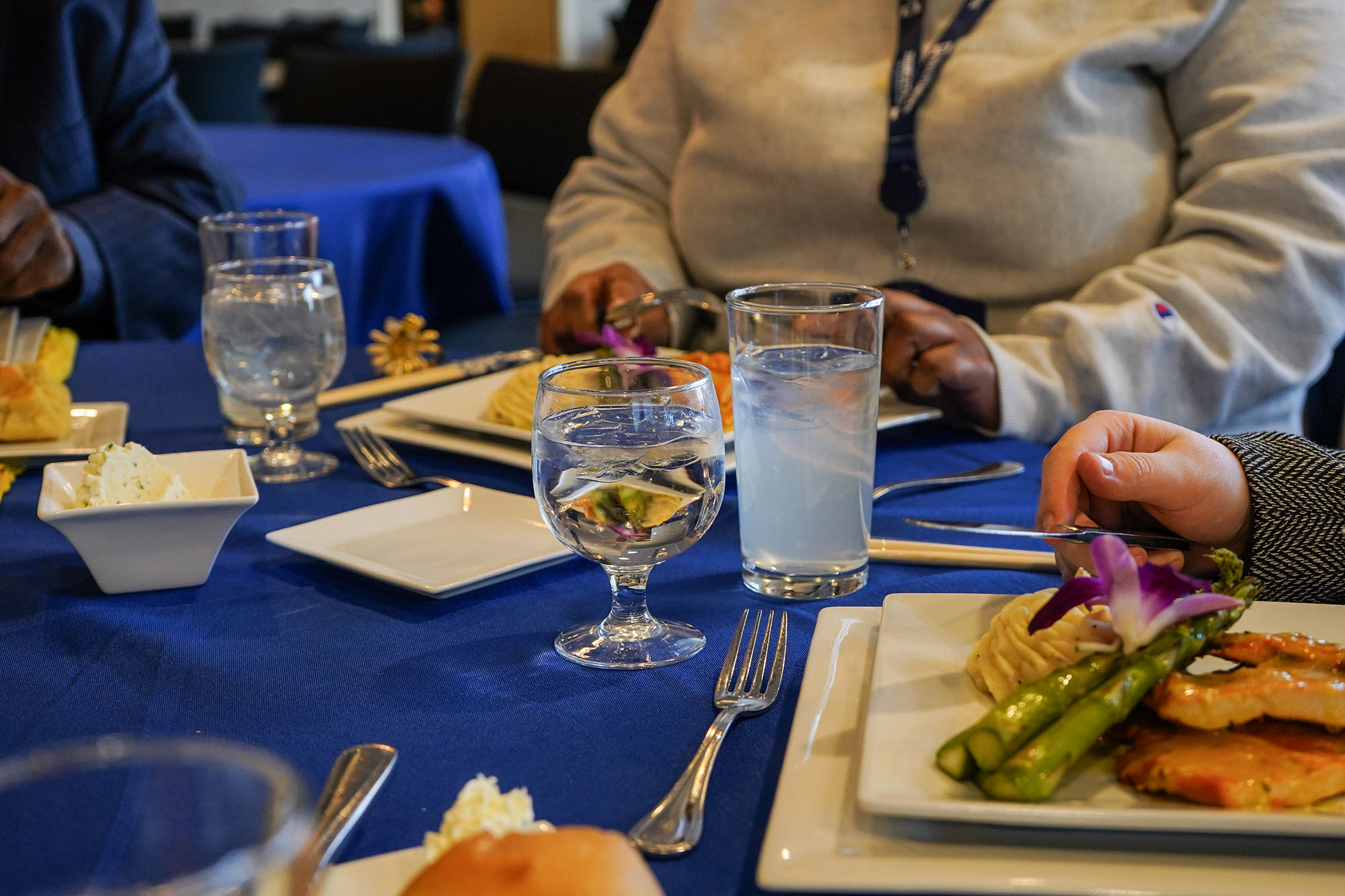
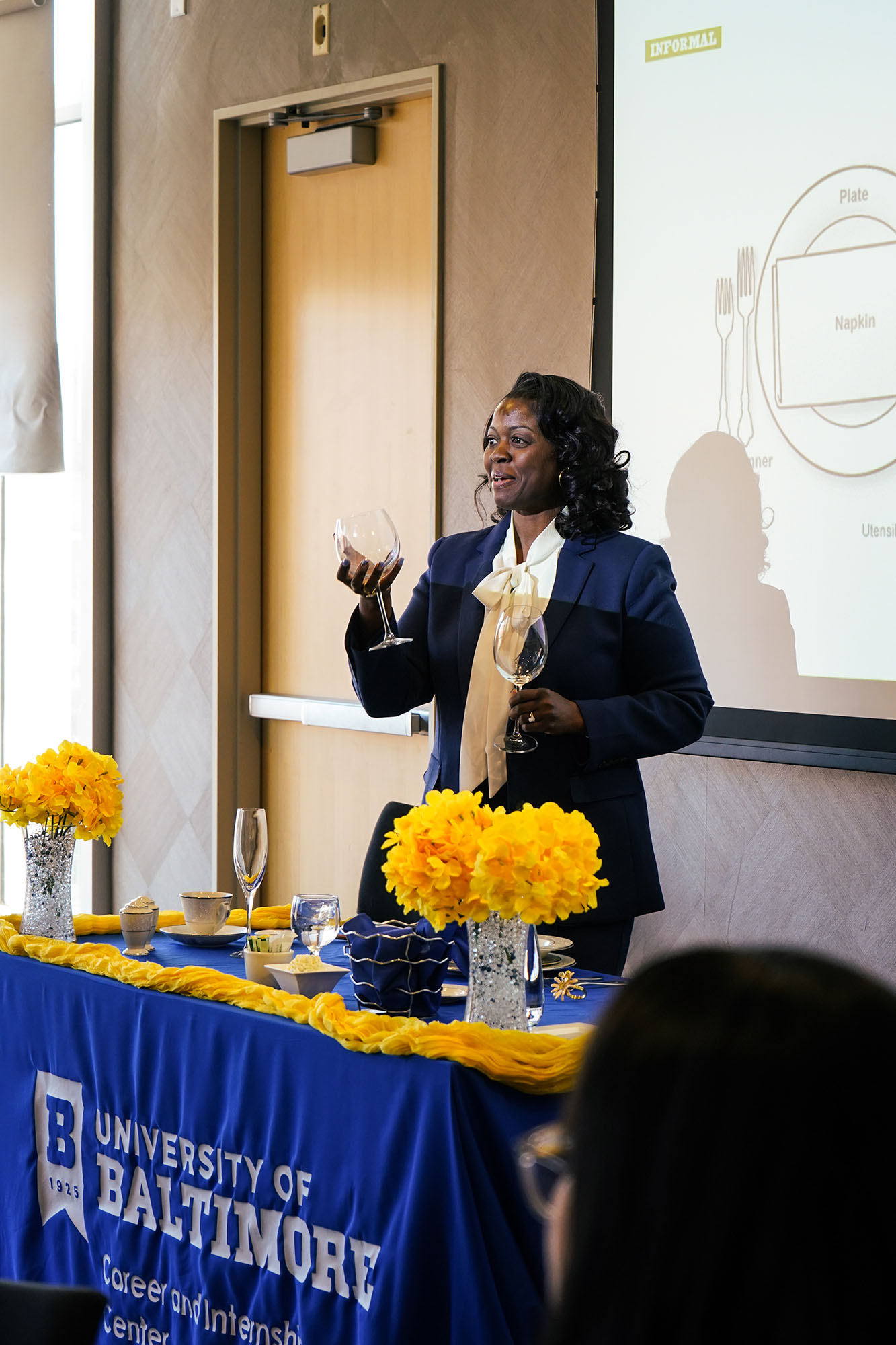
At the event, blue tablecloths covered tables set in the UBalt Student Center. Mathews offered lessons through a presentation and demonstrations as the students practiced their skills at dining and networking in real time.
From Mathews’ perspective, this tradition is just another way UBalt offers Knowledge That Works.
“Many business decisions are made over meals. Knowing how to conduct yourself during a networking event or lunch interview can make or break a career,” Mathews said. “Not all students come from backgrounds where they have been exposed to networking or formal dining. The etiquette dinner aims to level the playing field for UBalt students to ensure that they can navigate any business situation with confidence and ease.”
Maya Bennett, a student assistant with the career center, was tasked with taking photos of the event while her sister, Shauna, participated. So, as a B.A. in Digital Communication student, Maya interviewed her sister, an Essential Conflict Resolution graduate certificate student, about the experience.
Now that the table’s set, let’s sit up straight, pull our elbows off the table, and look back at what this event was like for the Bennett sisters.
Maya Bennett: Why do you think it’s important to learn proper etiquette?
Shauna Bennett: I think it's important to learn proper etiquette because you're going to be entering spaces where that kind of knowledge can be valuable in the impression that you make. For me, in that thinking, it's important to have that kind of knowledge when you're entering those spaces where you don't want people look down on you and you want to make a good impression.
Maya: Would you think that this event was helpful for networking and learning those skills?
Shauna: I think they did incorporate networking pretty well. I tend to be shy. I think they did a good job at giving topics and things to discuss, so that it wasn't something that you had to really grapple with and really run through your brain, ‘What am I going to say to this person?’
Maya: Would you say that, as a result of the dinner, you feel more comfortable in these situations now?
Shauna: I think that it's pushed me in the direction to be more comfortable. It's hard to say that I'm 100 percent more comfortable talking and networking over dinner, because I feel like dinner is a much more intimate experience where discussion is such a vital part of it. If you are someone who does struggle to impromptu have things to say, these scenarios can be daunting still even with this dose of exposure therapy.
Maya: What made you go to this event in the first place. What drew you to it?
Shauna: I talking to my career counselor La-Toya [Gomez], and she encouraged, maybe 'voluntold' me [laughs] to go, as a means of networking. She knows that I get a little anxiety when I'm supposed to be going in and networking.
Maya: What are some of the skills you learned during the event?
Shauna: Some of the skills that we learned there were things like, which is the right fork? You go to those setups where they have 800 forks one on this side. You learn the order that you're supposed to be grabbing things in, how to signal to the wait staff, when you're in fine dining, that you're done, also, things like where to hold or put your bag. That’s something I hadn't even considered. I'm used to just throwing it on the seat next to me, so not learning to put it behind you or where it can be a hazard. We learned how to handle certain situations like that. It reinforced and refreshed some skills I had. When you're going into these spaces, there are certain social norms that are expected and that could really make and break you in your career if you don't know these things.
Maya: UBalt is a school dedicated to career readiness to make sure that when we go into our respective fields that we're ready for it, that we know what we're going to get ourselves into. Do you feel like the skills that you learned are going to help you with your career after graduation?
Shauna: I think so. Right now, I'm heading in a direction to go into law, so I feel like there will be instances where something like this is beneficial to know. You never really know, even if I was to go into the nonprofit world, talking to donors or people who are potentially looking to invest in your nonprofit, having these etiquette skills can make a difference. In those spaces, making people feel like you're familiar, even if you're not, just makes people feel better. If anything, I would love to see them add a segment or have a dinner focused on conversation, like what’s good small talk? Obviously, this is a networking thing, but how do you make it feel natural and make it a conversation?
Maya: What feedback or praise do you have about the event?
Shauna: Honestly, I just thought it went really well. I think, for me, what's important that Lakeisha emphasized is that etiquette skills stem from classism and racism. I give a lot of praise for that acknowledgement and recognizing that you can still be yourself, but you do have to show up a certain way and there’s just certain expectations.
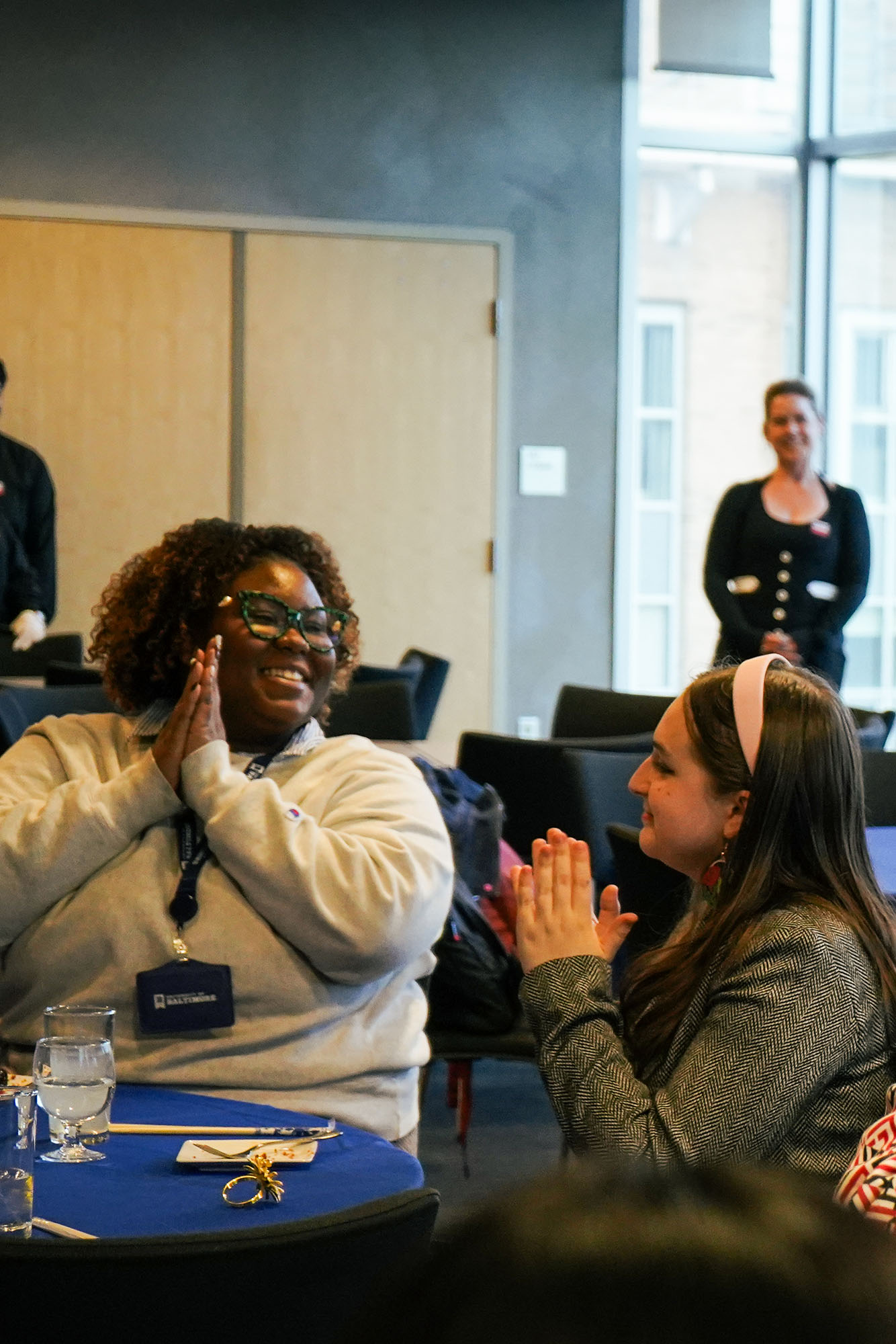
I thought it was a really good event. I think the options for the dinner were good. It wasn't like super stuffy. It felt like a down-to-earth space that sometimes those types of things just don't feel like that. You're allowed to not know what's going on, and you're not judged for not knowing anything. The whole point is to learn.
Maya: Thank you for your time, Shauna. I appreciate you.