

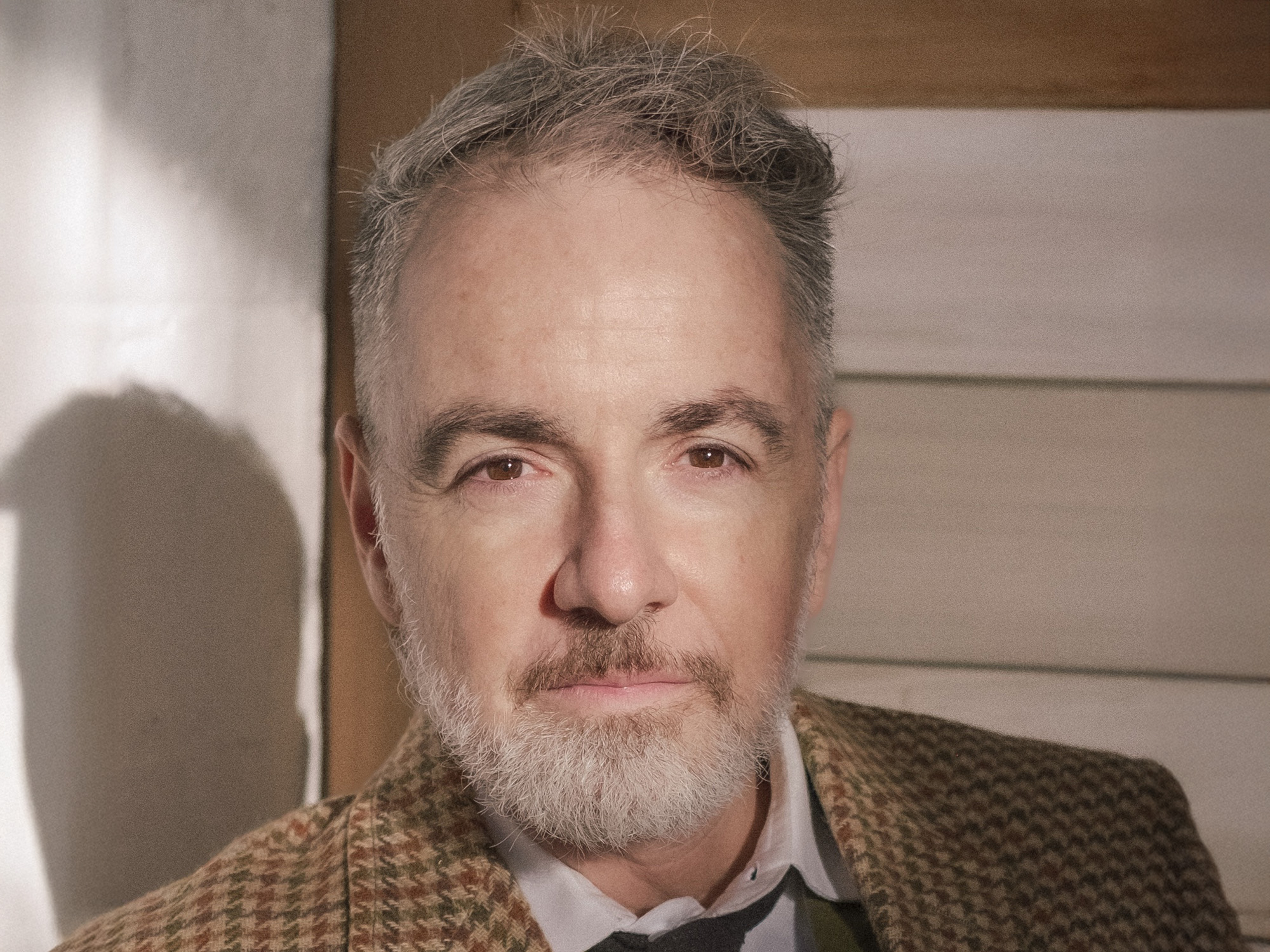
Article by Betsy Boyd, author and director of The University of Baltimore's MFA in Creative Writing and Publishing Arts.
After meeting Howard Fishman at the Virginia Center for the Creative Arts a few years ago—he and I were springtime writing fellows—I pre-ordered his cool-sounding book, To Anyone Who Ever Asks: The Life, Music and Mystery of Connie Converse. Howard, a softspoken professional musician and frequent contributor to The New Yorker and other major publications, had spent years and years researching the life of Converse. She was an obscure musician whom Howard recalled hearing on record at a party in Brooklyn, and being sure that her voice was post-2000 contemporary, only masking as vintage. But he was wrong—she made music in the 1950s, then disappeared seemingly without a trace. Some have called her a predecessor to Bob Dylan, but to Howard, Connie Converse was simply an artist he had to learn more about.
The carefully rendered tome of a book impressed me, so I asked Howard to visit my Creativity course in the MFA in Creative Writing and Publishing Arts program at UBalt, which he kindly agreed to do. He spoke about Converse, his own somewhat obsessive detective work around her life, and how he writes day to day. More recently, when my friend Chris Hart, MFA '21 (another writer/musician)—who also serves as Director of Communications for the University—met Fishman, the two found common ground discussing another little-known-but-should-have-been-a-big-legend: Baltimore-born musician Robbie Basho.
Basho, an extremely tall loner who lived from 1940 to 1986, sang, played piano, and was considered a virtuoso guitarist. Thanks to Chris and Howard's passionate "jam" sessions talking about Basho, an awesome independent study course—via the MFA in Creative Writing and Publishing Arts—has just been born. This summer session, students from the MFA and the community at large, have a chance to learn how to research, record, and write about a person's life, legacy, and intriguing mystery. I talked to both Howard and Chris about their enthusiasm for the project.
Prof. Boyd: Howard, what draws you to the music and life of Robbie Basho?
Fishman: As the music writer Chris Richards told me during my research into Basho's life and music (read Richards's excellent review of a recent Basho box set in The Washington Post), “American music is not a meritocracy, and Robbie Basho is a great example of that." Our music and entertainment industries do not—for the most part—prioritize artistic excellence or even compelling expression. They prioritize what looks good, what sells well, and what influencers are interested in, which means that weirdo innovators like Basho stand little to no chance of breaking through to the mainstream. I'm drawn to his music because of its authenticity and its sui generis nature. And I'm drawn to know more about his life because so little of it seems to have been documented.
Prof. Boyd: What will you teach students about the art of research? What key skills will they come away with?
Fishman: In my experience, biographical research involves a mixture of obsession, detective work, patience, and keeping an open mind. Requisite skills, outside of the obvious need to track sources and timelines, include curiosity, historical perspective, and an ability to constantly zoom in and zoom out on a story to gain perspective and insight.
Prof. Boyd: How does your own work as a musician influence your music journalism?
Fishman: Having been a professional musician for a few decades allows me greater insight into the various kinds of struggles and also the significant milestones in a musical career—on both the external level (managers, labels, club owners, recording, etc.), and internal (self-esteem, defining success, navigating relationships, structuring a creative life).
Prof. Boyd: Chris, tell me about your deep curiosity around the life of Robbie Basho.
Hart: I'm always intrigued by obscure music. Those origin stories—the label drama, the manager who walks away with somebody's masters—it's a heightened reality. But I'm especially curious when the music itself is stunning: How did this record not succeed? What happened here? That's Basho, for me. I learned of him through my admiration of John Fahey, who was a brilliant musician himself as well as a major contributor to the independent music movement as far back as the 1960s. Fahey touted Robbie, gave him an early push. Then, when I found out that Basho was born and raised in Baltimore, I was in disbelief. How could our town, which craves the artistic eccentric, have no room for this man? I want to change that. I think we're onto something here—something cool and mysterious. Thank goodness Howard is on board to lend credibility to this search. Without him, I'd just be wandering around lost.
Learn more about the Robbie Basho class by contacting Prof. Boyd.
Learn about UBalt's MFA in Creative Writing and Publishing Arts.