

The Office of Sponsored Research (OSR) serves as the University's central resource for externally funded grants, contracts, and research compliance activities.
As the official office of record, OSR facilitates partnerships between university
faculty, staff, and external funding agencies that support research, scholarship,
creative activities, and public service initiatives. In addition to supporting sponsored
programs, the Office of Sponsored Research oversees the Institutional Review Board
(IRB), ensuring the ethical conduct of research involving human participants and compliance
with applicable federal regulations and institutional policies. Our team works closely
with investigators throughout the proposal development and submission process to ensure
compliance with university policies, sponsor requirements, and state and federal regulations.
We also provide comprehensive budget review and guidance to ensure that project costs
are accurate, allowable, and aligned with funding guidelines. By supporting faculty
and staff from project development through award administration and research compliance,
the Office of Sponsored Research helps advance innovative research, strengthen community
partnerships, and promote the University's mission of academic excellence and public
impact.
Led by Dr. Frank Xu, PI and Professor of Cyber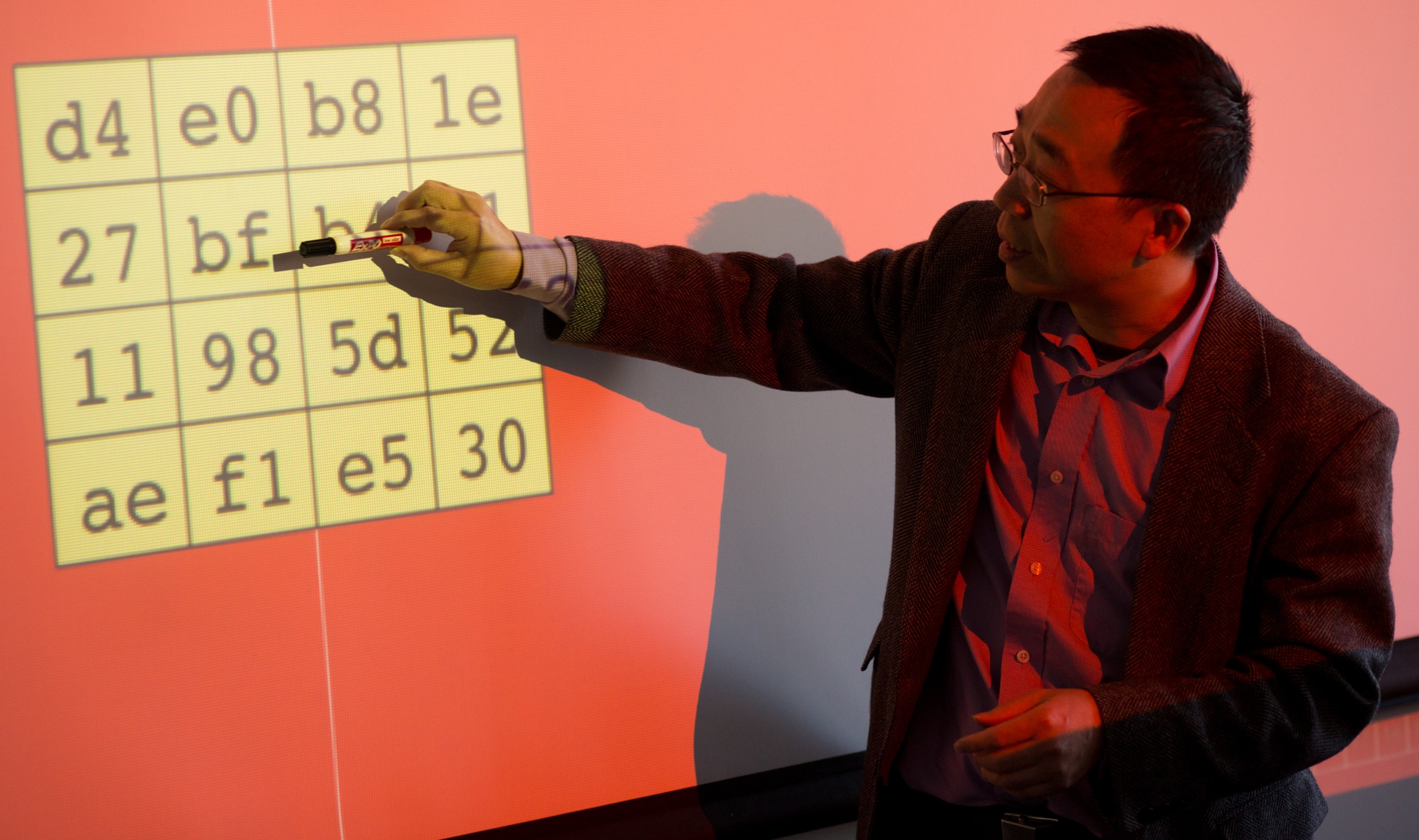 Forensics at the University of Baltimore, the NSF EAGER project has helped position
UBalt as a leader in applying AI tools, including large language models such as ChatGPT, to digital forensics education and cybercrime investigation. The project advanced
AI-assisted methods for extracting digital evidence, reconstructing investigation
graphs, identifying relationships among evidence, and supporting forensic reasoning.
These accomplishments have informed new instructional materials, research prototypes, and hands-on learning resources for students
and professionals in digital forensics and criminal justice, including Dr. Xu’s widely
used open-source digital forensics education repository, which has received more than
2,800 GitHub stars. The work has also produced measurable scholarly and dissemination
outcomes, including a publication and presentation at the 33rd ACM International Conference
on Information and Knowledge Management on transforming digital forensics with large
language models, along with multiple peer-reviewed publications on AI-assisted forensic
evidence analysis, evidence reliability, forensic intelligence graphs, and scenario
reconstruction.
Forensics at the University of Baltimore, the NSF EAGER project has helped position
UBalt as a leader in applying AI tools, including large language models such as ChatGPT, to digital forensics education and cybercrime investigation. The project advanced
AI-assisted methods for extracting digital evidence, reconstructing investigation
graphs, identifying relationships among evidence, and supporting forensic reasoning.
These accomplishments have informed new instructional materials, research prototypes, and hands-on learning resources for students
and professionals in digital forensics and criminal justice, including Dr. Xu’s widely
used open-source digital forensics education repository, which has received more than
2,800 GitHub stars. The work has also produced measurable scholarly and dissemination
outcomes, including a publication and presentation at the 33rd ACM International Conference
on Information and Knowledge Management on transforming digital forensics with large
language models, along with multiple peer-reviewed publications on AI-assisted forensic
evidence analysis, evidence reliability, forensic intelligence graphs, and scenario
reconstruction.
NSF EAGER stands for National Science Foundation EArly-concept Grants for Exploratory Research.
They are a high risk, high reward funding mechanism. You submit a white paper to a
program officer, and they have to invite you to apply.
Thursday, August 20 @ Noon Eastern
Presented by Dr. Steven Jax, Senior Grants Consultant with Hanover Research
Registration Link: https://hanoverresearch.zoom.us/meeting/register/evGBEUkdRCKJOW7BnKZHDQ
This presentation will help grantseekers understand how to best turn a rejected grant into a more competitive one. We will begin with a discussion about setting up realistic expectations for grant submissions and effectively using the time before you receive your reviews. Next, we will discuss how to read reviewer comments and determine whether a resubmission is your best way forward. Finally, we will discuss developing a resubmission plan, focusing on the topics that were most important to reviewers, so that your resubmission is as strong as possible. There will be an ample question and answer session to receive individualized guidance.
