School of Criminal Justice

Build expertise the field of criminal justice can use

The School of Criminal Justice offers programs that study why crime happens and how we respond to it—from forensics and policing to corrections, leadership and trauma-informed practice. Whether you're new to the field or already in it, you'll work alongside the agencies on the ground every day. Partnerships with organizations like the Baltimore Police Department and the Maryland Department of Public Safety and Correctional Services keep the classroom close to current practice.

Every program can be studied part-time or full-time, and most are available fully online (with some live, scheduled sessions required) and on campus. See individual programs for details.
Graduate Programs

Graduate study that fits your life and career goals. Our master's degrees and certificates require no admission test, and they're built to stack—a certificate you finish now can count toward a master's later.
33 credits | 11 courses | online and on campus
With the Master of Science in Criminal Justice, you'll choose to specialize in one of six areas: courts, corrections, justice leadership, juvenile, policing or victim studies. You can also earn a post-baccalaureate certificate along the way—Public Safety Leadership or Trauma-Informed—and you can pair it with a law degree through the dual J.D./M.S. program.
30 credits | 10 courses | online and on campus
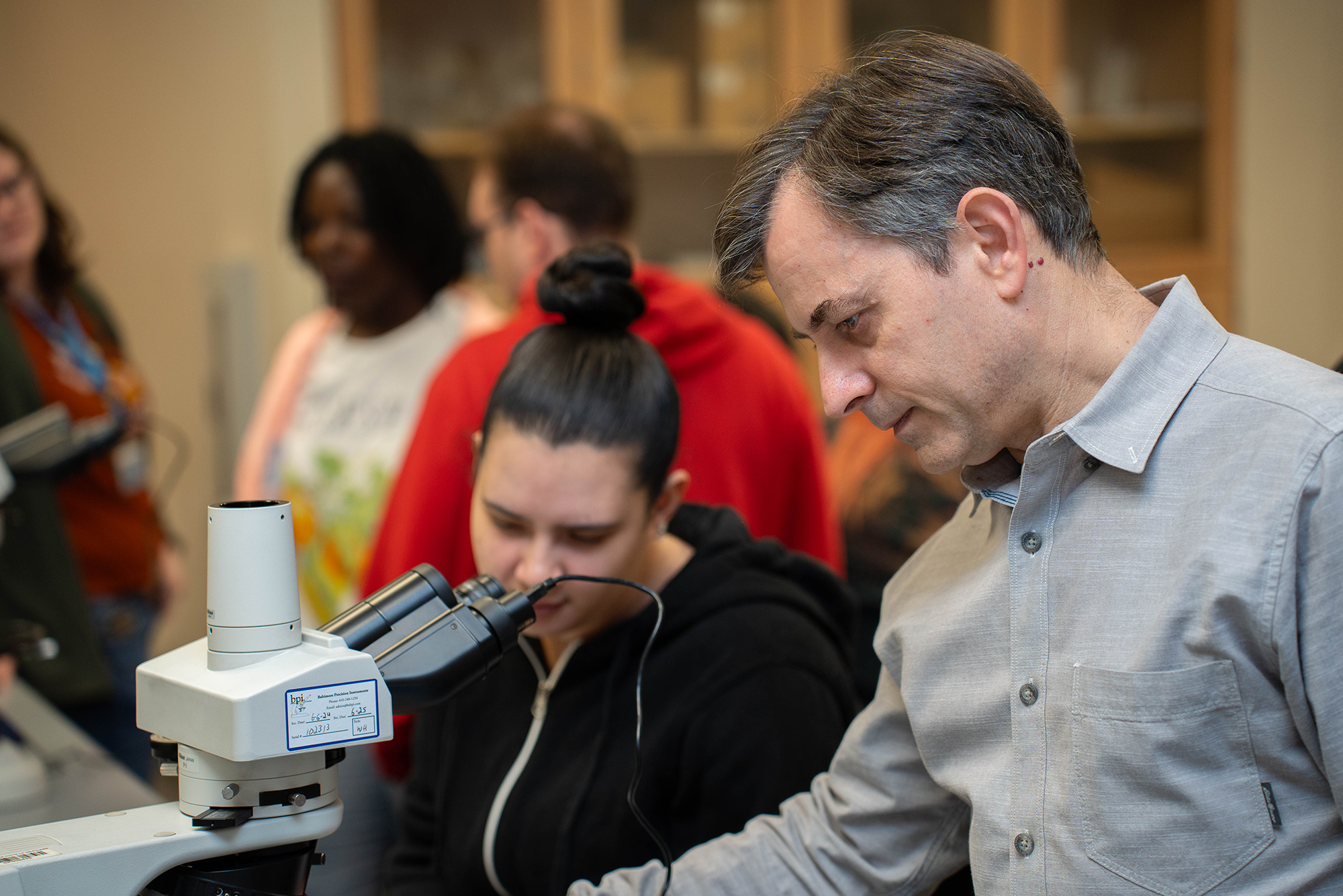
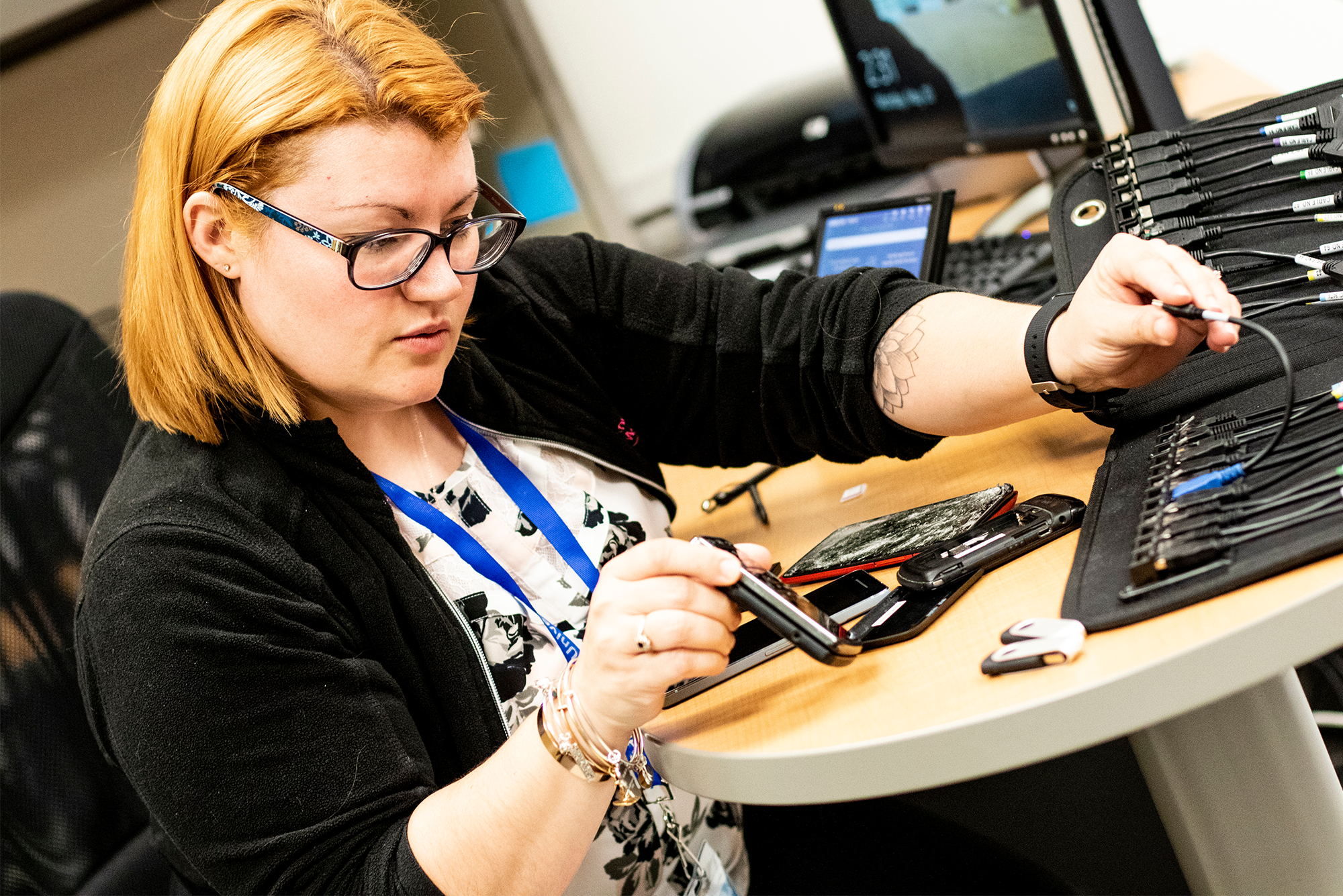
The Master of Science in Cyber Forensics is a STEM-designated program that prepares you to investigate cybercrime. You'll recover and analyze digital evidence, preserve it and understand the law that governs it.
12 credits | online | post-baccalaureate certificate
A graduate certificate in the leadership, ethics and decision-making that public safety organizations rely on. Credits count toward the M.S. in Criminal Justice.


12 credits | online | post-baccalaureate certificate
A graduate certificate that prepares criminal justice professionals to recognize and respond to the effects of trauma—a distinctive focus built specifically for this field. Credits count toward the M.S. in Criminal Justice.

Undergraduate Programs

Bachelor's degrees and a certificate built for hands-on learning—whether you're just starting out, already working in the field or making a career change. You'll move from fundamentals into applied work and graduate with real-world experience, including a required internship in the field. Qualified students can also get a head start on a master's through accelerated learning programs.
120 credits | online and on campus
The Bachelor of Science in Criminal Justice is hands-on and career-focused. A criminal justice internship is required for students without prior field experience. You can also pursue the Crime Scene Investigation certificate—potentially without adding to your total credits, since its courses can count as electives in your major. Qualified students can also begin graduate coursework early through the accelerated learning program, earning up to nine credits that count toward both the B.S. and the M.S. in Criminal Justice.
120 credits | online and on campus
The Bachelor of Science in Cyber Forensics—the first program of its kind in Maryland—trains you to recover, analyze and present digital evidence for investigations by working in dedicated forensic labs. Qualified students can also begin graduate coursework early through the accelerated learning program, earning up to nine credits that count toward both the B.S. and the M.S. in Cyber Forensics.
120 credits | hybrid and on campus
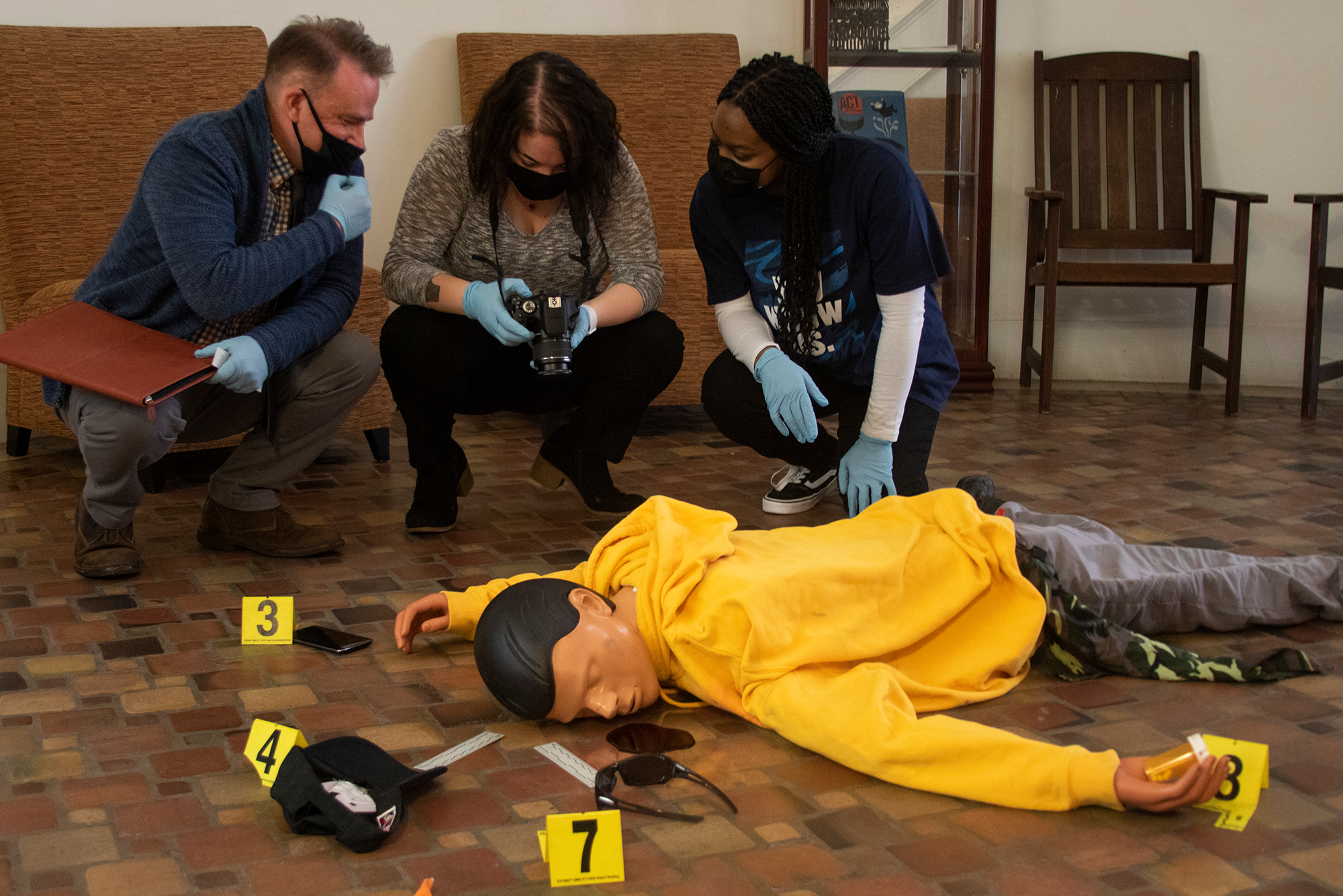
The Bachelor of Science in Forensic Studies is an applied degree focused on forensic investigation, including examining evidence, analyzing information and supporting investigations. You'll learn through lab and field experience, and you can include the Crime Scene Investigation certificate, with much of its coursework potentially counting toward your degree already. Qualified students can also begin graduate coursework early through the accelerated learning program, earning up to nine credits that count toward both the B.S. in Forensic Studies and the M.S. in Criminal Justice.
12 credits | on campus
An upper-division undergraduate certificate for students with at least 60 transferable credits. It can stand alone or be included in a bachelor's degree. Coursework spans forensic and crime-scene investigation, forensic photography, and moot court and trial advocacy. The program prepares you to document, analyze and present evidence.
15 credits | hybrid and online
Designed for students pursuing a career or advanced study in advocacy or criminal justice. Add it to any undergraduate degree (check with your adviser); it pairs especially well with criminal justice, where the courses can double as major electives. The minor examines the impact of crime victimization, how to recognize victims' needs and how the system responds across five required courses.


Request Information


Program Directors

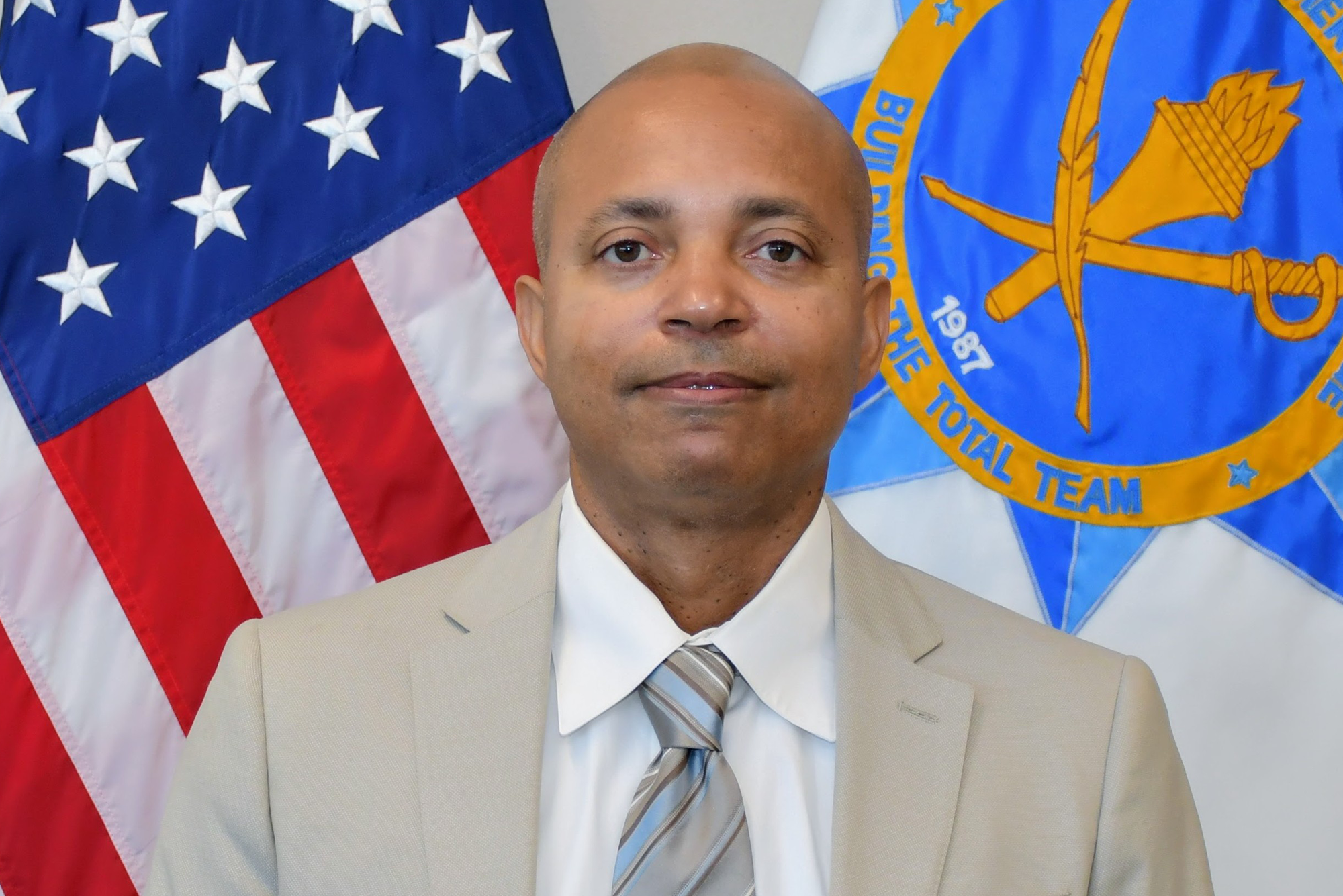
Dr. de la Cruz in front of two flags

Melvin de la Cruz, Ph.D.

Program Director, B.S. in Cyber Forensics
Email: mdelacruz@ubalt.edu 
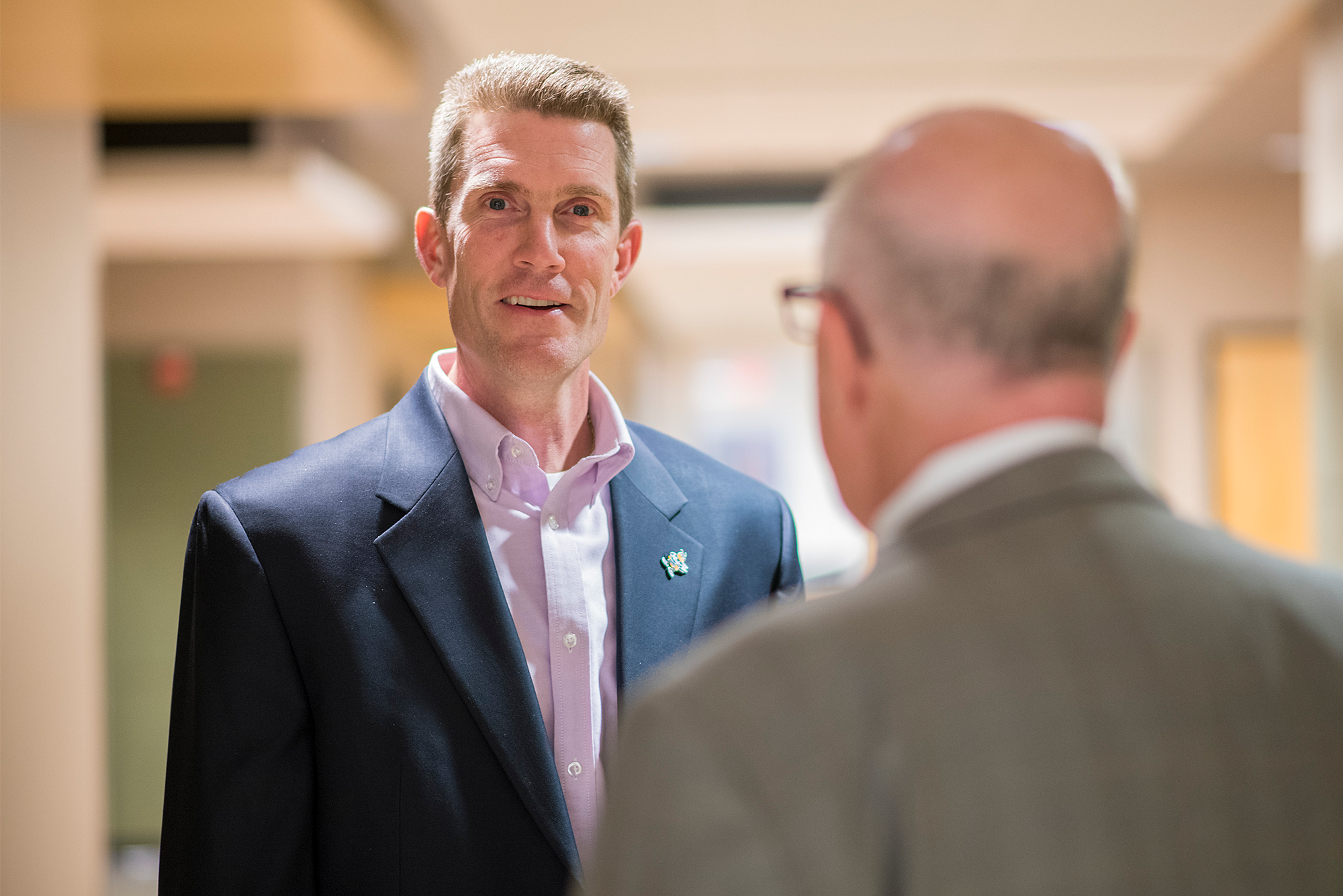
Patrick Hughes talking to a man whose back is turned

Patrick Hughes, Ph.D.

Program Director, Public Safety Leadership Certificate
Email: phughes@ubalt.edu 
Nelu Ioan Marginean

Ioan "Nelu" Marginean, Ph.D.

Program Director, B.S. in Forensic Studies
Email: imarginean@ubalt.edu 
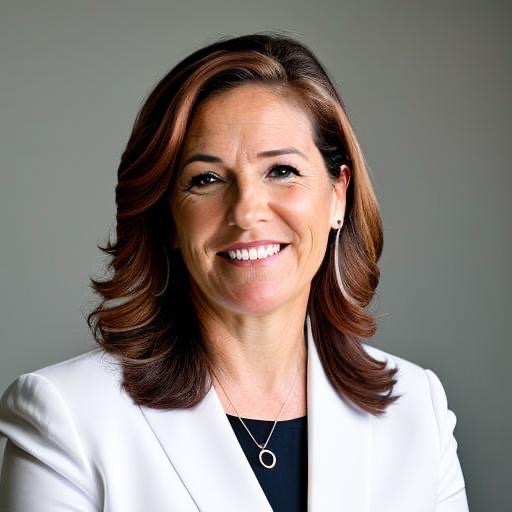
Heather L. Pfeifer, Ph.D.

Heather L. Pfeifer, Ph.D.

Executive Director, School of Criminal Justice
Program Director, M.S. in Criminal Justice
Email: hpfeifer@ubalt.edu 
Debra L. Stanley, Ph.D.

Debra L. Stanley, Ph.D.

Program Director, Trauma-Informed Certificate
Email: dstanley@ubalt.edu 
Gabriela Wasileski, Ph.D.

Gabriela Wasileski, Ph.D.

Program Director, B.S. in Criminal Justice
Email: gwasileski@ubalt.edu 
Weifeng Xu, Ph.D.

Weifeng "Frank" Xu, Ph.D.

Program Director, M.S. in Cyber Forensics
Email: wxu@ubalt.edu