

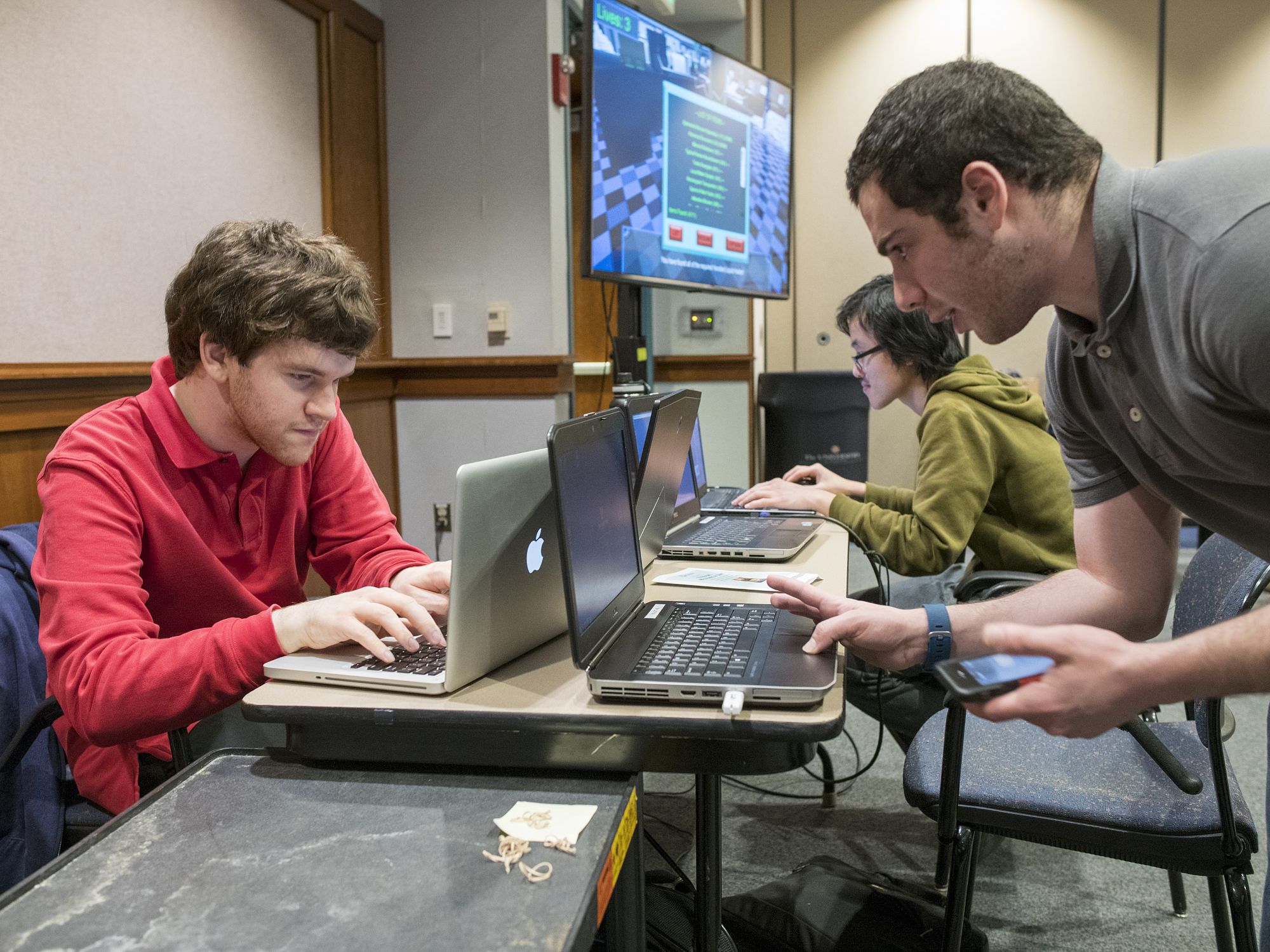
This week marks the 20th anniversary of National Distance Learning Week, focusing on advancing AI, open educational resources, and a sustainable future for distance education. As I registered for a handful of webinars (some from the United States Distance Learning Association, others hosted by our peers at University of Maryland, Baltimore County), I started reflecting on how students at the University of Baltimore are learning right now.
Not in five years. Not hypothetically. Today.
I’m always curious about what kinds of settings help someone show up, stay engaged, and do good work. A lecture hall suits some people. A kitchen table at midnight suits others. There's no single right answer, which is what makes it worth asking. At this fall's convocation, Provost Ralph Mueller discussed an effort to bring more clarity to how the university talks about course modality. A term like "hybrid" or "online" can mean slightly different things depending on which school, department, or syllabus you're looking at. New, standardized definitions are on the way, so students and faculty across campus are working from the same vocabulary.
Before those definitions arrive, though, it's worth noting what's already happening and how much common ground these four schools already share, even when their approaches look different on the surface.
These are four schools with four different starting points, but look closely and the thread connecting them is the same: a real commitment to meeting students where they are. That shared instinct is exactly what standardized definitions could help make visible across campus, instead of living as four separate, well-kept secrets.
Standardized definitions are one piece of what Provost Mueller described at convocation. But how should UBalt eventually categorize, evaluate, and support the quality of courses across all these formats? One option already part of that conversation is Quality Matters, a national framework used by institutions across higher education to review and certify course design. That's a genuinely exciting place for the university to be exploring, two decades into a field that keeps evolving faster than most of us can track.
UBalt has spent more than 25 years building toward this moment, one program at a time, long before "modality" became a word people debated in meetings. What's exciting now isn't just that four schools are doing interesting things independently, but the possibility of all of us understanding each other's work a little better, speaking the same language, and building on what already works across the university rather than in isolated pockets.
That feels like a fitting place to land during a week built around exactly these questions: how learning keeps evolving, what role technology plays in making it more accessible, and what a sustainable, flexible future for education actually looks like. At UBalt, that future is something we're building together. I'll still be curious to know which room (physical or virtual) helps you learn best.