

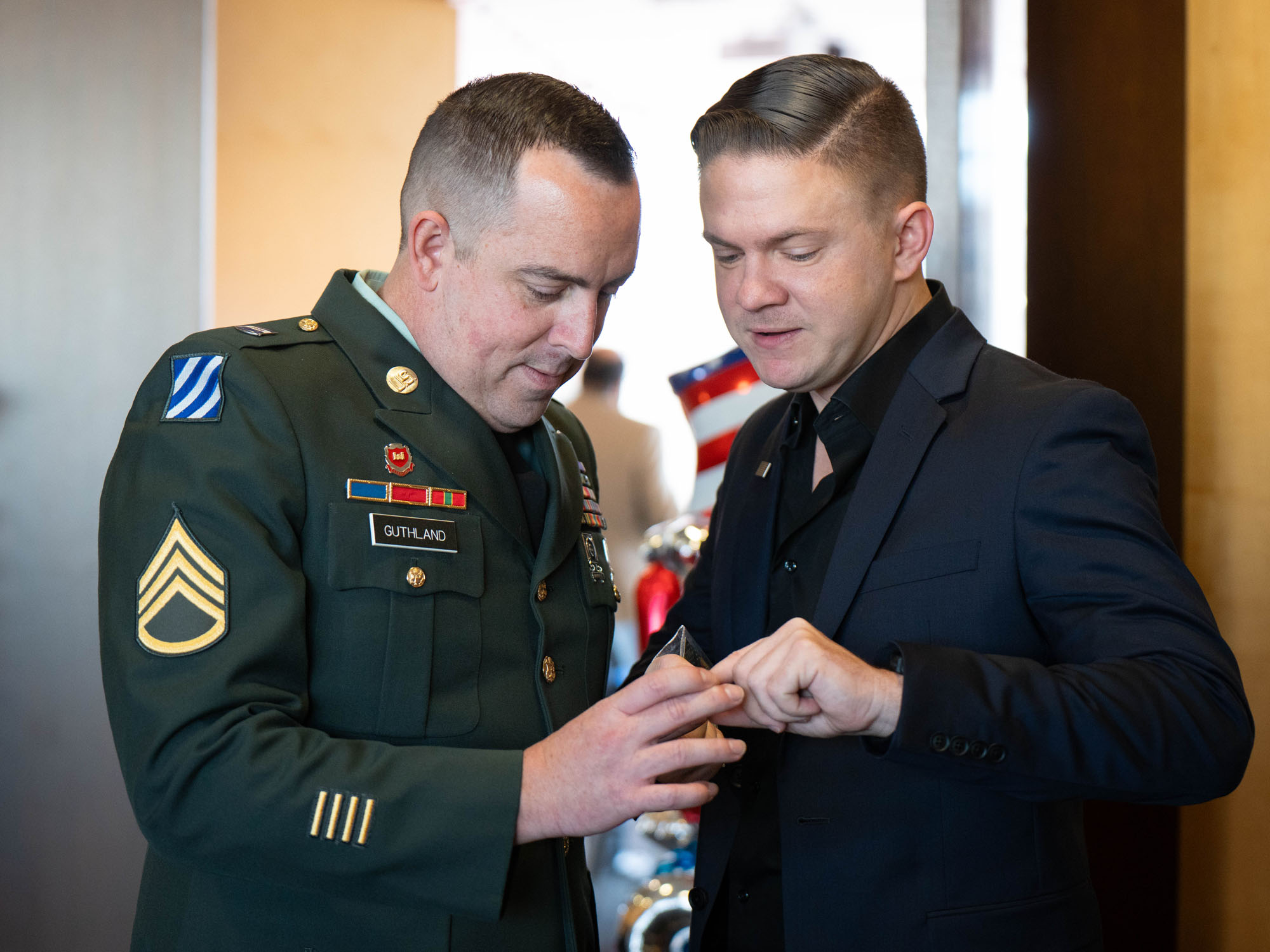
When Josiah Guthland first came to The University of Baltimore, he had a vision he hoped would transform its veterans center.
In six years, he’s increased the veteran student population and raised the center’s standings with consistently high national rankings on military friendliness and veteran support.
“Word of mouth is getting around through the veteran and military community that at the University of Baltimore, they treat you as a person, not as a number,” Guthland said. “We don't just welcome you with a handshake and a business card. We welcome you and we say, ‘What can we do for you today?’”
Guthland, a U.S. Army veteran, took over as director of veteran and military student services at The Bob Parsons Veterans Center during a turbulent time. It was 2020, and UBalt, like many places worldwide, was operating solely in a virtual landscape amid the COVID-19 pandemic.
When, a year later, he could finally step into UBalt’s veterans center, Guthland arrived ready to revive the veteran population and establish new traditions and services.
Guthland had two management philosophies in mind to improve the veterans center.
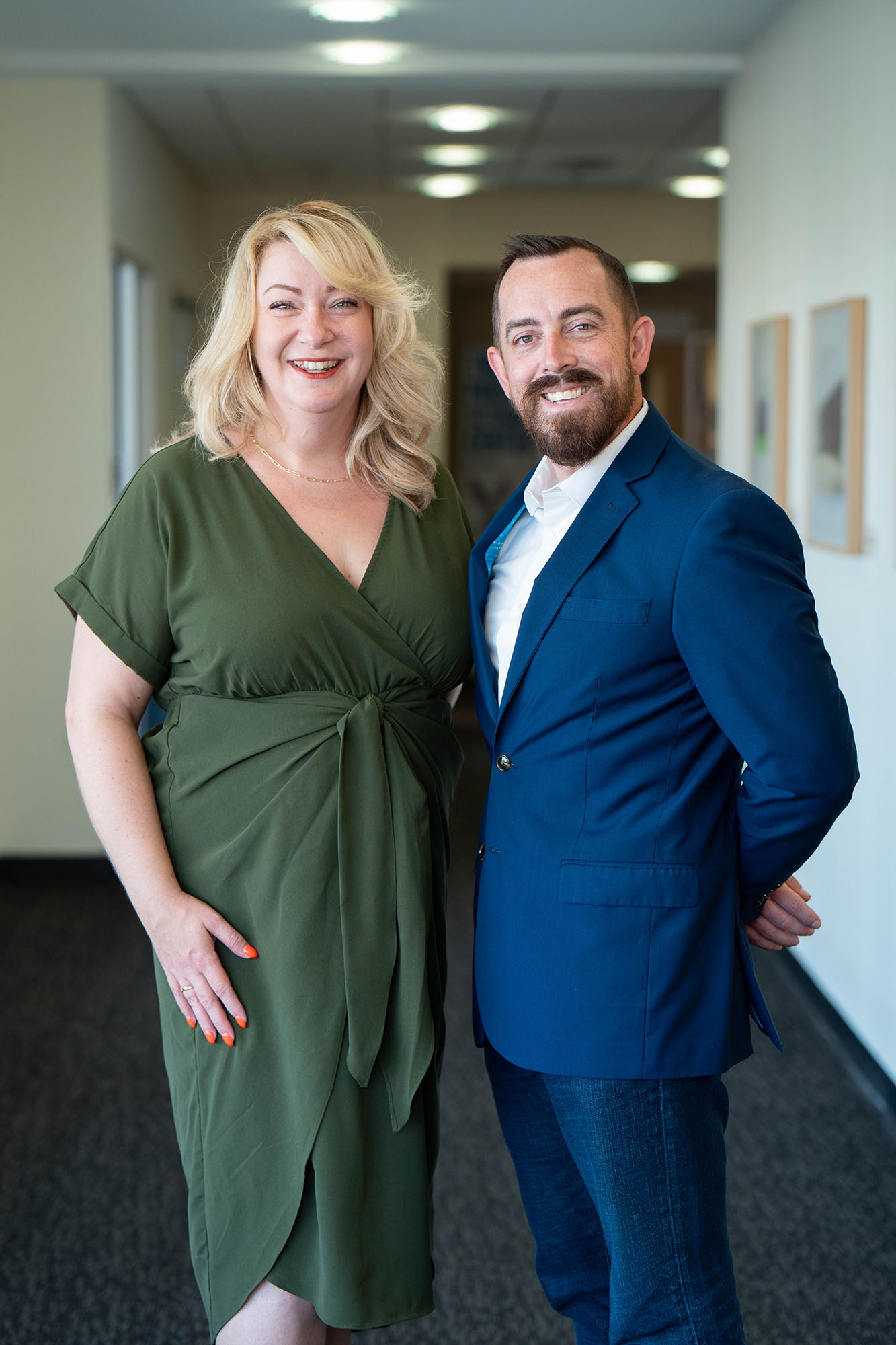
One was a hub-and-spoke model that aims to centralize support services. Guthland and Dena Allen-Few, the center's coordinator and U.S. Army veteran, keep their door open, inviting veteran students to speak to them first to resolve any issue, even if the source is another office on campus.
“We've told all our students that we are the center point for all issues and challenges that you're having at the University. Come to us first with your questions, with your challenges, with your issues,” he said.
That simple change is appreciated by students juggling heavy commitments and course loads.
“The UBalt veterans center facilitates UBalt's commitment to honoring veterans,” said Javon Lamar Weaver, a UBalt School of Law student and U.S. Army veteran. “They understand the value in alleviating stressful administrative tasks, such as registering early for classes every semester.”
The second plan Guthland had for the veterans center called for a four-pillar approach in programming, covering academics, social engagement, career planning and community service.
This approach fosters the whole student, supporting students’ academic pursuits while building camaraderie. Each semester, the veterans and military-affiliated students are encouraged to participate in a service event, typically involving fellow veterans. The center has often partnered with the Maryland Center for Veterans Education and Training, as one example.
“We'll serve a meal to homeless veterans, or we'll help them clean, or we'll help them organize the 1,000s of pounds of clothing donations that they've received,” Guthland said.
UBalt’s veterans center also hosts a variety of on-campus events, some with an academic connection and others just in the spirit of fun. Past activities have included military movie nights where a professor joins for a discussion about reality versus perception, or a pizza party with a few games of pool.
A new tradition that is quickly becoming a favorite is spending Memorial Day watching a Baltimore Orioles game at Camden Yards. Thanks to support from the center’s namesake, UBalt alumnus and Vietnam veteran Bob Parsons, Guthland buys enough tickets for not only veteran students but also their families.
“So many of us, especially students here, we have families, we have jobs, we have a bunch of other responsibilities, and so we don't want our students to think they have to shed those parts of them in order to be a part of our community,” Guthland said. “We want to embrace the whole student.”
Career development is also a foundational focus in the pillar system. Through the center, Guthland invites in guest speakers to help students understand the federal job hiring process, and partners with UBalt’s Career and Internship Center for hands-on training and support.
In addition to his four-pillar approach, Guthland also wanted to establish an exceptional work study program. Using the Veterans Affairs’ work study program, the center can hire current students to work up to 25 hours weekly.
He typically has 10 working students each semester. They become ambassadors of the center to the rest of the campus community.
Every ambassador’s introduction to UBalt’s veterans follows a similar pattern: When they were new to campus, they were ushered into the center and greeted by Guthland and Allen-Few, they quickly learned about services and opportunities, and in many cases, were offered consideration for a campus job.
“From Day 1, I knew everybody’s name at the veterans center,” said John Sweeney, MFA in Creative Writing & Publishing Arts student, U.S. Army veteran and student veteran ambassador. “We all just got along so famously. It's really a great environment.”
Kaitlyn Walker, a B.S. in Forensic Studies student and military dependent who also works as a veteran ambassador, also quickly found the center to be a home away from class.
“This is a place you can go to and unwind or study, and you're surrounded with funny and kind people who want to see you succeed,” she said.
Bryant Lepic, a second-year law student and U.S. Air Force veteran, appreciates a quiet place to rest and a community that embraced him quickly.
“This is a top-tier veteran center. They have so many good events and services for veterans that you're not getting that anywhere else,” he said. “It's just such a great space to come into. Law school can be stressful and fast paced, and I come over here and go relax in the lounge or take a nap. It's great to have that.”
The veterans center includes a conference room that doubles as a study space, a computer lab, a lounge with a TV and couches, and a kitchen where students can often find free food.
“The reason we have the best veteran center in the Mid-Atlantic, is because we care about our veteran and military student population as students, as humans, and as individuals. We put the resources into providing a space where students can really spend time, build community, and get the support and the resources that they need to be successful student,” Guthland said.
Located on the third floor of the UBalt Student Center, the veterans center is part of the hub of student life and “surrounded by all the services they could need in the same building, along with the professionals whose sole purpose is to assist them in their academic pursuits,” Guthland said.
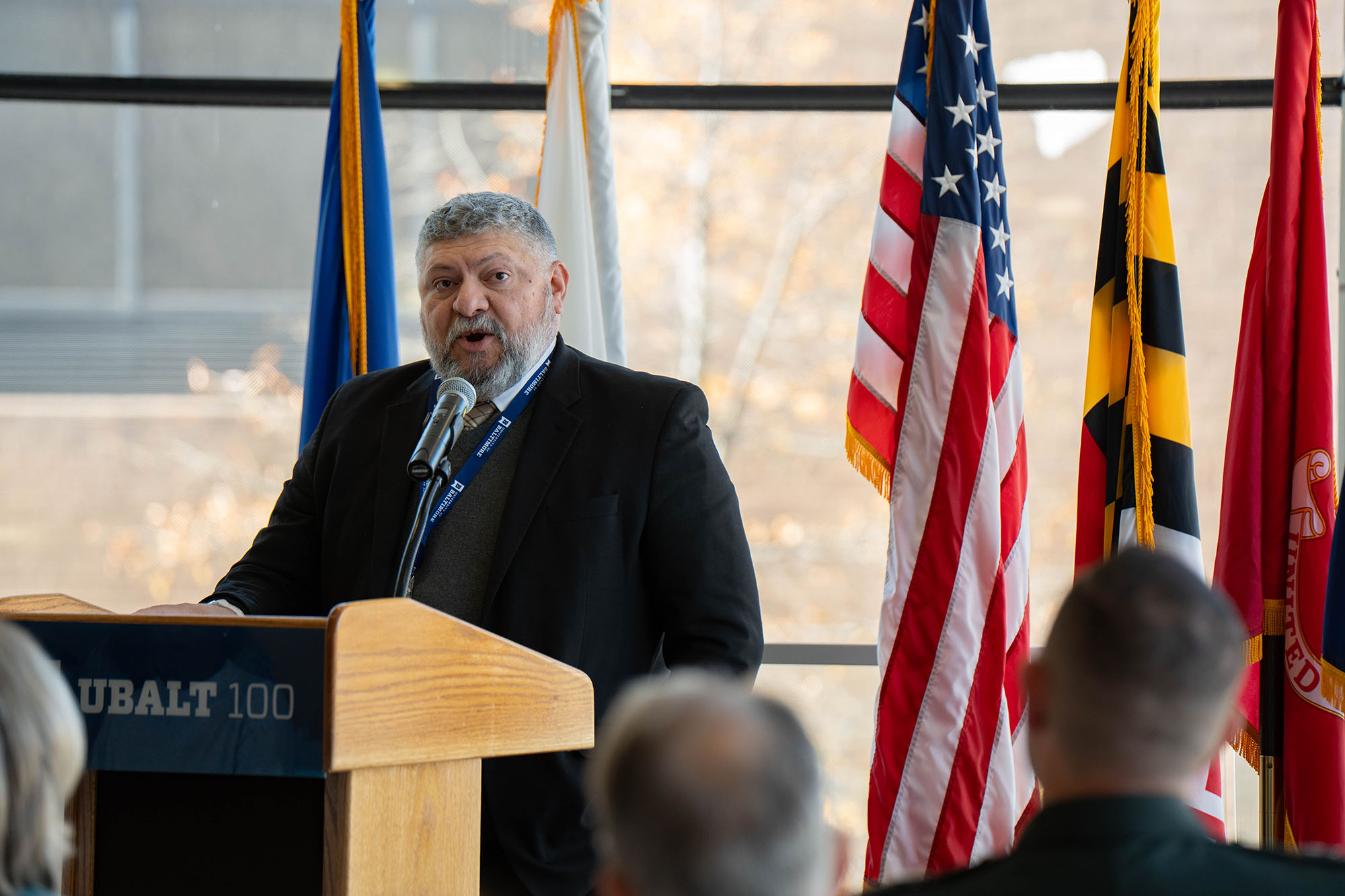
Nicholas Salcido, a B.A. in Digital Communication student and U.S. Army veteran, likened the veterans center to the USOs he’s visited around the country—a place of respite offering food and support from empathetic company—but considers it even more valuable.
“Part of the experience of being in the military is the camaraderie piece. That's the piece you don't forget after all these years and instantly, when I went to The Bob Parsons Veterans Center, everybody was connecting and chatting with each other, and it reminded me of my time in uniform,” he said.
Salcido recalled connecting with Guthland even as he was still weighing UBalt as a college. “We broke bread, we chatted about our military careers, we chatted about what I wanted to do. It was thorough—it wasn't an email, it wasn't a brochure, it was a human being connecting with me,” Salcido said.
The little things like connecting with students early and developing a community where they can feel supported and seen were important to Guthland. And his efforts have earned attention and accolades.
Since Guthland took over as director of veteran and military student services, UBalt’s veteran and military-affiliated student population has increased roughly 45 percent. As of fall 2026, the University had 241 veteran and military-affiliated students.
The population of veteran and military-affiliated students, which includes dependents of service members, represents about 9 percent of UBalt’s total population—a number that still surprises Guthland. He noted the state of Maryland’s veteran population is 5 percent.
Guthland is hoping to drive that growth further with a new scholarship that cuts course costs in half for qualifying active-duty service members.
Additionally, UBalt’s veteran center has not only maintained its rank as a military friendly university, but it’s earned more national appreciation in recent years, too.
The Military Times ranked the center at No. 2 in Maryland (in the top third nationally) for its “Best for Vets” 2026 survey, which weighs services and educational benefits available to students.
“We are in the top 1 percent of all higher education institutions when it comes to the services and support that we provide our veteran and military affiliated students,” Guthland said.
The veterans center also ranks top 10 in the nation by Military Friendly, an organization that has long honored UBalt as a “Gold School” for veterans’ services.
“We pride ourselves, in The Bob Parson Veterans Center, of giving students what they need to be successful,” Guthland said. “Some students come onto our campus and need a quiet place to study. Other students are seeking community, and we can provide that. This space is for them. One of the best things about the center is we are able to provide that veteran and military-affiliated student with anything they need, regardless of what that need may be.”