

We apply the results of assessment to improve student learning and unit-level effectiveness.
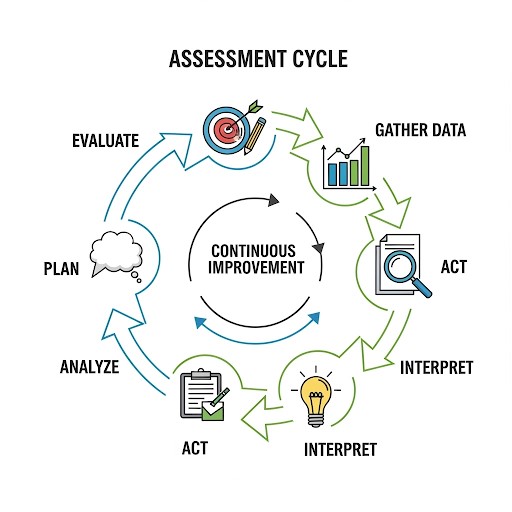
Assessment consists of these essential steps:
No matter what we're assessing—an academic program, a single course, a co-curricular program or a unit's contributions to University-wide goals—we use the results to improve student learning and unit-level effectiveness.
The University System of Maryland requires academic programs to be reviewed every
seven years; cycles may be adjusted with approval to accommodate program accreditation
schedules or other similar situations. Learn more at the UBalt program review page.
Current Program Reviews are located in Sharepoint
.
Learning outcomes are statements of what students are expected to know or to be able to do after they have engaged in a learning activity. Learning outcome statements typically are expressed as knowledge, skills, attitudes, behaviors or values. Assessment of student learning occurs at the program and course levels as well as in units outside of academic affairs. All UBalt learning outcomes at every level are consistent with and derived from a set of learning goals established by the UBalt Faculty Senate in 2011.